


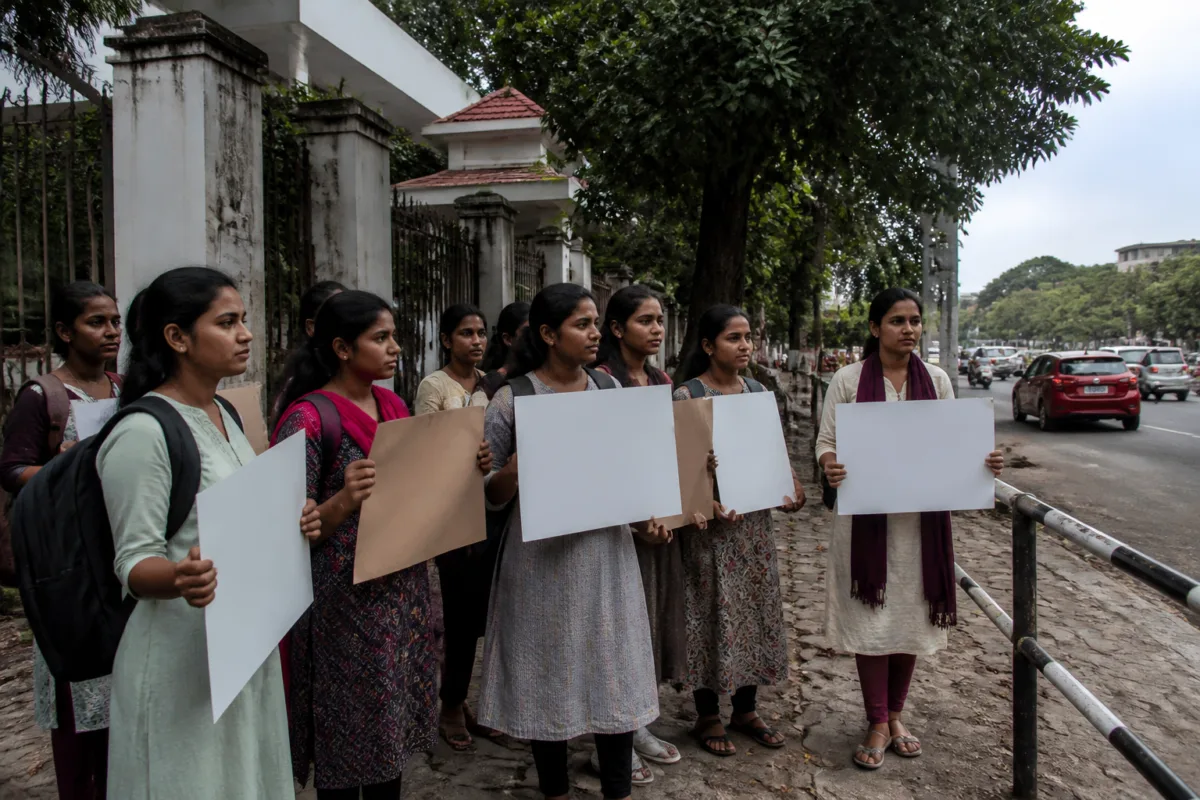
The Kerala government has refused to immediately reduce the teacher-student ratio in lower primary schools from 1:30 to 1:25, saying the move would require additional posts across multiple school levels and place an unaffordable burden on public finances. The position has prolonged the protest by lower primary school teacher job aspirants in Thiruvananthapuram.
Chief minister V D Satheesan said the government had accepted four of the five demands raised by the protesters and had not ignored their agitation. He said the general education minister had held eight rounds of discussions with them, while he had met the protesters twice. The secretary to the general education minister subsequently asked them to temporarily withdraw the protest, according to Satheesan.
The unresolved demand is for a 1:25 teacher-student ratio. Satheesan said implementing it would require the creation of additional posts not only for lower primary school teachers, or LPSTs, but also for upper primary, high school and higher secondary teachers. The resulting staffing requirement would extend beyond the immediate group of rank-holders protesting in the state capital.
The chief minister also said that increasing posts in government schools could trigger similar demands from aided schools. Maintaining different teacher-student ratios between government and aided schools, he said, could lead aided-school managements to approach the courts and potentially require the government to extend the same benefit to them.
“We are not in a financial position to reduce the ratio and create additional posts. We can consider it when the financial situation improves. We haven’t rejected their demand; we have explained our limitations to them,” Satheesan said.
The dispute illustrates how a staffing norm in public education can become a wider administrative and fiscal question. A decision on the ratio would affect recruitment, school-level deployment and the government’s obligations towards aided institutions. It would also determine whether schools with changing enrolment can retain or gain teaching posts.
Valarmathi, who is leading the rank-holders’ protest, rejected the government’s explanation. She said the five demands would not impose any additional financial burden on the state and alleged that the government had not issued official orders to implement the four demands it claimed to have accepted.
She insisted that the ratio be reduced to 1:25 in all schools and urged the government to begin with schools where declining student numbers could result in the loss of divisions and teaching posts. According to her, the government was using financial constraints as a reason to deny the demand. She also said that three cases had been registered against her.
Satheesan expressed concern over the protesters adopting extreme forms of agitation, including cutting their hair. Valarmathi, however, said she would continue the strike and would not withdraw the demand for a lower teacher-student ratio. The immediate next step remains the continuation of the protest and the government’s position on whether further negotiations will take place.

