


Shapoorji Pallonji Real Estate’s plan to monetise more than 3,000 acres across Maharashtra is more than a large land-sale programme. It signals a deliberate shift towards plotted development as a way to convert a geographically distributed landbank into phased, revenue-generating projects. The strategy places the Mumbai Metropolitan Region, Pune, Nagpur and the Mumbai-Pune corridor at the centre of the company’s next growth cycle.
According to the report, the real estate arm of the Shapoorji Pallonji Group expects its plotted development portfolio to generate more than ₹10,000 crore in revenue over the next three to four years. The land parcels are spread across the MMR, Pune and Nagpur, while the first major project identified under the strategy is a 900-acre plotted township along the Mumbai-Pune corridor.
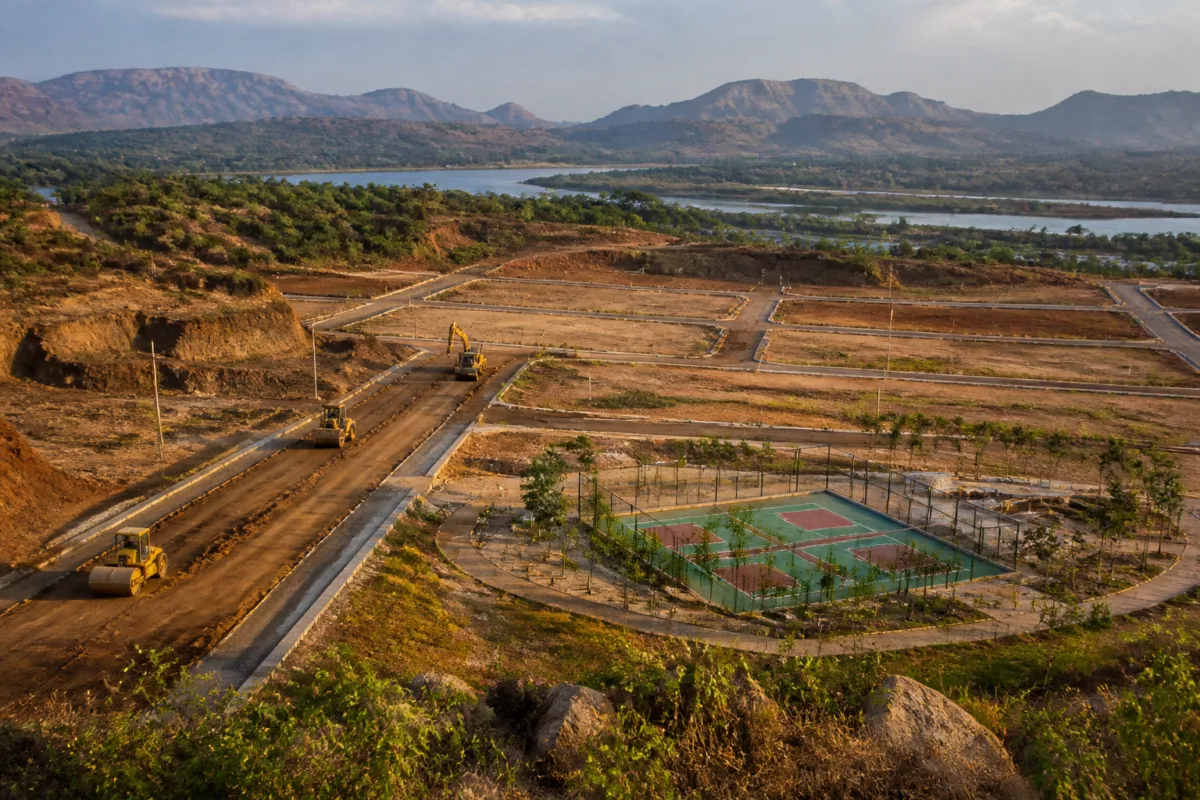
The proposed township has an estimated gross development value of more than ₹6,000 crore. The company has already invested around ₹1,500 crore in the project, including land costs, and has secured the entire parcel. Its master plan has reportedly been finalised, while key approvals for the first phase have been obtained. That first phase will cover 200 acres and is expected to contribute around ₹1,800 crore to the project’s overall revenue potential.
The project is located near Khopoli, in a landscape described as being surrounded by hills and water bodies. Its positioning is centred on wellness, with sports and adventure facilities planned in subsequent phases. The development is also intended to serve the second-home market, giving the project a distinct proposition from conventional urban residential schemes.
The Khopoli plan illustrates the operating logic behind the wider landbank strategy. Rather than developing all the land at once, SPRE intends to release portions through multiple projects, with developments initiated and monetised progressively over the next three to four years. This approach allows the company to create a pipeline from land parcels that might otherwise remain tied up as long-term assets.
Venkatesh Gopalakrishnan, Director, Group Promoter’s Office and Managing Director of Shapoorji Pallonji Real Estate, told The Economic Times that the company’s landbank across Maharashtra provided an opportunity to build a sizeable plotted development portfolio. He said the company intended to unlock the value of these parcels through a phased development strategy, with plotted developments expected to contribute more than ₹10,000 crore in revenue over the stated period.
The distinction between a landbank and a development pipeline is important. A landbank represents control over land, but it does not automatically produce revenue. To become a pipeline, each parcel must move through planning, approvals, infrastructure preparation, marketing and sales. In SPRE’s case, the company’s description of secured land, a completed master plan and approvals for the first Khopoli phase indicates that at least one part of the portfolio has moved beyond a purely speculative holding stage.
The 30-month development timeline for the first phase also gives the strategy an operational structure. The 200-acre opening phase is expected to contribute about ₹1,800 crore, while the full 900-acre township carries a potential GDV of more than ₹6,000 crore. These figures show how the company is sequencing value creation: an initial phase establishes the project, while later phases are expected to extend the township’s commercial life and build out its wellness, sports and adventure components.
The model also reflects the changing geography of real estate development around major urban regions. The project is not located within the dense core of Mumbai or Pune. Instead, it is positioned along the Mumbai-Pune corridor and is designed around landscape, recreation and second-home demand. This places the project within the wider expansion zone of metropolitan real estate, where developers can assemble larger parcels and offer a different product from high-density city housing.
However, the available information does not establish the scale of supporting infrastructure around the proposed township, including transport access, water systems, utilities or public services. Nor does it specify the final layout, the number of plots, pricing, occupancy assumptions or the construction responsibilities for common infrastructure. These details will determine how the development functions in practice and whether it operates as an integrated township or primarily as a plotted sales project.
The company’s recent project on more than 100 acres on the outskirts of Pune provides an early indication of its direction. That development marked SPRE’s entry into plotted development and is now being followed by the larger Khopoli township and the broader Maharashtra pipeline. The move gives the company an additional revenue channel alongside its residential and commercial real estate portfolio.
For developers, plotted development can offer a different delivery structure from apartment-led construction. The company can develop land parcels and associated infrastructure in phases, while individual buyers may construct buildings over time. The source material does not provide SPRE’s detailed delivery model, so it is not possible to establish how much construction will be undertaken directly by the developer or how the company will structure the plots, amenities and common facilities.
The institutional challenge lies in coordinating land development with the systems that make a settlement functional. A large plotted township requires more than a master plan and internal roads. It also needs reliable connections to transport networks, water supply, drainage, power, waste management and emergency services. The report confirms approvals for the first phase but does not identify the approving authorities or describe the infrastructure obligations attached to the project. Those matters will be significant as additional parcels move from the landbank into development.
The location mix also gives the strategy a wider regional dimension. The company has identified land across the MMR, Pune and Nagpur, three markets with different development conditions and demand profiles. The stated revenue target therefore depends on managing a portfolio rather than relying on one township. The Khopoli project is the most detailed example currently available, but the source does not disclose the size, product or approval status of the other parcels.
That gap matters because the ₹10,000-crore figure is a cumulative revenue potential, not reported revenue already generated. Similarly, the more than ₹6,000-crore figure for Khopoli is an estimated GDV, while the ₹1,800-crore figure relates to the expected contribution from its first phase. These are forward-looking commercial projections and should not be read as completed sales or realised income.
The timing of the plan is nevertheless clear. SPRE expects to initiate and monetise multiple plotted developments over the next three to four years, while the first Khopoli phase is expected to be fully developed within 30 months. The company’s immediate execution test is therefore the conversion of the approved 200-acre phase into a functioning project, followed by the expansion of the remaining township and the activation of other land parcels.
The larger urban question is what happens when land on metropolitan edges is converted into planned, lifestyle-oriented settlements. Such projects can bring formal layouts, organised development and new real estate supply to areas outside established city centres. They can also create additional demands on transport, utilities and local governance. The supplied information confirms the company’s development ambition, but it does not yet provide enough detail to assess the project’s eventual impact on surrounding settlements or public infrastructure.
What the announcement establishes is a significant land-led growth strategy: more than 3,000 acres across Maharashtra, a 900-acre Khopoli township, an estimated ₹6,000-crore GDV for that project and a stated revenue potential exceeding ₹10,000 crore across the plotted portfolio. What remains to be established is how the projects will be serviced, absorbed and integrated into their respective urban regions. The next material milestones are the delivery of Khopoli’s 200-acre first phase within 30 months and the disclosure of plans, approvals and timelines for the remaining land parcels.

