


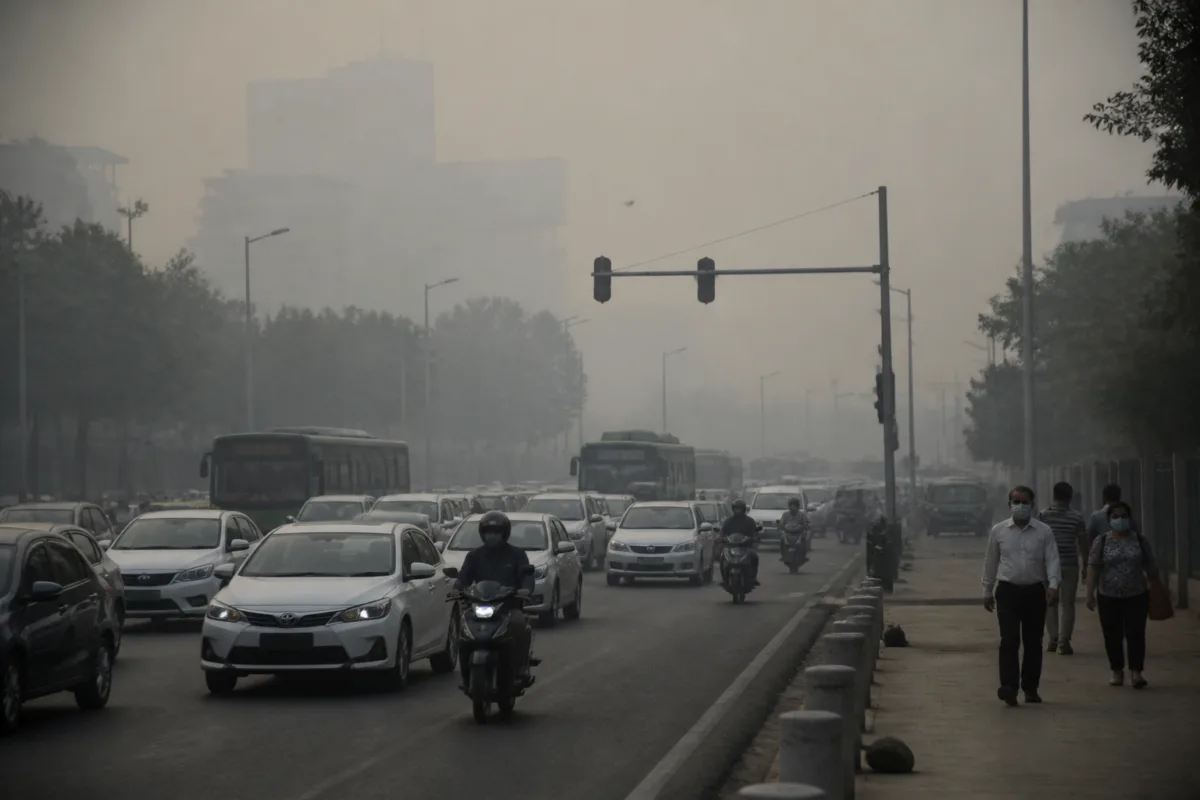
Delhi air quality deteriorated further into the very poor category, with the city recording an AQI of 350 at 4pm on Tuesday and at least eight monitoring areas slipping into the severe zone. Monitoring agencies expect pollution levels across more parts of the capital to worsen in the coming days despite restrictions under GRAP-II.
Jahangirpuri recorded the highest AQI among the affected areas at 462. Other locations in the severe category included Punjabi Bagh at 449, DTU at 445, Alipur at 430, Mundka at 422, Bawana at 421, Vivek Vihar at 425 and North Campus at 405. Safdarjung, the base monitoring station, recorded very poor air quality.
The deterioration has been linked to a combination of rising emissions and weather conditions that are limiting the dispersal of pollutants. Experts cited in the report said unfavourable weather was a major factor behind the sharp increase in pollution across the city.
The Indian Institute of Tropical Meteorology said the contribution of stubble-burning emissions from neighbouring states had increased in Delhi’s pollution profile. Its decision support system estimated that stubble burning accounted for 8.5% of the city’s pollution on Monday and projected the share to rise to 15.5% on Tuesday.
IITM’s projections indicated that the contribution could reach 20% by November 4 and 22% by November 5. The projected share would bring stubble burning’s contribution close to vehicular pollution, which remains the dominant source in Delhi’s emissions inventory, according to the report.
The pollution spike has occurred even as GRAP-II restrictions came into force from Monday. The graded response framework is intended to trigger progressively stronger measures as air quality worsens, but the latest readings show that regulatory restrictions have not prevented pollution from reaching severe levels in several parts of the capital.
Weather conditions are expected to remain a constraint on air-quality improvement. Delhi recorded a maximum temperature of 29.1 degrees Celsius at Safdarjung, one degree below normal, while the minimum temperature was 16.4 degrees Celsius, one degree above normal. The India Meteorological Department expects temperatures on Wednesday to remain between 27 and 29 degrees Celsius during the day and 14 and 16 degrees Celsius at night.
IITM forecast that Delhi’s air quality would remain very poor or could reach severe levels over the next six days. Monitoring agencies are also expecting pollution to spread to other parts of the city as weather conditions continue to restrict the movement of pollutants.

