


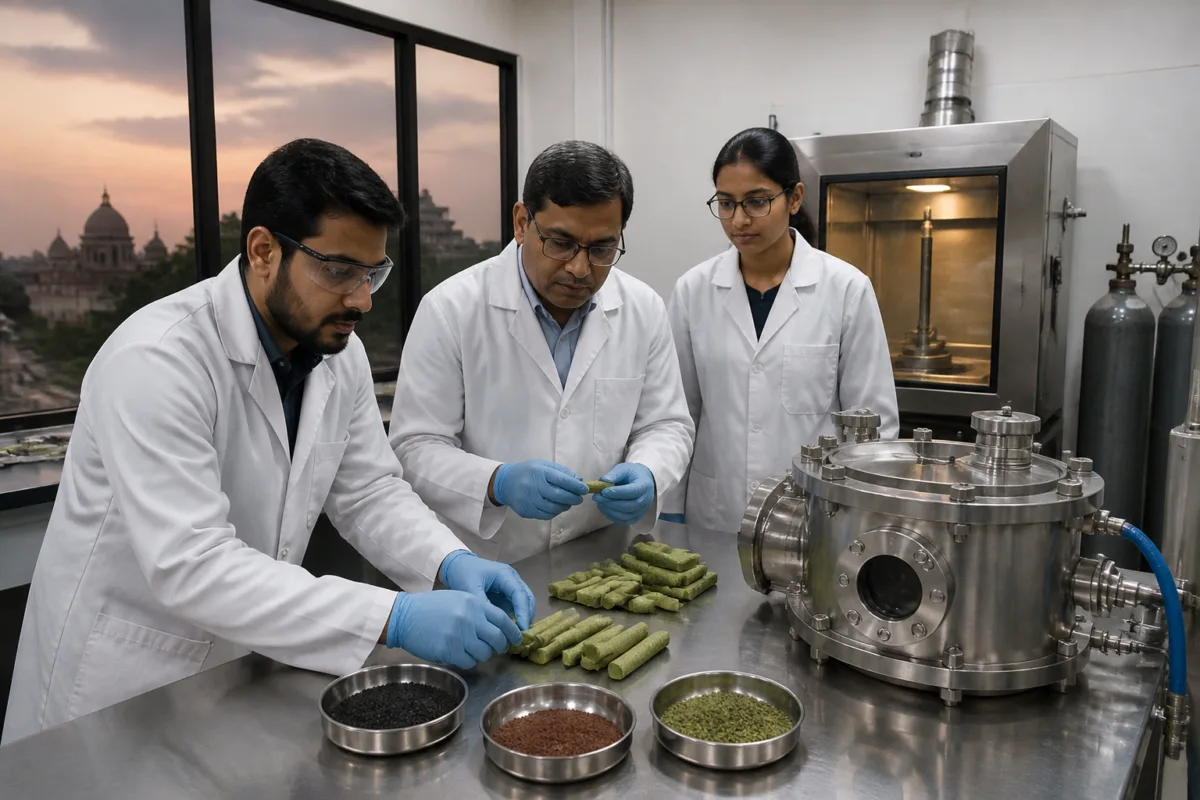
CSIR-National Environmental Engineering Research Institute (NEERI) is developing new green cracker formulations that could reduce emissions by 45% to 60% compared with conventional firecrackers, while also working on near-smokeless variants expected to reach the market by next Diwali.
Joshua Krupadam, coordinator of NEERI’s National Centre of Excellence for Green Firecrackers, told the Times of India that the institute is developing 12 to 13 formulations designed to produce little or no visible smoke. The work comes amid continuing concerns over the contribution of firecrackers to urban air and noise pollution during festive periods.
Earlier formulations developed by NEERI and transferred to manufacturers had achieved emission reductions of about 25% to 30% compared with conventional products, Krupadam said. The newer formulations have improved that performance, with reported reductions ranging from 45% to 60%.
Krupadam clarified that the term green crackers does not mean that the products produce zero pollution. They are low-emission firecrackers compared with conventional alternatives, he said. The distinction is important for cities and enforcement agencies assessing the likely air-quality impact of products marketed as environmentally safer.
NEERI is also working on the regulation of joint firecrackers, commonly known as garlands or ladis. According to Krupadam, these products account for an estimated 20% to 30% of the market and are traditionally produced by hand or with small equipment. He said that many people involved in their manufacture had lost employment over the past five to seven years.
The institute’s proposal is to permit regulated production of joint firecrackers using scientifically developed formulations. NEERI said this could address livelihood concerns while ensuring that only authorised products enter the market. The approach would link environmental regulation with the economic impact on workers and small producers in the cracker industry.
Noise remains a separate challenge. Krupadam said that a garland containing 1,000 individual shells had produced noise levels of around 130 to 140 decibels when the shells burst within a few seconds. That was above the prescribed limit of 125 decibels. The figure highlights the difficulty of controlling noise pollution when large numbers of individual explosive units are combined into a single product.
NEERI’s work therefore covers both the chemical composition of firecrackers and the way products are assembled and sold. Lower-emission formulations may reduce smoke compared with conventional crackers, but the institute has not described them as pollution-free. The proposed regulation of joint crackers is intended to bring a significant market segment within an authorised production and monitoring framework.
The new formulations are expected to reach the market by next Diwali, subject to their development and transfer to manufacturers. NEERI’s stated objective is to combine lower emissions, reduced visible smoke and controlled noise with legal production and employment opportunities for people affected by restrictions and market changes.

