


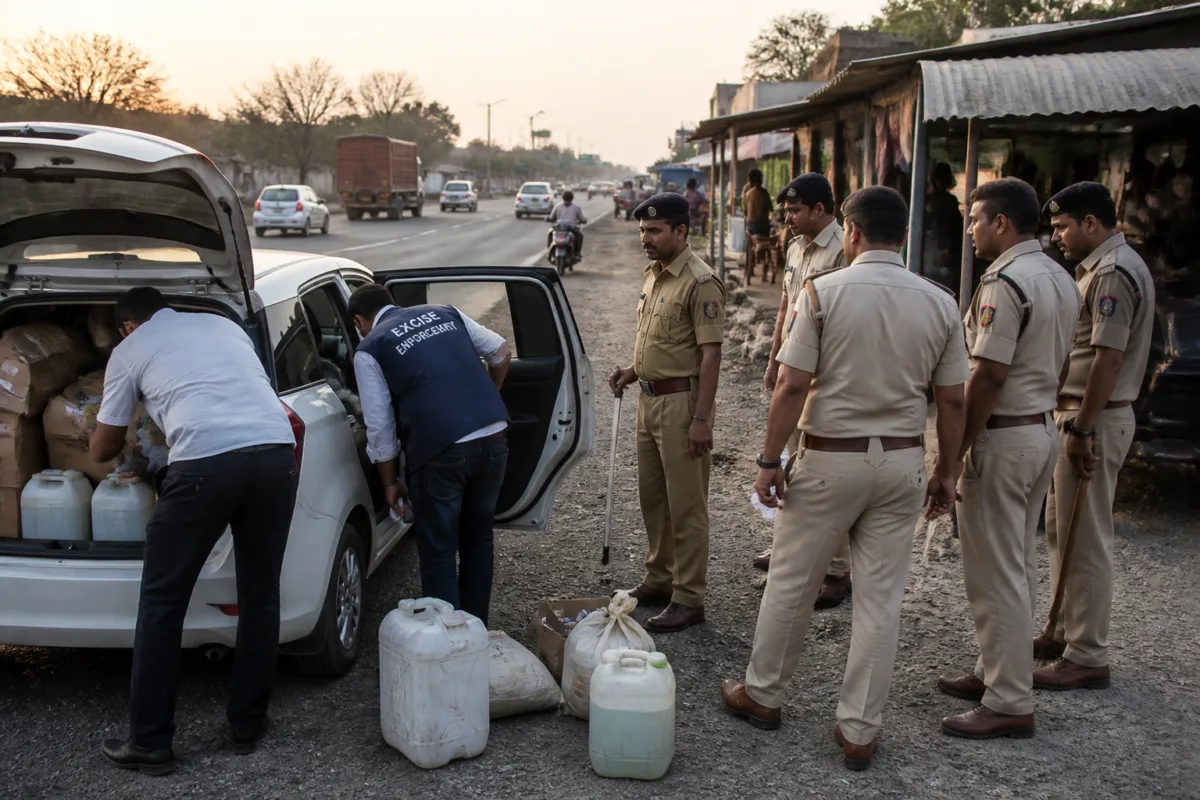
Indore divisional commissioner Bhaskar Lakshakar has directed officials to begin preventive detention measures, including district externment and action under the National Security Act, against people involved in the illegal manufacture, storage, transportation and sale of liquor across the division.
The directions were issued during a video conference with officials from Indore division on Tuesday. Lakshakar said identifying people operating illegal liquor networks and taking action against them should be treated as a priority, according to the Times of India report.
The commissioner also directed Excise Department officials to act against liquor shops in Indore city that operate beyond their permitted hours. Officials were asked to strengthen monitoring in sensitive areas, along border stretches, on major routes, at dhabas and along highways where illegal liquor transportation and sale were suspected.
The enforcement plan focuses not only on individual seizures or cases but also on tracing the supply chain behind illicit liquor. Officials have been asked to identify the source of illegal liquor, track distribution networks and gather information about associates and other people linked to the trade.
Lakshakar directed officials to pursue strong prosecution in cases involving illegal liquor storage registered under Section 34(2) of the Madhya Pradesh Excise Act, 1915. He said conviction should remain the primary objective in these cases. The directions place responsibility on enforcement agencies to move cases beyond detection and registration towards prosecution outcomes.
The commissioner also asked officials to take complaints about illegal liquor seriously and ensure prompt action. Police, the Excise Department and other agencies were directed to share information quickly and regularly review enforcement measures. The coordination instruction is intended to improve the flow of information between departments dealing with illegal manufacture, movement and sale.
Local administrative officials were also asked to maintain accountability in areas where illegal cannabis cultivation had been detected. The direction broadens the review beyond liquor enforcement to include local monitoring of areas connected with illicit cultivation.
The latest instructions do not announce a new law or a specific enforcement deadline. They set out operational priorities for divisional and local officials, including monitoring suspected routes and locations, identifying networks, pursuing cases under the existing excise law and reviewing action taken against illegal liquor and cannabis-related activity.

