


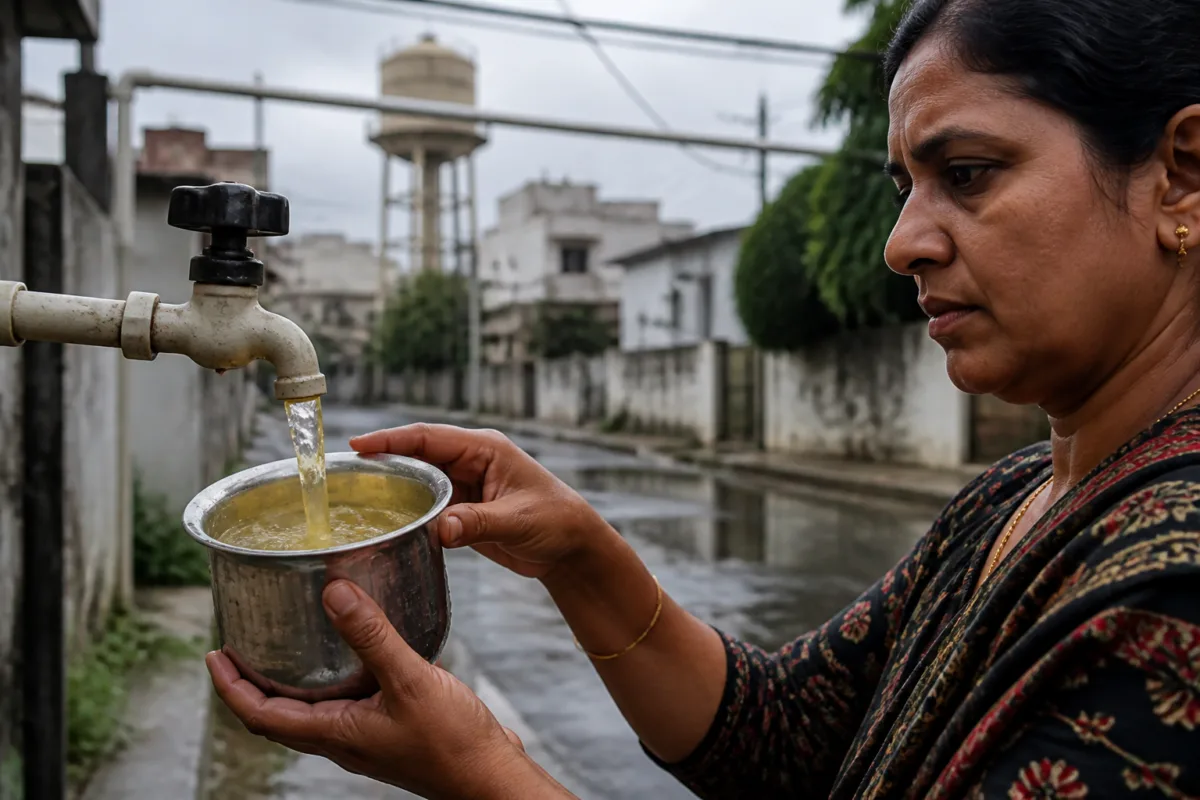
Coimbatore Corporation has ordered fresh tests of water supplied under the Pillur scheme after residents in several parts of the city complained that their drinking water appeared yellowish and dusty following heavy rainfall in the dam’s catchment areas.
Corporation commissioner Katta Ravi Teja has directed officials to collect samples from the dam, the treatment plant and residents’ houses. The testing is intended to assess water quality across the supply chain, particularly in parts of the north zone where complaints have continued.
Officials have attributed the discolouration to silt, clay and sand entering the Bhavani River and Pillur reservoir after soil erosion caused by heavy rain. The resulting increase in turbidity has raised the treatment burden at the Pillur II treatment plant.
A senior corporation official said turbidity, which measures the cloudiness of water, had exceeded 1,000 nephelometric turbidity units this year, compared with the usual range of 10 to 50 NTU. The official said turbidity during earlier monsoons generally rose to about 160 NTU and the issue was resolved within three or four days, but the latest episode continued for almost 10 to 15 days after a sudden and heavy downpour.
The official said raw water at the time of the report recorded 36 NTU and that treatment had reduced the figure to 10 NTU. However, the continued complaints from some north-zone areas have prompted the corporation to repeat the sampling process at multiple points, including household taps.
The corporation has also increased the use of treatment chemicals. Ferric alum consumption at the Pillur II treatment plant has risen from around one tonne to nearly four tonnes a day. Chlorine dosage has been increased from 1.5 parts per million to 2.5 ppm as officials respond to the higher treatment requirements caused by the influx of rainwater, silt and soil.
The commissioner said turbidity levels had been very high about two weeks earlier but had reduced over time. He also rejected claims that the discoloured supply had already resulted in an increase in water-borne or throat infections, saying the corporation had not received information about such health problems so far. Officials will nevertheless be asked to check whether there has been any rise in reported cases and to take immediate action if required.
The next round of tests will cover water from the dam, the treatment plant and selected homes. The results will determine whether further municipal measures are required in the affected areas.

