


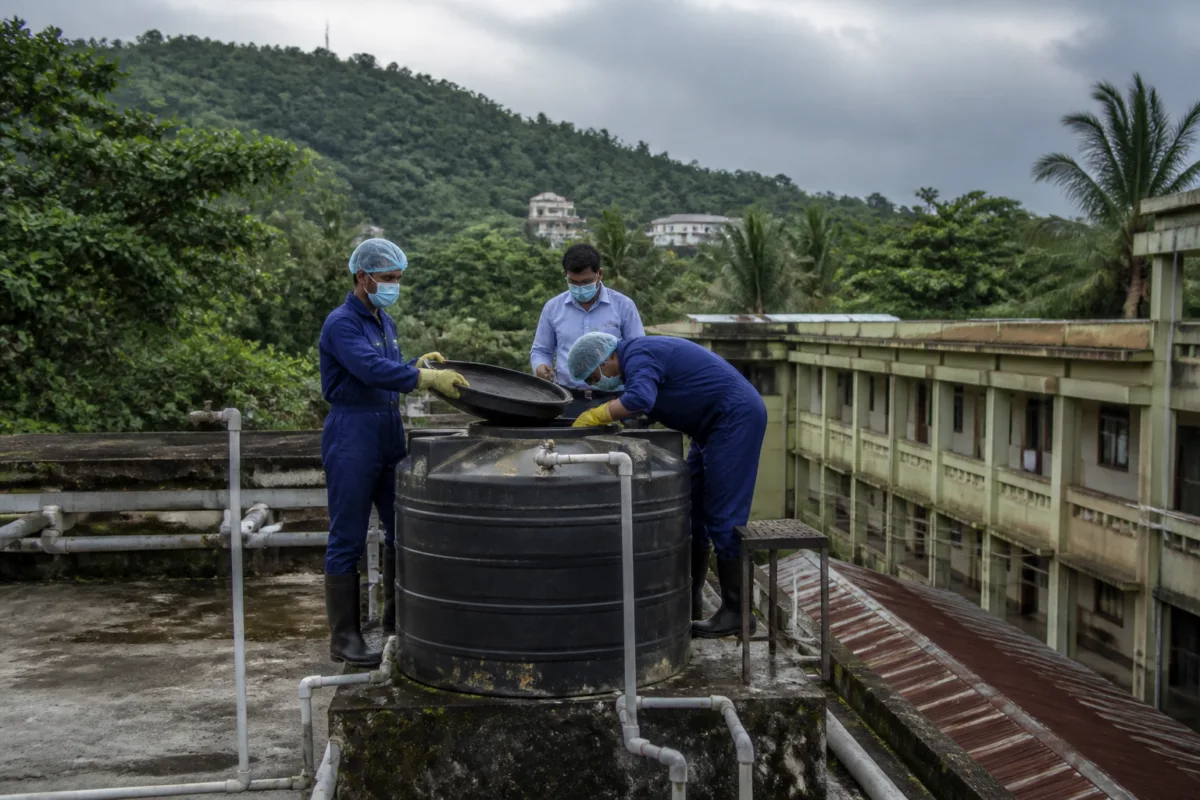
Forty-three students at Assam Engineering College in Guwahati fell ill after consuming contaminated water and food prepared with it, following the discovery of a dead monkey in an overhead hostel water tank, according to the college principal. The affected students were shifted from Hostel No. 7, and the tank was cleaned and disinfected.
The carcass was found in the hostel’s overhead water tank after students complained of a foul smell in the water and reported symptoms including vomiting, stomach ache and diarrhoea. The monkey is suspected to have drowned on Friday night, while some students began reporting stomach pain on Saturday, principal Dr Amrita Ganguly told the Times of India.
Ganguly said 40 of the 80 students staying in the hostel experienced minor illnesses such as vomiting and stomach ache, while three reported diarrhoea. The students received treatment at the Government Ayurvedic College and Hospital near the engineering college.
Doctors from the pathology department of Apollo Hospital also visited the campus on Tuesday to conduct blood tests on all 80 students living in the hostel. The principal said the students had since resumed attending classes.
The incident has prompted the college to relocate the students to another hostel and disinfect the affected water tank. The report did not specify the duration for which the tank water had been contaminated or whether laboratory results from the tests had been released.
The college has also linked the incident to a recurring problem involving monkeys entering its campus from a hill behind the institution. Ganguly said hundreds of monkeys frequently entered the premises, particularly in the afternoons, while searching for food. According to her, the animals often broke the lids of water tanks, creating a risk to water safety.
The monkey presence has affected other parts of campus life as well. Ganguly said students were unable to use the playground safely because of the animals. She also said a student had recently been bitten by a monkey and required medical treatment, including anti-rabies treatment.
The principal said the college had written to the Forest Department two or three times seeking intervention. She said the institution did not have the resources or equipment needed to address the growing monkey problem and urged the department to take appropriate measures.
The immediate response has focused on relocating students, treating those who fell ill, testing the hostel residents and cleaning the water tank. Further medical findings and the Forest Department’s response remain pending.

