


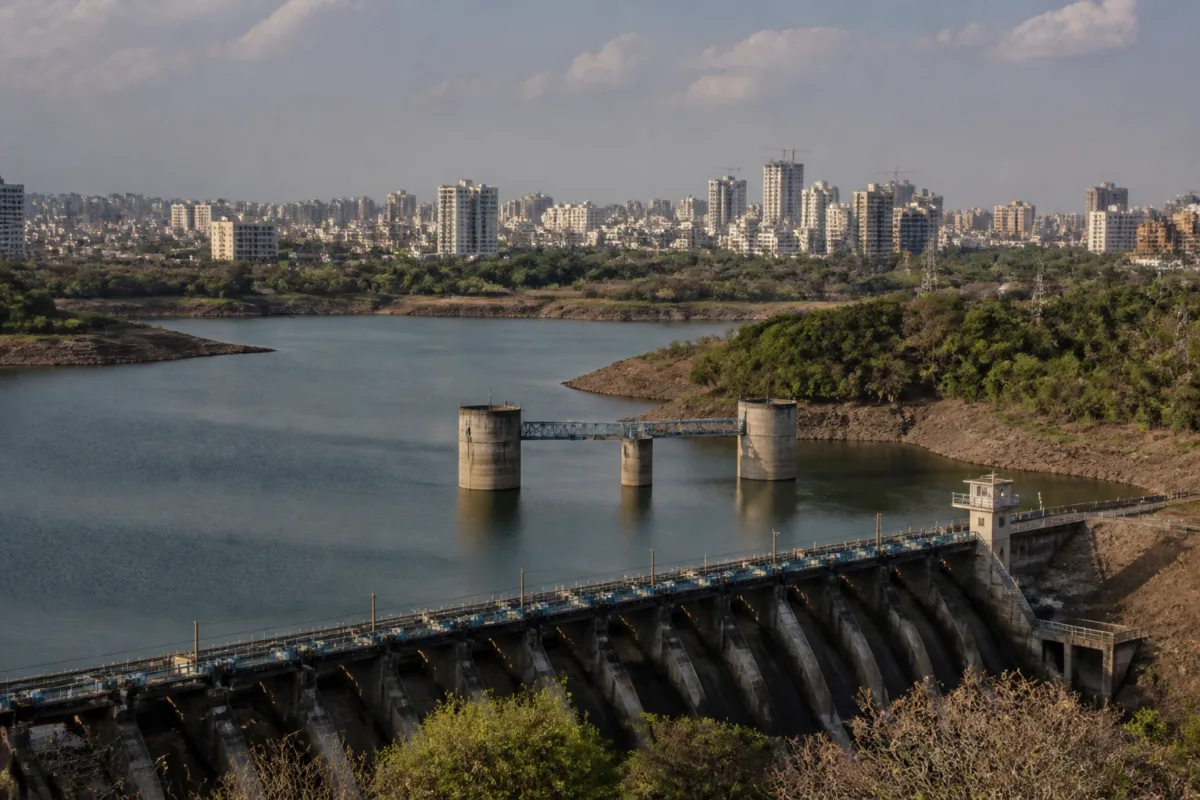
Pune’s municipal water allocation for 2026-27 has triggered a fresh dispute, with opposition leader Nilesh Nikam asking Chief Minister Devendra Fadnavis to raise the city’s quota from 11.33 TMC to at least 16.192 TMC. Nikam made the demand in a letter, arguing that the allocation does not account for population growth, the 34 villages merged into the Pune Municipal Corporation and losses in the distribution network.
According to the report by Pudhari, the Pune civic body had sought 21.34 TMC for the year, while the Water Resources Department fixed the quota at 11.33 TMC. Nikam said the city’s population has crossed 83 lakh and could increase further as global capability centres, industries and other commercial investments expand in and around Pune.
The dispute centres on how the city’s actual water requirement has been calculated. Nikam said the allocation did not adequately consider the needs of the 34 recently incorporated villages, water leakage and transmission losses in pipelines. He also objected to a deduction of 4.857 TMC based on water expected to be available through reuse, wells and borewells.
The letter reportedly stated that water from many wells and borewells in Pune is polluted and cannot be treated as a dependable source for drinking or general municipal use. The calculation of the quota, Nikam argued, should therefore distinguish between nominally available water and sources that can safely serve the city’s potable water needs.
Pune’s water allocation is also linked to the city’s sewage treatment capacity. The municipal corporation currently treats about 3 to 4 TMC of sewage every year and supplies the treated water for irrigation through the Mundhwa jackwell, according to the report. Nine more sewage treatment plants are expected to become operational within the next two months. Nikam said the additional treatment capacity would increase the supply of recycled water for agriculture and should not be used as a reason to reduce the city’s drinking-water allocation.
The letter also connected the quota dispute with Maharashtra’s economic development plans for the Pune region. More than 360 multinational companies in engineering, technology, pharmaceuticals and finance are reported to be operating around the city. The state government is seeking to develop Pune as a global capability centre, while future industrial, data-centre and commercial investment could bring more workers and residents to the region.
Nikam described a lower water quota as inconsistent with those development plans and asked the chief minister to intervene. The report does not state whether the chief minister or the Water Resources Department has accepted the demand, revised the allocation or issued a response. The next step is a decision on Pune’s 2026-27 quota and the treatment of reuse, leakage and newly merged areas in that calculation.

