


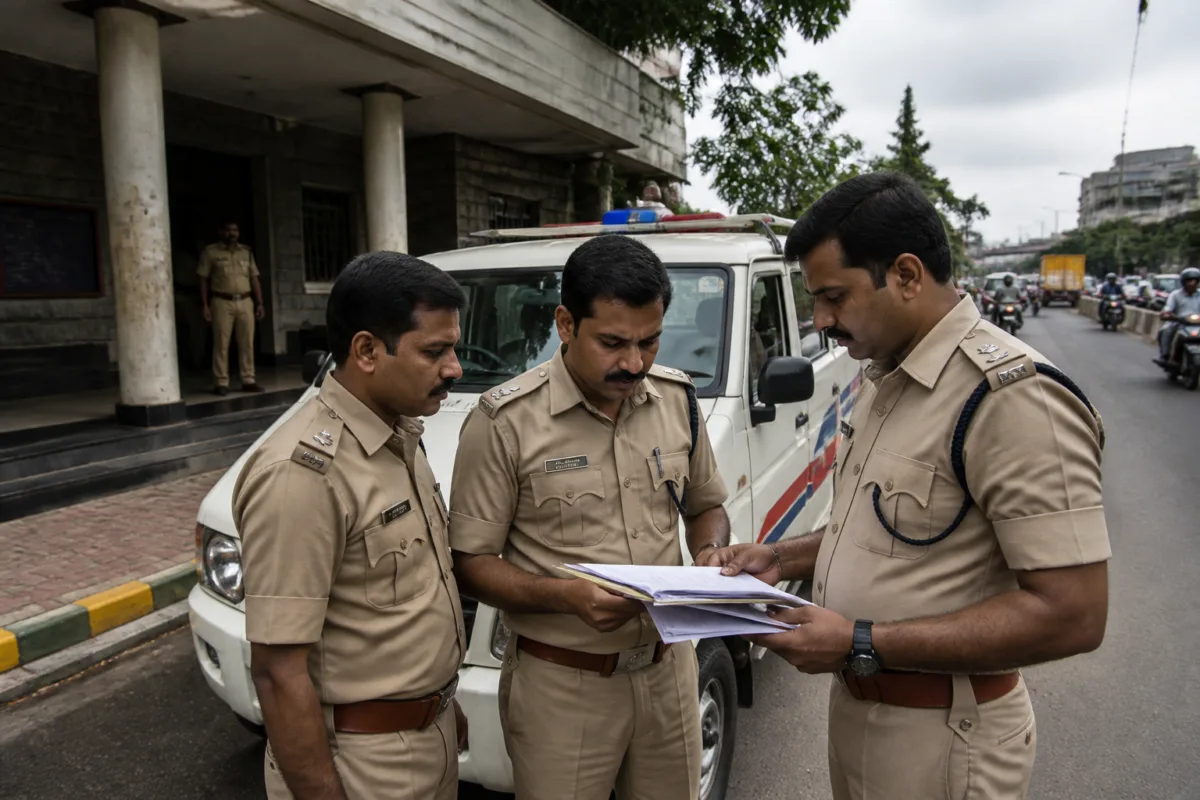
The Karnataka High Court has made coordination with local police mandatory when law-enforcement teams from another state enter the state to investigate a case, warning that uncoordinated operations can create serious risks for citizens amid the rise of cyber fraud, digital-arrest scams and impersonation of officials.
Justice Suraj Govindaraj, sitting on a single-judge bench, issued the direction while partly allowing petitions filed by Tumakuru-based tobacco businesses Shiv Enterprises and Siddhi Agencies. The petitions challenged action taken by Wadgaon police from Maharashtra’s Kolhapur district.
The court declared the interstate investigative operation carried out by the Wadgaon police against the petitioners unlawful, but declined to quash the first information report registered against them. The court said police officers travelling to another state for an investigation must inform the local police in advance and seek their assistance.
According to the report, the case began on August 19, 2025, when Maharashtra police stopped a truck on the Bengaluru–Pune National Highway. Pan masala and chewing tobacco products were allegedly seized from the vehicle. A case was subsequently registered in Kolhapur under provisions relating to the Food Safety and Standards Act and the Bharatiya Nyaya Sanhita.
The first information report named unidentified persons as accused and did not identify the two Tumakuru businesses as accused, according to the court proceedings. Despite this, a six-member team from the Wadgaon police station conducted searches at the petitioners’ establishments and issued notices requiring the firms’ partners to appear in Kolhapur.
The High Court found that the Wadgaon police had acted beyond constitutional and statutory limits by conducting the operation without coordinating with the local police. The order does not, however, end the underlying criminal case, since the court refused to cancel the FIR.
The court also linked the procedural requirement to the changing nature of public safety risks. It observed that cyber fraud, digital-arrest schemes and people impersonating investigative or other government officials have increased. Residents may not be able to easily verify whether officials arriving at their homes or offices are genuine, creating an opportunity for criminals to threaten or exploit them.
The direction places local police coordination at the centre of interstate investigations. Such coordination can provide a basic mechanism for verifying the identity and authority of visiting officers, while also creating an official record of investigative action within the jurisdiction where searches, seizures or questioning take place.
The order is particularly relevant for businesses and residents located along major interstate transport and commercial corridors, including the Bengaluru–Pune route. It clarifies that the authority of an investigating team from one state does not remove the need to observe procedural and territorial safeguards in another state.
The High Court’s order requires police teams entering another state for investigation to notify the local police beforehand and obtain their assistance. The criminal proceedings connected to the Kolhapur case will continue, as the court has not quashed the FIR.

