


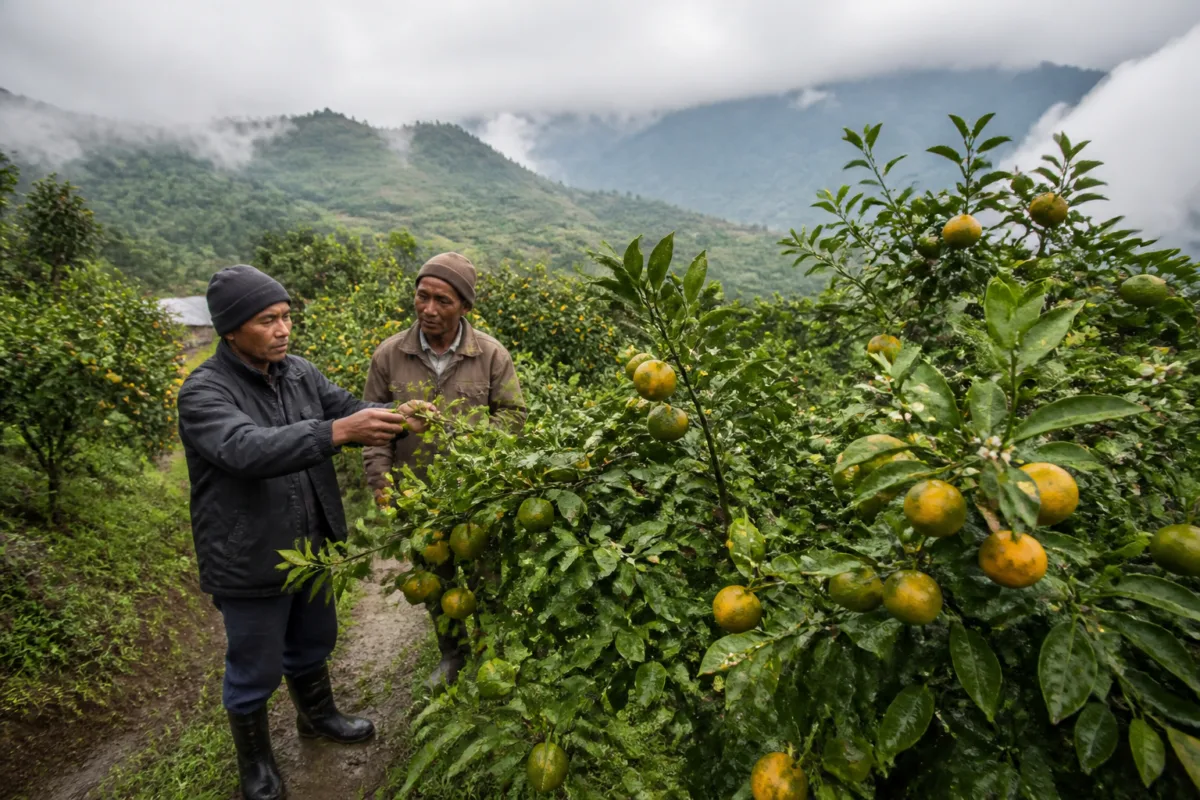
Darjeeling orange output may decline this year after untimely rainfall disrupted flowering and caused premature fruit drop in parts of Mirik, the hills’ main orange-growing belt, while fruit-fly attacks have added to production losses, growers’ representatives said.
Manoj Subba, chairman of the Darjeeling Orange Farmers Producers Organisation (DOFPO), said sudden changes in weather had affected cultivation compared with the previous year. Mirik, often described as the “orange bowl” of the Darjeeling hills, contributes a substantial share of the region’s annual production.
“Changes in weather conditions, including untimely rainfall, affected the trees during the flowering stage, resulting in premature fruit drop. Besides climatic variations, fruit fly attacks have also impacted production,” Subba said.
Around 15,000 farmers are engaged in orange cultivation across the region, according to Subba. Many are based in Sourenibusty’s upper and lower areas, Bobarjee, Paljor, Duptin and other hilly settlements in Mirik block. The crop is an important part of the local rural economy and contributes to the identity of Darjeeling’s hills alongside tea.
A source in the district horticulture department said orange production in the Darjeeling hills was around 19,000 tonnes last winter, despite landslides and floods in October. A significant portion of that output came from Mirik and Sivitar in the Kurseong subdivision.
The department oversees orange cultivation across five blocks: Kurseong, Mirik, Rangli Rangliot, Darjeeling-Pulbazar and Jorebunglow-Sukhiapokhri. Cultivation across these areas covers around 2,500 hectares. Growers receive training and technical guidance from the regional research centre of Uttar Banga Krishi Viswavidyalaya in Kalimpong and the district horticulture department.
The weather-related concerns come as Darjeeling mandarins enter a new phase of market recognition. The fruit received a Geographical Indication tag on November 24, 2025, and DOFPO representatives are working to register orange growers so they can benefit from the recognition.
District officials, however, said reports from some production areas remained encouraging. Oranges in Sivitar have started maturing, and officials said they had not received adverse reports from the region. The department has also provided assistance to growers in Mirik to protect the fruit against fungal attacks.
“The reports received from orange growers in Sivitar are encouraging. Oranges in the Mirik area are likely to reach full maturity later this month. We have provided necessary assistance to growers in Mirik to protect the fruit against fungal attacks. We are hopeful that production will remain at a level similar to last year,” said Pradipta Dutta, the district horticulture officer of Darjeeling.
The final assessment will depend on the crop’s maturity across the five hill blocks and the extent of losses reported by growers. Officials are expecting the Mirik oranges to reach full maturity later this month.

