


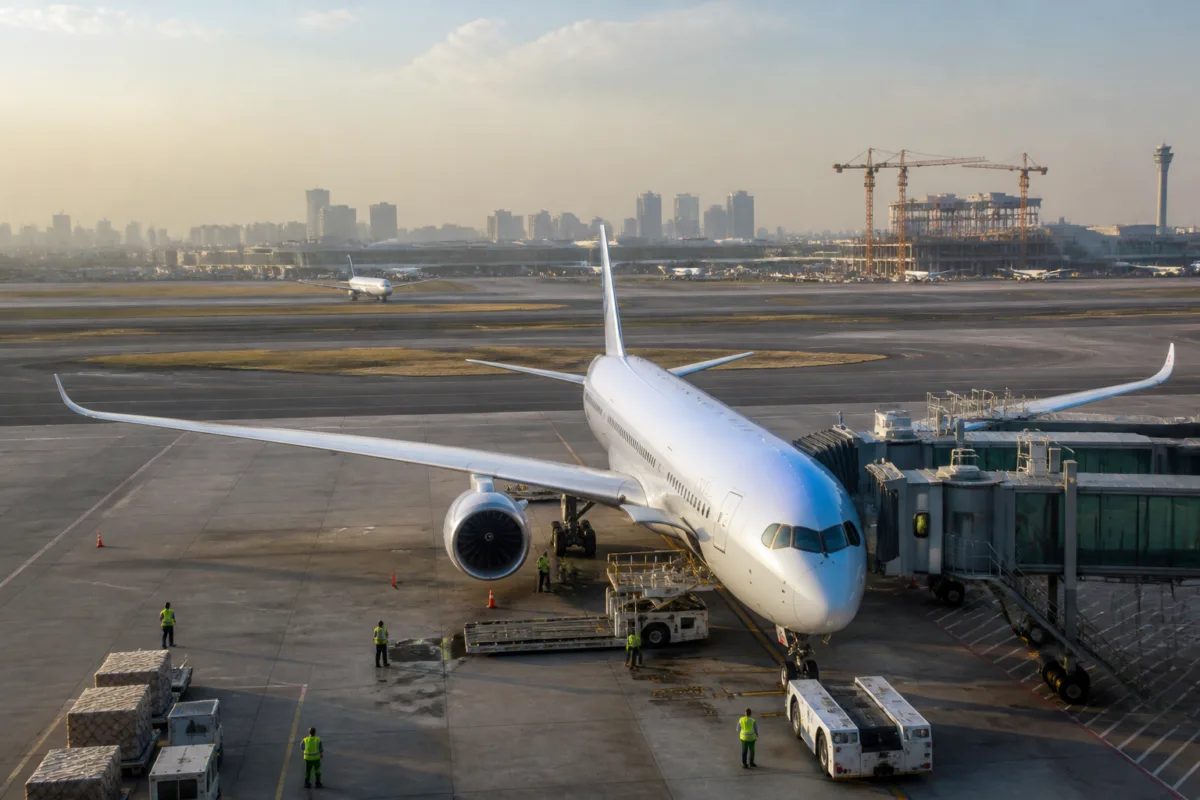
IndiGo’s long-haul expansion is moving ahead even as higher fuel costs, rupee depreciation and weaker quarterly traffic put pressure on the airline’s finances. The carrier expects to begin receiving Airbus A350 wide-body aircraft in the second quarter of 2028 and has identified Navi Mumbai airport as an important opportunity for its international network. Together, these developments show an airline trying to build a larger role in India’s global connectivity while protecting the low-cost operating model that has driven its growth.
At his first in-person briefing since becoming chief executive in August, Willie Walsh said IndiGo saw “incredible opportunities” in the long-haul market. He also acknowledged that the operating environment remained difficult and said the airline would continue to navigate the pressures facing the industry. The immediate challenge is that expansion requires large commitments of capital and capacity at a time when the existing network is already absorbing higher operating costs.
IndiGo reported a net loss of Rs 1,879.1 crore for the July-September quarter, its third consecutive quarterly loss, according to the report. Higher fuel expenses and rupee depreciation weighed on the result. Fuel costs rose 67.2% year-on-year to Rs 9,966.8 crore from Rs 5,961.8 crore in the corresponding period last year. The increase is significant because fuel is a direct operating cost: when prices rise, airlines must either absorb the impact, raise fares, reduce flying or find savings elsewhere.
The airline has already reduced capacity in response to the operating pressures. Its available seat kilometres, a measure of capacity offered to passengers, declined 1% to 40.8 billion during the quarter. Passenger numbers fell 4.7% to 2.7 crore, while the load factor declined 2.2 percentage points to 80.3%. These numbers indicate that the airline was carrying fewer passengers and operating slightly less capacity, even as it generated higher passenger ticket revenue.
Passenger ticket revenue increased 29.3% to Rs 20,652.2 crore. Total income rose 24% year-on-year to Rs 24,311.9 crore. The contrast between rising revenue and a large quarterly loss underlines the pressure created by the cost base. Growth in ticket income alone did not offset the increase in fuel expenses and the effect of currency movements. For a carrier that has built its position around competitive pricing, preserving cost discipline is central to whether expansion can remain financially sustainable.
Walsh said IndiGo would focus on maintaining a competitive cost base while dealing with elevated fuel expenses. He had also said the airline expected fuel costs to remain high for some time and would continue exploring internal measures to offset the increase. The statement points to a structural tension in the airline’s growth model: the company wants to add longer international routes, but the economics of those routes will depend on aircraft utilisation, fuel exposure, passenger demand and the ability to keep operating costs under control.
The planned A350 deliveries mark a change in the type of network IndiGo is preparing to operate. The airline currently has more than 400 aircraft and operates over 2,100 flights daily. As of September 30, its fleet stood at 442 aircraft, while it operated a peak of 2,020 daily flights during the July-September quarter, including non-scheduled services. The A350 programme would add wide-body aircraft to a fleet and operating system that has so far been associated primarily with high-frequency operations using narrower aircraft.
The significance of the move is not only the size of the aircraft. Wide-body operations require an airline to manage longer flight cycles, larger cabin capacity and a different balance between frequency and seat volume. They also expose the carrier to longer periods of fuel-price and demand risk on individual flights. The supplied report does not establish IndiGo’s planned routes, fares or detailed deployment strategy for the A350s. It does, however, record Walsh’s view that the airline has the necessary ingredients to succeed in the long-haul market.
Navi Mumbai airport adds an important metropolitan infrastructure dimension to that expansion. Walsh described the upcoming airport as a significant opportunity and said IndiGo’s decision to shift some international flights there had been taken in the airline’s interest. The move suggests that the airline is considering airport capacity as part of its network strategy, rather than treating Mumbai’s aviation demand as dependent on a single operating location.
For a large metropolitan region, a second airport can change how international connectivity is distributed across the urban system. It can provide airlines with another operating base and allow traffic to be allocated between facilities. For passengers, the effect depends on where flights are shifted, how the two airports are connected to the region and whether the new capacity is matched by reliable access. The report does not provide details of IndiGo’s planned international routes from Navi Mumbai or the airport’s opening schedule, so the operational effect cannot yet be assessed.
The airport decision also illustrates why aviation expansion cannot be evaluated only through fleet numbers. IndiGo’s fleet, flight schedule and cash position are connected to the infrastructure available around its hubs. The airline reported a cash balance of Rs 52,685.4 crore at the end of September, including Rs 39,929 crore in free cash and Rs 12,756.4 crore in restricted cash. At the same time, its total debt, including capitalised operating lease liabilities, stood at Rs 87,303.1 crore. These figures show the scale of resources supporting the airline’s network, but they do not by themselves establish how much future expansion will cost or how quickly new aircraft will generate returns.
The operating data also places the long-haul plan in context. IndiGo remains a very large domestic and regional operator, with more than 2,100 daily flights and 442 aircraft as of September 30. Yet the September quarter showed that scale does not insulate the airline from industry-wide shocks. A 67.2% increase in fuel expense, a 4.7% decline in passenger numbers and a lower load factor affected performance despite higher ticket revenue and total income.
This is the central institutional question behind IndiGo’s expansion: can a high-volume, cost-focused airline extend its model into long-haul flying without losing the cost advantage that made its network competitive? The answer will depend on decisions that are not yet detailed in the supplied report, including how the A350 fleet is deployed, which international markets are targeted and how operations are divided between existing facilities and Navi Mumbai airport.
The immediate evidence supports two conclusions. IndiGo continues to see substantial growth potential, particularly in long-haul international travel and the new Navi Mumbai airport. At the same time, the airline is expanding from a position of considerable financial pressure, with three consecutive quarterly losses, sharply higher fuel expenses and lower passenger traffic in the latest reported quarter.
The next important milestones are the airline’s response to sustained fuel costs, its capacity decisions and the beginning of A350 deliveries expected in the second quarter of 2028. The way IndiGo uses Navi Mumbai airport will also reveal whether the new facility becomes merely an additional departure point or a meaningful part of the airline’s international network strategy.

