


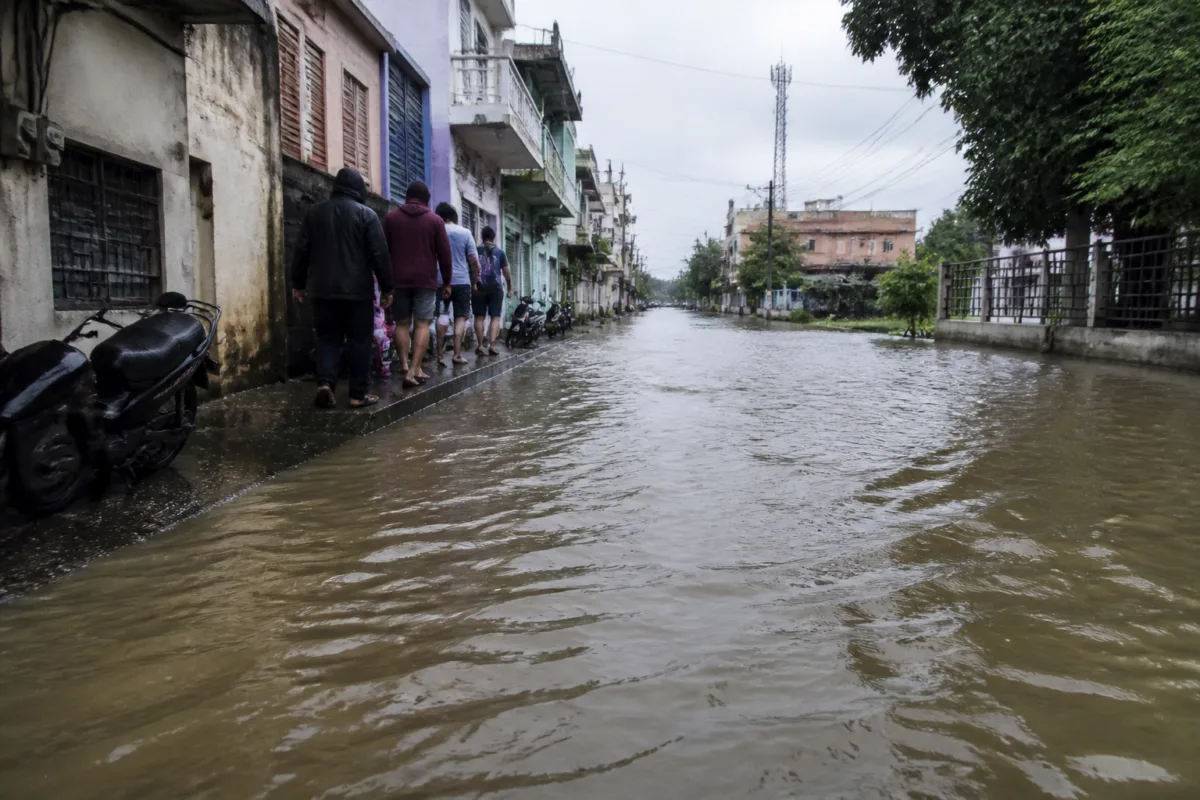
Baramati heavy rainfall brought 158 mm of rain to the city by 7 am on November 2, flooding low-lying areas and leaving several roads with knee-deep water, according to Baramati tehsildar Swapnil Rawade. The intense spell lasted for roughly two-and-a-half to three hours and affected normal activity across the city.
Rain began in the early hours and intensified sharply, keeping many residents awake. The rainfall continued strongly until about 8.30 am, with water accumulating in several parts of Baramati where drainage capacity was unable to clear the flow quickly enough.
The heaviest impact was reported on roads and in low-lying neighbourhoods. The volume and speed of the runoff left little space for the water to drain away, resulting in pools of water and knee-deep accumulation on several roads. The waterlogging affected daily movement and other routine activities in the city.
Rawade confirmed the 158 mm rainfall recorded in Baramati by 7 am. The measurement represents a major concentration of rain over a short period, rather than a prolonged spread of rainfall across several days. The report did not provide details of injuries, property damage, traffic diversions or the functioning of specific drainage pumping arrangements.
The rainfall also brought relief to residents and farmers after Baramati had faced concerns related to water scarcity in recent days. The rain was described locally as beneficial for agriculture, although its concentration over a few hours simultaneously exposed the difficulties of managing rapid runoff in built-up areas.
Baramati does not usually receive rainfall of this intensity, according to the report. The contrast between the relief created by additional water and the flooding caused by the sudden downpour highlights the immediate operational challenge for the city: rainfall that benefits farms and water resources can still disrupt urban mobility when low-lying roads and drainage routes cannot absorb or carry away the flow.
The report did not state how long the water remained on the affected roads or whether municipal teams had begun clearance and drainage operations. Further information on road conditions, damage and restoration of normal movement was not available in the supplied account.

