


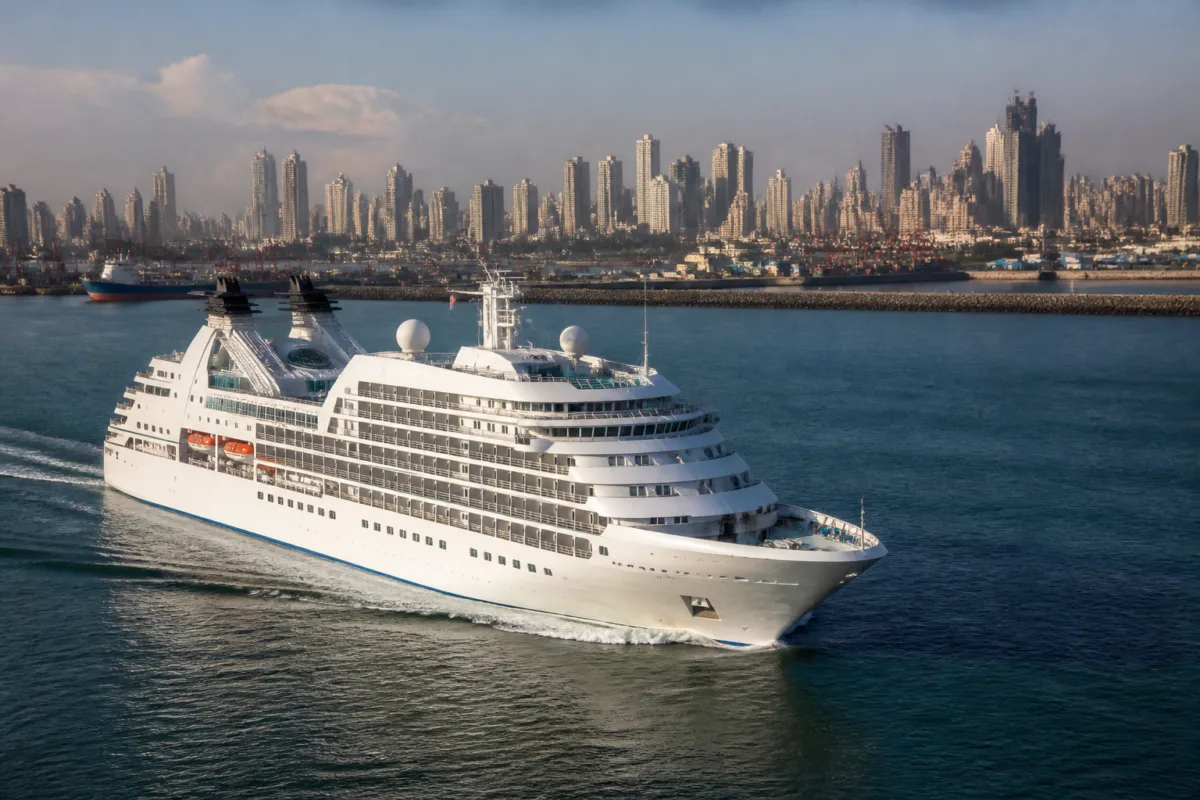
India cruise tourism is entering an expansion phase, but Cordelia Cruises’ ambition to place the country among the world’s five largest cruise markets by 2032 will depend on more than adding ships. It will require sustained demand, capable coastal infrastructure, viable destinations, international connectivity and an operating model that can withstand fuel-price volatility.
Cordelia Cruises President and CEO Jurgen Bailom said the company plans to expand its fleet and tap the potential of domestic cruise travel. The company currently operates Cordelia Empress and Cordelia Sky, while a third vessel, Cordelia Sun, is likely to join the fleet earlier than scheduled. Cordelia Sky has begun commercial operations from Mumbai.
The announcement was made at a press conference aboard Cordelia Sky off the Mumbai coast. Bailom said the company had further fleet options but could not disclose specific expansion plans because Waterways Leisure Tourism Limited, the operator of Cordelia Cruises, is now a listed entity and is subject to market regulations.
The company’s expansion is already changing the geography of its operations. A regulatory filing said the higher deployed capacity has broadened its domestic and international itinerary network. Weekend sailings, Goa and Lakshadweep cruises, and international itineraries to the Maldives and Sri Lanka are operating across Mumbai and Kochi. Cordelia is also developing additional destination offerings, including private destinations, and now visits three locations in Lakshadweep compared with one earlier.
This makes the company’s plan relevant to urban infrastructure because cruise tourism is not only a ship-based business. It depends on the relationship between vessels, ports, coastal destinations, transport connections, hospitality services and local visitor economies. Mumbai and Kochi are serving as operational bases, while Goa, Lakshadweep and overseas destinations form part of the itinerary network. The scale and quality of those connections will influence whether fleet growth translates into a broader tourism market.
The company’s stated target is ambitious. Bailom said India should become one of the world’s five largest cruise markets by 2032, referring to China’s position before the COVID-19 pandemic as an example of how quickly a large national market can grow. The latest 2025 global cruise passenger data from the Cruise Lines International Association, released in April 2026, placed the United States, Germany, the United Kingdom and Ireland, Australia, and Canada among the top five source markets. India does not appear among the top 10 markets in the published rankings.
The gap between India and those markets also shows why fleet expansion alone cannot define market development. The CLIA figures recorded 20.6 million passengers from the United States, 2.8 million from Germany, 2.5 million from the United Kingdom and Ireland, 1.45 million from Australia and 1.27 million from Canada. These figures measure cruise source markets, rather than the number of ships operating from a country. They indicate the scale of established demand that India would have to approach if it is to enter the top tier globally.
Bailom said approximately 200,000 Indians take international cruises each year, before Cordelia Cruises entered the domestic market. He also said Cordelia had carried one million passengers. The company’s assessment is that around 13-14 per cent of Indians can afford to cruise in India, representing a potential market of about 200 million people. These are company statements and were not accompanied in the supplied report by an independent market-size study. They nevertheless point to the central commercial proposition: domestic itineraries could reduce the need for Indian customers to travel abroad to access cruise holidays.
That proposition places affordability and access at the centre of the market. Domestic sailings from Mumbai and Kochi can create a simpler entry point for passengers who may not want to arrange international flights, visas or overseas accommodation. Weekend itineraries can also make cruise travel compatible with shorter leave periods. However, the supplied material does not establish how fares, passenger profiles, occupancy rates or repeat travel are evolving. Those indicators will be important in assessing whether the market is broadening beyond a relatively limited customer base.
The infrastructure challenge is equally significant. India has a coastline of around 12,000 km, according to Bailom, offering a large geographical base for cruise tourism. A long coastline provides opportunity, but it does not automatically create usable cruise destinations. Ports need passenger-handling capacity, reliable access, tourism services and onward connections. Islands and coastal locations also require careful management of visitor movement, waste, water, energy and environmental pressures. The supplied report does not provide details of the infrastructure available at the destinations Cordelia currently serves.
The network’s expansion from one to three Lakshadweep locations illustrates the importance of destination capacity. Adding ports of call can make itineraries more attractive and distribute visitor spending, but each location must be able to handle arrivals without weakening the local environment or basic services. The company’s plan to develop private destinations adds another institutional question: how such destinations will be integrated with public infrastructure, local economies and regulatory oversight is not established in the available material.
The company is also looking beyond leisure passengers. Bailom highlighted corporate travel, meetings, incentives, conferences and exhibitions, as well as weddings, as growing contributors to the business. Longer itineraries are being considered to attract international tourists. This broadens the role of cruise vessels from holiday transport to floating venues that compete with hotels, convention facilities and destination resorts. It also means the economic impact will depend on how much activity takes place on board and how much reaches the cities and coastal communities on shore.
Operating costs create another constraint. Bailom said fuel prices had doubled and that the increase would have added Rs 40 crore to profit in the company’s last earnings period if prices had remained at the previous year’s level. He said the company remained profitable and that cruise operators had more flexibility than airlines in responding to higher fuel costs because they could alter itineraries, reduce speeds and improve operational efficiency.
Fuel exposure is particularly important for a cruise business that is expanding its network. Longer itineraries and international routes may increase the appeal of the product, but they can also increase fuel consumption and operational complexity. Adjusting speed or destinations may protect margins, but it can also affect journey times, port calls and the experience promised to passengers. The source material does not provide the company’s fuel costs, route-level profitability or emissions data, so the precise effect of expansion cannot yet be measured.
The institutional landscape is spread across several layers. The cruise operator controls fleet deployment, schedules and commercial strategy. Listed-company disclosure rules affect what management can say about future expansion. Ports and coastal authorities influence the physical ability to receive ships and passengers. Tourism administrations and destination bodies shape visitor facilities and local integration. For Mumbai and Kochi, the growth of cruise traffic also intersects with urban mobility, airport and rail connectivity, road access and the capacity of surrounding hospitality districts.
That coordination will determine whether cruise tourism becomes a durable part of India’s coastal economy or remains concentrated around a small number of sailings and destinations. The current expansion provides an operating base, but the available evidence does not yet show whether port capacity, local transport and destination services are expanding at the same pace as the fleet.
Cordelia’s target therefore represents both a market ambition and a test of India’s coastal infrastructure. The company has two ships in operation, expects Cordelia Sun to arrive earlier than planned, and is adding domestic and international destinations. It has also reported one million passengers and continued profitability despite higher fuel costs. What remains uncertain is whether these company-level gains can develop into the broad, high-volume source market reflected in the global rankings.
The developments to watch are the entry of Cordelia Sun, further fleet decisions that can be disclosed under market regulations, the performance of Mumbai and Kochi itineraries, expansion across Lakshadweep and other destinations, and the company’s ability to attract international passengers through longer routes. Together, these indicators will show whether India’s cruise push is building a connected tourism infrastructure system or simply adding capacity ahead of wider market development.

