


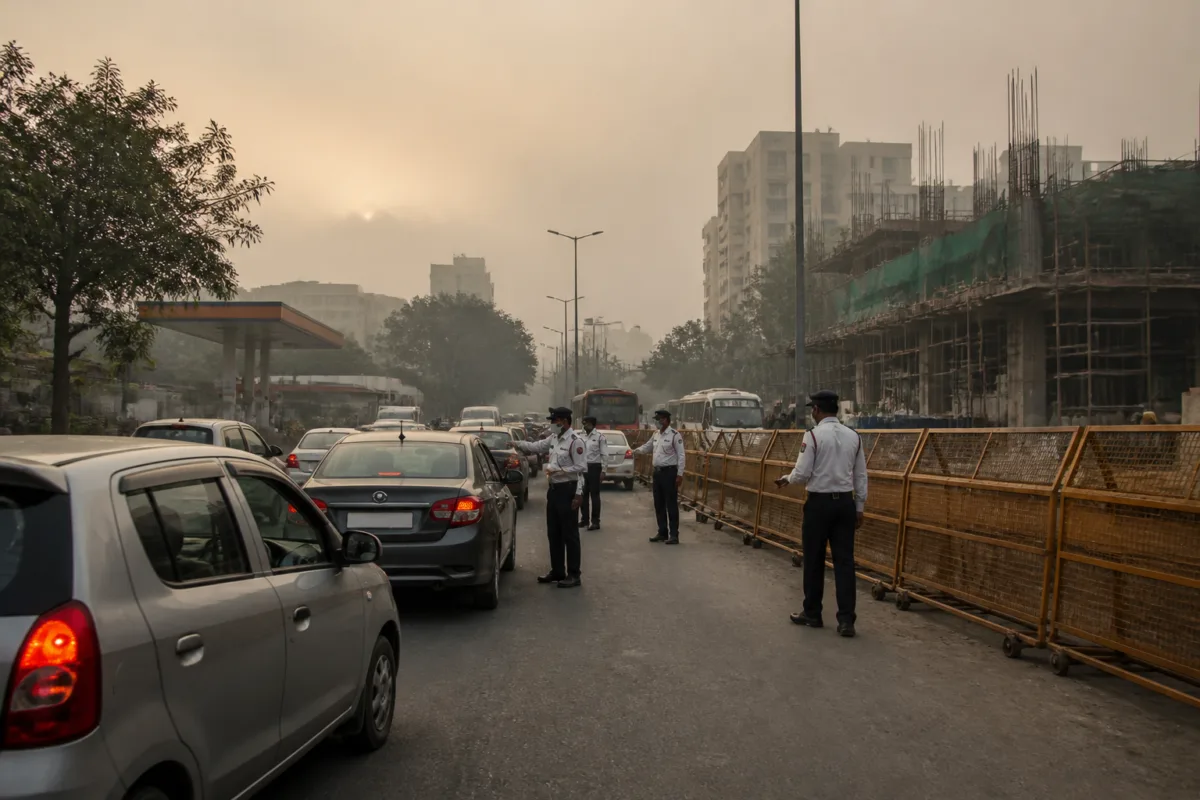
Delhi’s winter pollution curbs came into force on November 1, bringing restrictions on older vehicles registered outside the capital, dust-generating construction, office attendance and private-car use as the government begins its seasonal effort to contain deteriorating air quality.
The measures will remain in force for different periods until February 28. The ban on non-Delhi-registered motor vehicles below BS-VI emission standards and restrictions on dust-generating demolition and outdoor civil construction activities will apply from November 1 to January 31. A complete ban on construction and demolition, subject to specified exemptions, will separately apply from December 10 to January 20.
Delhi government and private offices must implement 50% work from home between November 1 and January 31. Essential and emergency services are exempt. In government offices, administrative Secretaries and Heads of Departments must attend regularly and may call additional officers in when required to maintain essential public services.
Parking charges at authorised municipal parking sites will double from November 1 through February 28. Parking facilities owned and managed by the Delhi Metro Rail Corporation are exempt because they support public transport connectivity and park-and-ride services. Delhi and Municipal Corporation of Delhi offices will also follow staggered timings through February 28. Delhi Government offices will operate from 10 a.m. to 6:30 p.m., while civic body offices will function from 8:30 a.m. to 5 p.m.
The vehicle restrictions exempt CNG and electric vehicles, ambulances, fire tenders, police vehicles and other emergency or sovereign-duty vehicles. The Environment Department may notify additional exemptions. For construction, essential public infrastructure projects are exempt, as are finishing, plumbing and electrical works within sites, provided they comply with construction and demolition waste rules and dust-control requirements.
Fuel stations will not sell fuel to vehicles without a valid Pollution Under Control Certificate. The rule has no stated exemption. Vehicles identified through Automatic Number Plate Recognition cameras or other checks may be penalised, according to the report. The measures are intended to reduce vehicular emissions, construction dust and traffic during the winter period, when pollution episodes typically create sharper public-health and mobility pressures.
Enforcement will involve the Transport Department, Delhi Traffic Police, Delhi Pollution Control Committee and municipal authorities. The Chief Minister’s Office said special enforcement teams, border and fuel-station ANPR cameras and an AI-enabled Integrated Command and Control Centre would be used to monitor compliance. Traffic authorities may issue e-challans and impound non-compliant vehicles under applicable rules. Transport authorities have also coordinated with neighbouring States to stop non-BS-VI public buses at State borders.
Construction sites will face inspections by the DPCC, municipal bodies and other agencies. Unauthorised construction or demolition can attract immediate work-stop notices, environmental compensation penalties, sealing and other legal action wherever necessary. The restrictions are scheduled to remain in effect through the specified end dates, with the longest-running measures continuing until February 28.

