


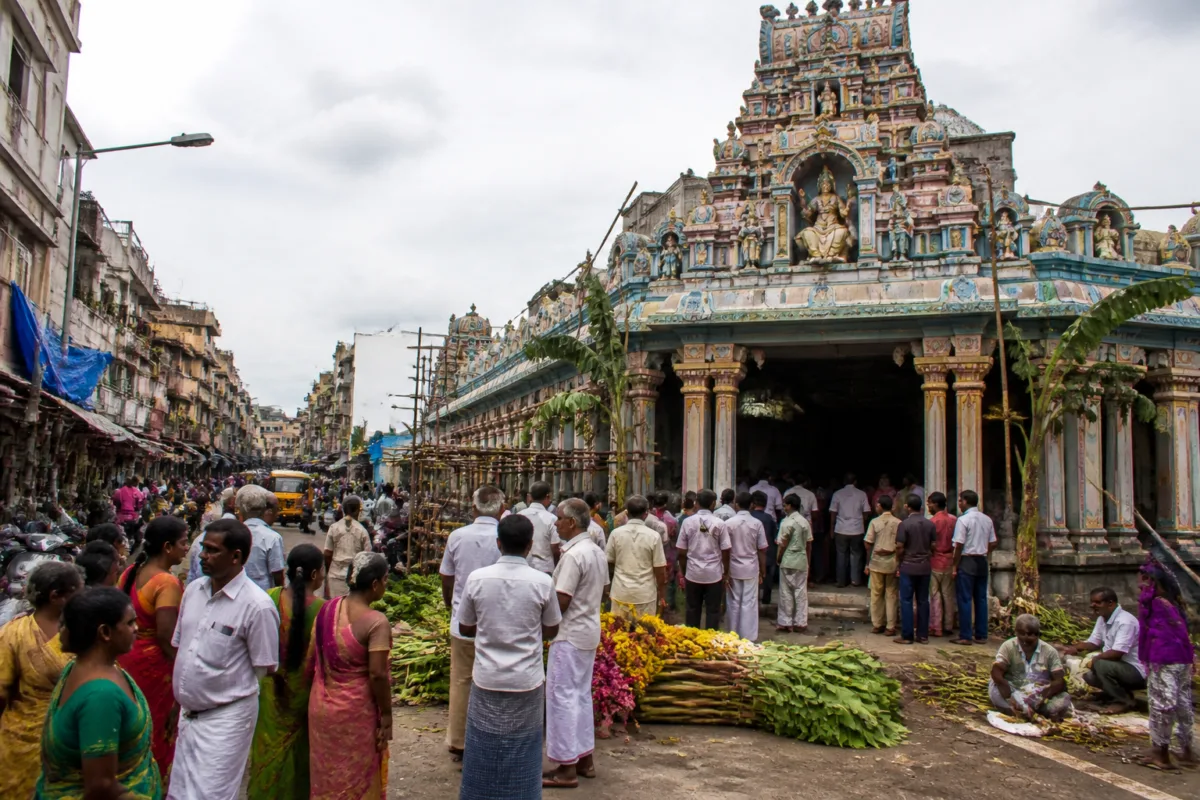
The conduct of the Kandasashti festival at Chennai’s historic Sri Muthukumaraswamy Temple, popularly known as Kandakottam, has come under uncertainty after ticket sales, procurement preparations, and the temple’s financial administration remained unresolved ahead of the event scheduled to begin on November 10.
Devotees said the temple usually begins selling tickets for the annual Laksharcharnai soon after Vijayadasami. This year, however, ticket sales had not started at the time of the report. Around 35,000 tickets, priced at ₹300 each, are sold every year to devotees who wish to participate in the archanai.
A. B. Srinivasan, a 65-year-old devotee, said there was no visible indication that arrangements for the festival had begun. Saravanan, another devotee, said this year’s event would mark the 99th consecutive Kandasashti festival and traditionally includes grand concerts. Participants in the archanai are also given prasadam, including a bucket.
Preparatory tenders for items including pandals, coconuts, bags, and flowers had also not been called, according to the devotees. The festival is held at the over 500-year-old shrine in Rattan Bazaar, Park Town, which attracts participants for its annual religious programme.
The concerns have also exposed a dispute over the temple’s administrative and financial control. Kandakottam is a scheme temple, meaning it belongs to a particular community — in this case, the Berri Chettis. A five-member team from the community was selected as trustees last year and has been involved in the temple’s daily administration.
Sendilvellan, one of the trustees, said the executive officer had taken control of cheque-signing powers from the trustees without informing them. He said the trustees were consequently unable to pay even the salaries of temple staff and had lost authority over routine operations.
According to Sendilvellan, the trustees had been managing the temple without problems since last year. He also said a court had directed the Hindu Religious and Charitable Endowments Department to intervene only if there was a problem connected with the temple’s conduct.
Another trustee said the group had been attempting to restore its powers and make arrangements for the festival with only a few days remaining. The dispute has created uncertainty over who is responsible for approving expenses, issuing procurement tenders, and coordinating the arrangements required for the annual event.
The Hindu Religious and Charitable Endowments Department is responsible for overseeing the administration of Hindu religious institutions in Tamil Nadu. Sources in the department said they would look into the matter. No further decision on the festival arrangements or the signatory powers was provided in the report.

