


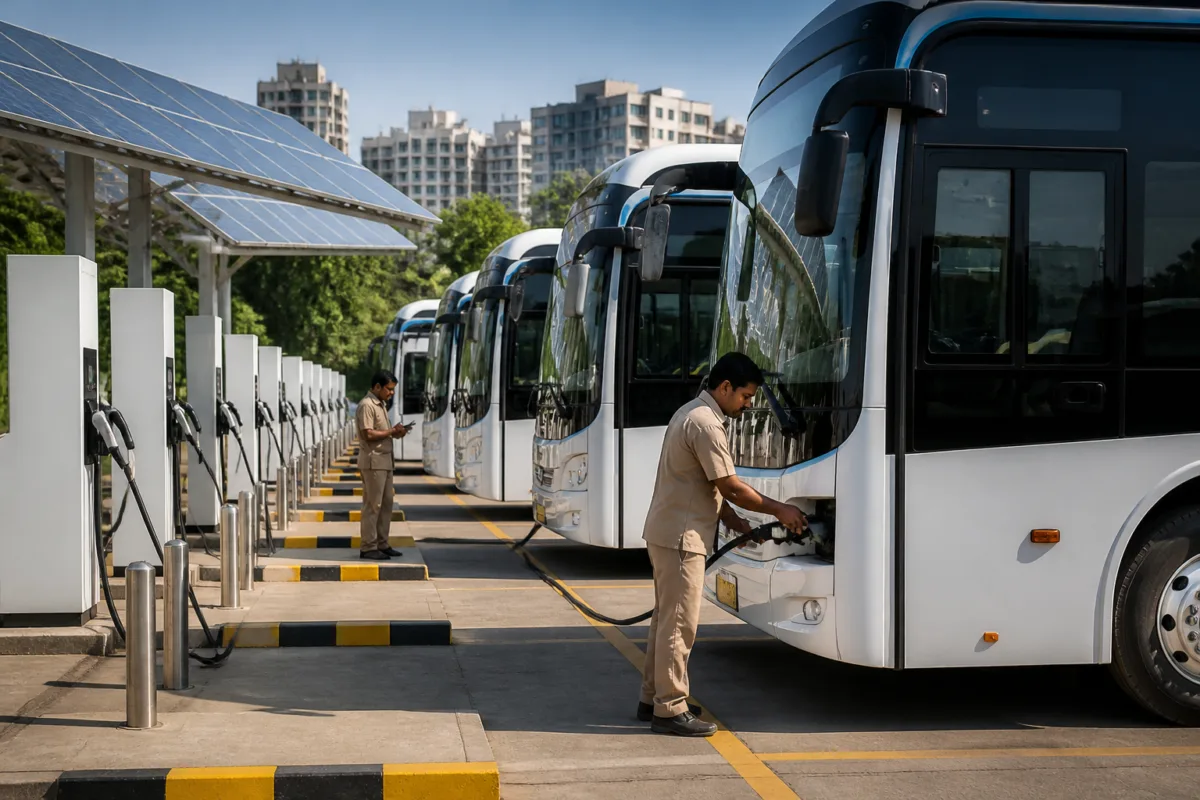
Maharashtra will procure 50,000 electric buses over the next three years, Chief Minister Devendra Fadnavis said while outlining a plan to link the expansion of electric public transport with renewable power and a statewide charging network.
Fadnavis said the move was intended to reduce vehicle-related pollution in cities and make clean public transport a priority. He was speaking at an event where six mobility production projects were inaugurated in his presence, according to a report by Pudhari – Pune.
The announcement places electric buses at the centre of Maharashtra’s transport and energy transition plans. The chief minister said the electricity required to operate the growing electric-bus fleet would also be sourced from green energy. The report did not specify the number of buses to be allocated to individual cities, the procurement model, the bus operators involved or the planned delivery schedule.
Maharashtra’s cities already face rising transport demand, making the availability and reliability of public buses an important factor in how residents travel. Moving a large share of bus operations from internal-combustion engines to electric power would require more than the purchase of vehicles. It would also involve depot upgrades, charging equipment, grid connections, route planning and operational changes, although the report did not provide details of these requirements.
Fadnavis said Maharashtra had become a hub for electric-vehicle production, with large-scale EV manufacturing under way in Pune, Chhatrapati Sambhajinagar and Nagpur. He also said the Union government was giving priority to electric vehicles. The six mobility projects inaugurated at the event were not individually identified in the report.
The state’s proposed bus procurement is being paired with a broader renewable-energy target. Fadnavis said Maharashtra aims to increase the share of green energy in its total electricity generation to 52% by 2030. He added that data centres would also receive 50% of their energy from green sources, linking the state’s industrial expansion with its clean-energy plans.
Charging infrastructure is expected to become a major implementation requirement as the number of electric vehicles increases. Fadnavis said the government would work with EV manufacturers to build a charging ecosystem and provide companies with land and other permissions needed for charging stations. He also said solar power would be made available at these stations during solar hours.
The announcement does not yet establish how the proposed 50,000-bus target will be financed, which agencies will manage procurement or how the state will measure the green-energy share used by public transport. The next steps will depend on the government’s procurement schedule, charging-infrastructure plan and formal implementation details for the 2030 energy target.

