


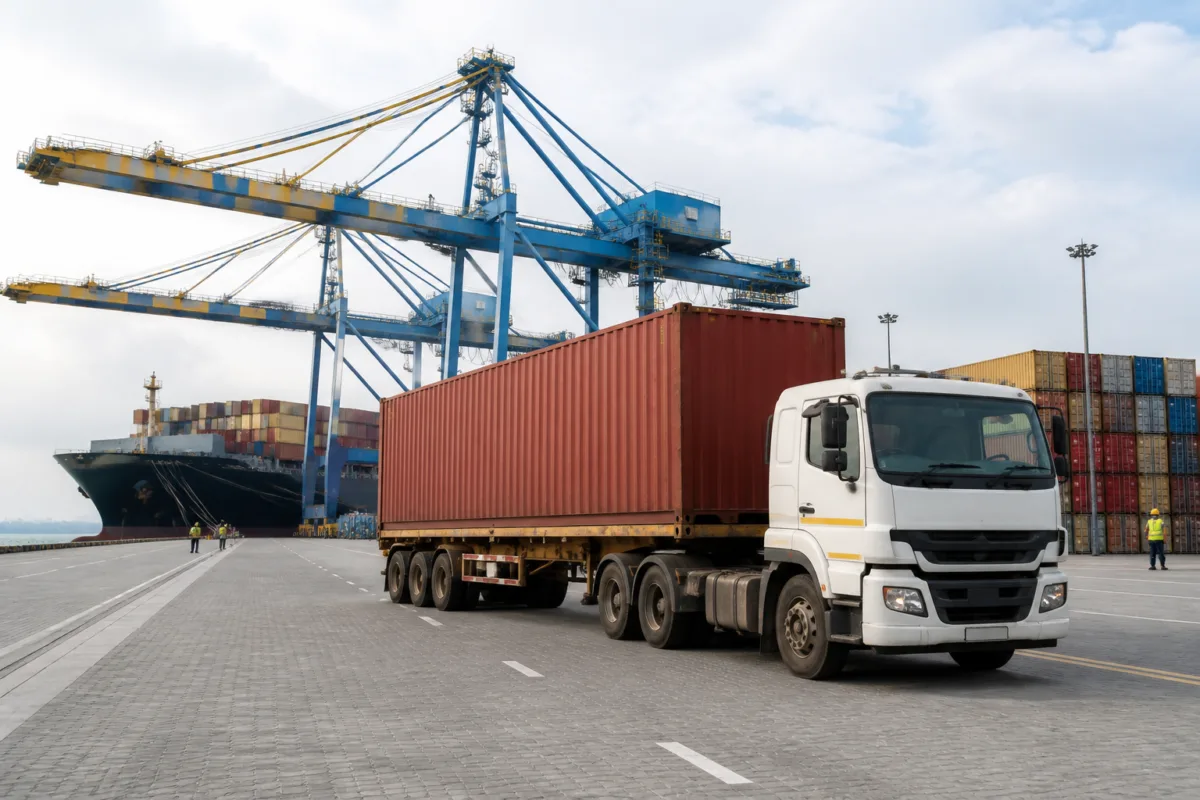
Vizhinjam International Port has handled its first import container from Ningbo, China, enabling goods to be unloaded, cleared through customs and moved directly to markets in Kerala instead of relying on other ports. The development marks the port’s first reported step towards serving importers directly, beyond its transshipment operations.
The container arrived on the MSC Sabrina III and was transported out of the port after Vizhinjam International Seaport Ltd managing director Jeroamic George flagged off the truck carrying it. The shipment was booked by BSG Logistics and Ship Chandlers Private Ltd, a city-based startup, for Altair Group in Thiruvananthapuram.
The consignment contains engineered building boards used in the construction sector as an alternative to traditional plywood. Its movement through Vizhinjam gives the port a direct role in bringing imported construction inputs into Kerala, while also providing a live test of the port’s cargo handling, customs and onward transport arrangements.
According to a statement by the port authorities, the import facility will allow goods to be unloaded directly at Vizhinjam and customs procedures to be completed in Kerala. The authority said this would reduce the time and cost involved in freight movement by lowering the state’s dependence on other ports.
The change is important because a port’s role in a regional economy depends not only on ships calling at its berths, but also on how efficiently cargo can move from the vessel to businesses and consumers. Direct import handling brings together several stages of the logistics chain, including customs brokers, freight forwarders, transport operators, warehouses and port workers.
The port authorities said the facility could help retain revenue from cargo handling and logistics within Kerala. They also said it could create employment opportunities in Thiruvananthapuram and the southern districts across customs brokerage, freight forwarding, transport, warehousing and port operations.
Vizhinjam began exim operations a few months ago, and the first import container follows the routing of a few export containers through the port. Together, these movements indicate an expansion of activity beyond the port’s initial transshipment function, although the supplied report does not provide cargo volumes, vessel-call projections or a timeline for scaling up direct imports.
The operational distinction matters for Kerala’s freight network. Transshipment involves transferring containers between vessels, while direct import handling connects the port to domestic cargo owners and regional markets. For businesses, the latter can reduce the number of logistical stages between an international shipment and its final destination, subject to customs, transport and warehousing capacity.
The first shipment therefore represents both a cargo movement and an administrative milestone. It demonstrates that import cargo can be received at Vizhinjam, processed through customs and dispatched for use in Kerala. The next phase will depend on how regularly importers, exporters, logistics companies and shipping lines use the facility.
Port authorities have identified the expansion of direct import and export activity as a route to strengthening cargo handling and logistics within the state. The first import container has now established that operational link; further developments will show how quickly Vizhinjam’s role grows in Kerala’s wider freight network.

