


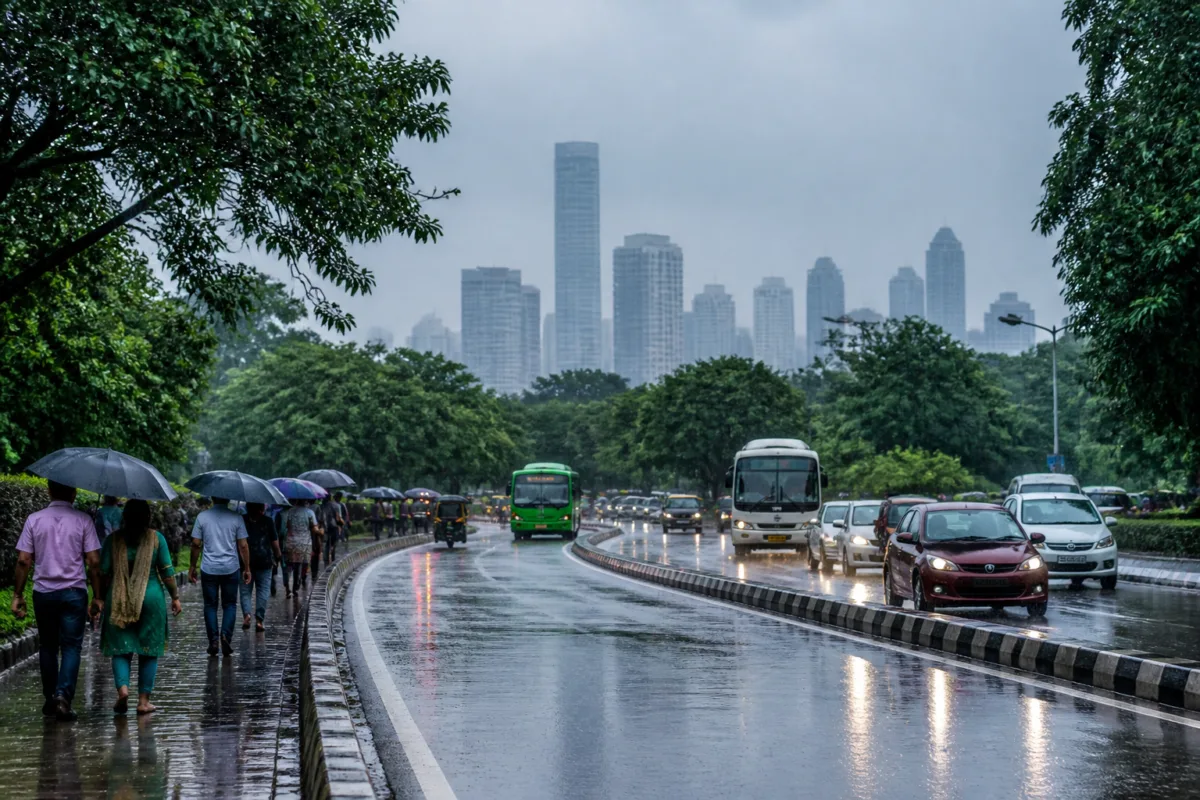
Delhi recorded its cleanest October air in more than a decade as unusually heavy rain and lower temperatures brought down pollution levels across the Capital, even as the city entered its peak winter pollution season.
The city’s average Air Quality Index (AQI) stood at 167 in October 2026, the lowest for the month since 2015, according to an analysis by the Centre for Research on Energy and Clean Air (CREA). Delhi also recorded 123.3 mm of rainfall up to 8.30 am on October 30, making it the wettest October in four years and the fourth-wettest October since 1954.
The rainfall was substantially above the monthly normal of 15.1 mm. The city last recorded higher October rainfall in 2022, when cumulative precipitation reached 128 mm. On October 30, Safdarjung received 61.4 mm of rain in the 24 hours ending at 8.30 am, making it the wettest October day in four years and the sixth-wettest October day at the observatory since 1951.
The weather also pushed temperatures down. Delhi’s average minimum and maximum temperatures for October were 20.7 degrees Celsius and 32.6 degrees Celsius, respectively. The maximum temperature on October 30 was 20.7 degrees Celsius, the coldest October day temperature recorded at Safdarjung since 1951.
The AQI fell to 60 on October 30, the cleanest October day since October 10, 2022, when the city recorded an AQI of 44. The highest AQI recorded during October 2026 was 245, the lowest monthly peak since 2015. Delhi experienced five days of ‘poor’ air quality, three ‘satisfactory’ days and 22 ‘moderate’ days during the month.
Air quality entered the ‘poor’ category on October 21, when the AQI reached 245. CREA said this was the first time since 2015 that Delhi’s air quality entered the poor category during the second half of October; in earlier years, that shift occurred during the first half of the month.
The monthly average AQI was 167 in 2026, compared with 223 in 2025, 234 in 2024, 219 in 2023, 210 in 2022 and 264 in 2015. Delhi’s average AQI between January and October was 168, the lowest for that period since 2020, when it was 156. The comparison covers available data since 2015, after India’s National Air Quality Index was launched in September 2014.
Manoj Kumar of CREA said Delhi’s October average AQI was lower than in previous Octobers but remained 1.5 times higher than the average AQI recorded in September 2026. He said the AQI was already relatively low before the Graded Response Action Plan was imposed and declined to 60 alongside the rainfall recorded at Safdarjung.
Kumar said the figures highlight the need to account for meteorological conditions before attributing improvements in air quality to GRAP measures. The rainfall, wind and temperature conditions therefore form an important part of interpreting the month’s pollution data, even as regulatory restrictions remain in force during the winter season.
The latest rainfall figure was below the October record of 238.2 mm recorded in 1954. The last time Delhi received more rain in a single October day was October 9, 2022, when 74 mm was recorded. The city’s weather and air-quality data will continue to be monitored as winter conditions intensify and the pollution season progresses.

