


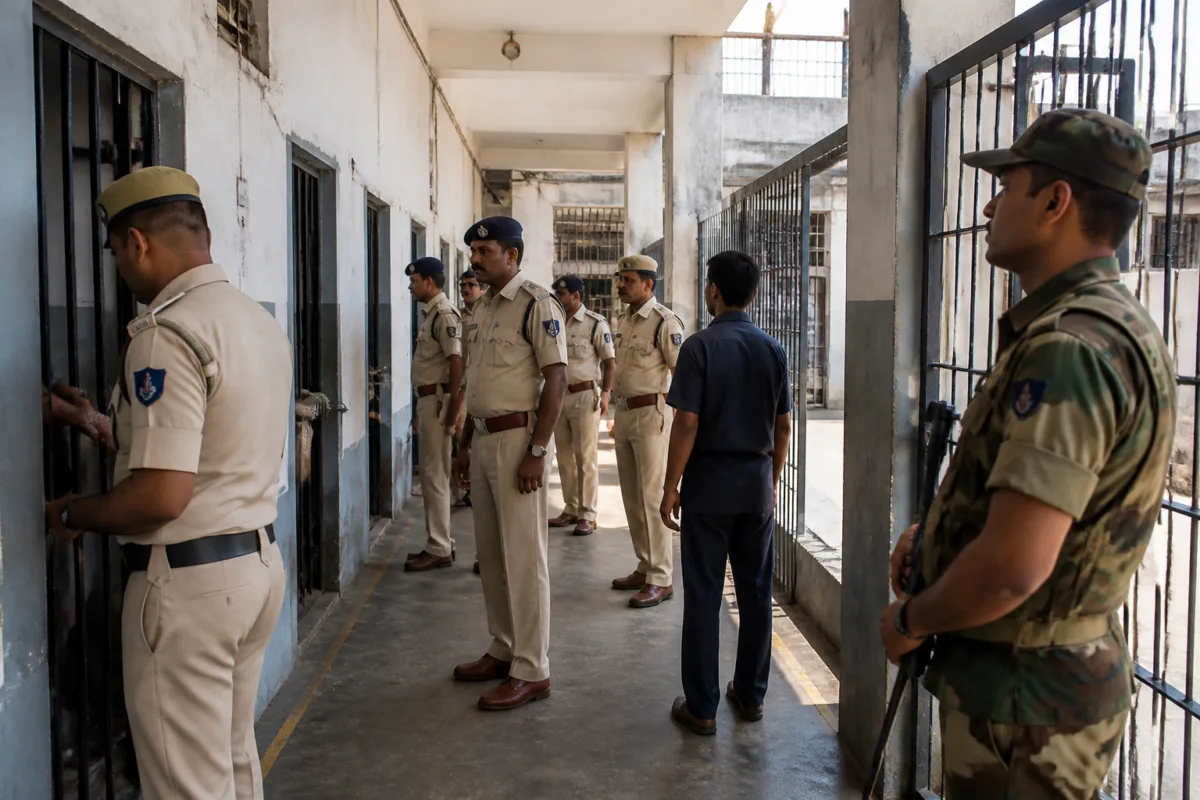
Karnataka’s prison department has launched a new “Prison Intelligence” initiative at Bengaluru’s Central Prison, Parappana Agrahara, combining inmate communication monitoring, staff transfers, surprise searches and temporary quarantine to prevent contraband and disrupt established gang networks. The measures were detailed by DGP for prison and correctional services Alok Kumar after a four-hour search of the prison found no banned items, including tobacco.
A team of 251 police personnel led by Electronics City DCP M Narayana entered the prison around 7am and completed the operation by 11am. The search covered barracks housing undertrials and convicted prisoners, including the women’s barrack. According to the report, no contraband was recovered during the operation.
Kumar told The Times of India that prison staff had been instructed to move beyond routine custodial duties and gather intelligence, conduct basic investigations and monitor inmate activity. This includes tracking which prisoners communicate with one another and the reasons for those interactions.
The department’s concerns include the movement of mobile phones, tobacco and other prohibited items into prison premises. Kumar said about 30 mobile phones had earlier been recovered after being buried two to three feet underground, requiring the use of an earthmover. He said smuggling attempts remained an everyday challenge, with prohibited items allegedly concealed in footwear or thrown into prison premises from roads outside.
The initiative also includes personnel changes. Kumar said around 95% of staff suspected of involvement in irregularities had been transferred to different prisons and would not be reposted to the same facility. The department is also dispersing long-standing inmate groupings by allotting barracks alphabetically. Gangs that had remained together in the same barracks or cells for 15 to 20 years are being separated, including prisoners arrested in terror-related cases.
Prisoners returning from court appearances or hospital visits are being kept in quarantine for five days. Kumar said the measure is intended to prevent contraband concealed inside the body from being brought back into the prison, noting that such items cannot be retained in body cavities for more than 24 hours. Monitoring has also been strengthened during prisoner escorts outside the prison.
When inmates are taken outside prison premises by the CAR police, prison personnel are now deployed in escort vehicles to monitor communications and respond to suspicious activity. Within the prison, access between barracks for convicted prisoners, undertrials, women prisoners and inmates in high-security sections has been restricted. Barricades have been installed to limit movement between barracks, while regular surprise checks are being conducted.
The prison department has said its objective is to make all prisons free of contraband at the earliest. The latest search at Parappana Agrahara forms part of the department’s continuing checks and the wider Prison Intelligence effort to identify irregularities before they become security incidents.

