


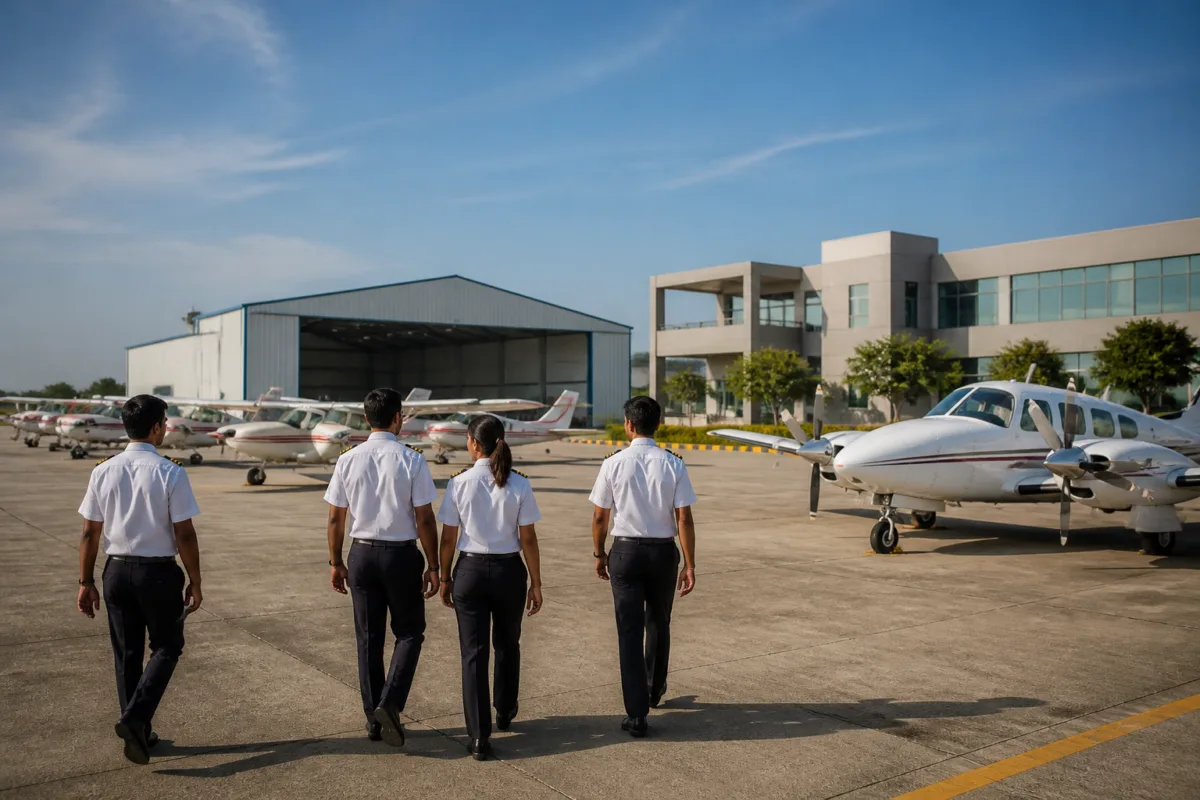
Air India’s flying training academy at Belora Airport in Amravati, Maharashtra, has received approval from the Directorate General of Civil Aviation (DGCA) to begin operations, marking the first flying academy operated by an Indian airline, according to a report by Jagran. The facility is expected to strengthen India’s domestic capacity to train commercial pilots.
The academy has been developed across about 10 acres at Belora Airport and will begin with 34 training aircraft. The fleet includes 31 single-engine aircraft and three twin-engine aircraft, the report said. The campus will also include digital classrooms, hostel facilities, an operations centre, an aircraft maintenance hangar and simulation infrastructure.
Air India plans to train 180 pilots annually at the facility. The academy will offer training for the Commercial Pilot Licence, the qualification required for pilots seeking to fly commercial aircraft after meeting the applicable regulatory and training requirements.
The approval comes as Indian aviation expands its need for trained cockpit crew and supporting aviation professionals. The report said that India already has government and private flying training organisations, including the Indira Gandhi Rashtriya Uran Akademi. However, limited availability of training aircraft, restricted seats and the long duration of pilot training have led many aspiring pilots to seek training overseas.
The Amravati academy is intended to add capacity within India’s pilot-training ecosystem. Its location at Belora Airport brings together the airfield, training aircraft, classroom facilities, accommodation, maintenance infrastructure and simulator-based instruction within one campus. This integrated model is designed to support both ground training and flight training at the same institution.
The academy’s planned annual output of 180 pilots will depend on the operation of its approved training infrastructure and the availability of aircraft, instructors and training schedules. The report does not provide a separate implementation timetable for the academy’s first training batch or specify when the full annual capacity will be reached.
For Amravati, the facility adds a specialised aviation-training use to the airport’s institutional role. Beyond passenger or cargo operations, airports can support flight schools, aircraft maintenance, simulator training and other aviation-related activities when the necessary regulatory and operational systems are in place. The academy’s maintenance hangar and operations centre are part of this wider aviation-support infrastructure.
The domestic availability of pilot training is also linked to the cost and accessibility of aviation education. When students travel abroad because of limited local capacity, their training involves overseas institutional arrangements and additional logistical requirements. Air India’s academy is expected to provide another domestic pathway, although the report does not state the course fees, student intake schedule or eligibility process.
The DGCA approval allows the academy to operate as a flying training institution at Belora Airport. Air India’s stated target is to produce 180 pilots each year as the facility develops its training operations.

