


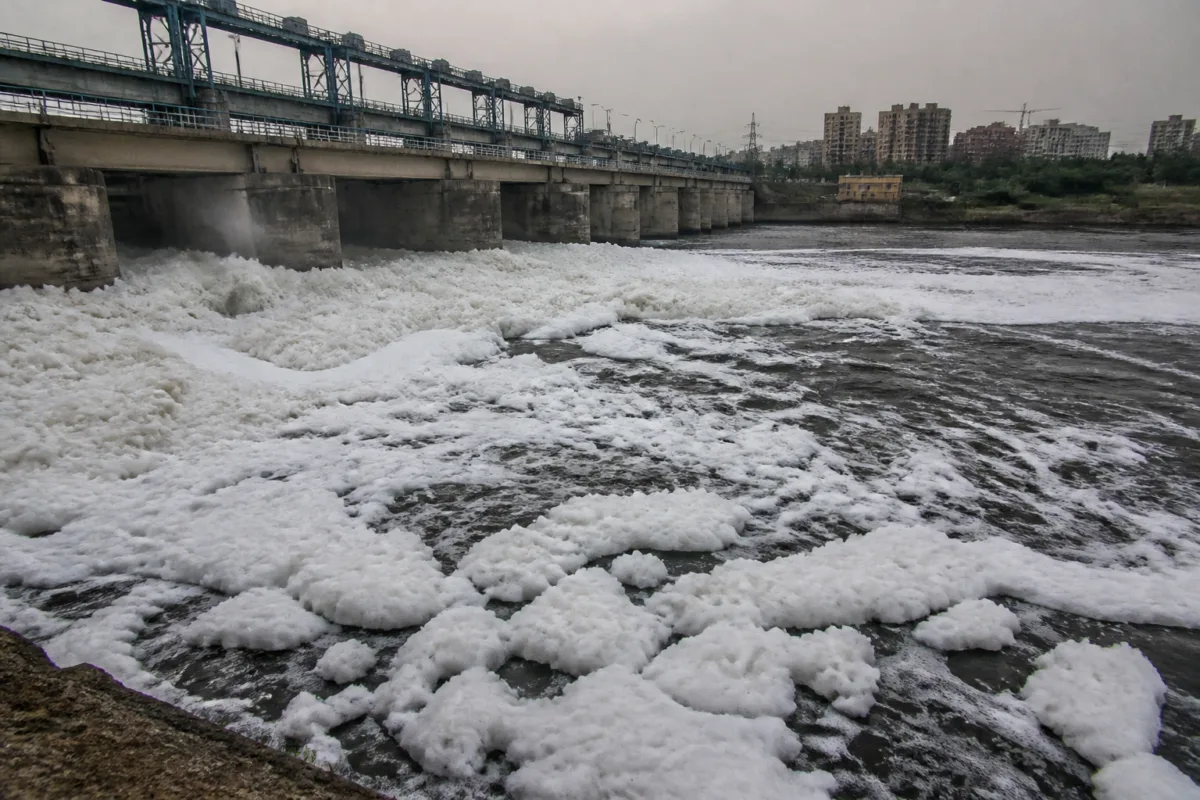
Two Yamuna clean-up projects at Okhla Barrage have stalled because the downstream river stretch and barrage fall under Uttar Pradesh’s irrigation department, despite Delhi allocating funds for a froth-reduction study and a permanent Chhath ghat at Kalindi Kunj.
Delhi’s irrigation and flood control department has repeatedly written to its Uttar Pradesh counterpart seeking timelines and intervention to move both projects forward. The correspondence, accessed by the Times of India, shows that Delhi transferred Rs 91 lakh to Uttar Pradesh’s irrigation and water resources department for a scientific study by the Irrigation Research Institute, Roorkee.
The study is intended to examine whether structural changes at the barrage can reduce the turbulence created by water falling from the structure and thereby limit the formation of thick foam downstream. A letter from Delhi’s chief engineer to his Uttar Pradesh counterpart on September 28 sought the current status, milestones and a definite timeline for the final feasibility report and action plan.
The froth frequently reported around Okhla Barrage forms when pollutants, including detergents and other surfactants in sewage, mix with water and are agitated. The drop in water level at the barrage increases turbulence, allowing air bubbles to become trapped and accumulate on the river surface.
The second project involves construction of a permanent Chhath ghat on the right bank of the Yamuna at Kalindi Kunj, downstream of the barrage. Delhi sanctioned Rs 68.4 crore for the work and transferred the amount as deposit money because the land falls under the jurisdiction of Uttar Pradesh’s irrigation department.
Delhi’s additional chief secretary for irrigation and flood control flagged the delay in a letter dated September 14, asking for personal intervention to expedite both projects. The department also forwarded a memorandum of understanding for the ghat project. In an August 27 letter, Delhi’s executive engineer sent two updated copies of the agreement incorporating suggestions from Uttar Pradesh and sought their signature and return. Further correspondence in September again requested the signed document.
A Delhi government official said the repeated reminders reflected coordination challenges between the two states. According to the official, Delhi had made the financial provisions and begun the administrative process but remained dependent on Uttar Pradesh for the next steps.
The proposed ghat-related structural work includes modifying the concrete slope near the barrage. The design would replace the sudden drop-off with a gentler, stepped gradient, reducing the plunge and churn effect that contributes to froth formation. The intervention would address turbulence at a specific stretch and would not remove the pollutants entering the river.
A senior Uttar Pradesh irrigation department official said the froth study’s report would be shared with Delhi once received. On the Chhath ghat, the official said the department had returned the money to Delhi because guidelines of the National Mission for Clean Ganga and the National Green Tribunal concerning construction in the area were creating difficulties. The status of the proposed works will therefore depend on the study timeline, the inter-state agreement and the permissions applicable to construction near the barrage.

