


Karnataka has proposed a new regulatory framework for coaching centres that would bar children under 15 from enrolling, cap daily coaching at five hours and require institutes to provide mental health counselling, according to draft rules notified by the state higher education department.
The proposed Karnataka Tutorial Institutions or Coaching Centre (Registration and Regulation) Rules, 2026, would regulate centres offering academic support, examination preparation or competitive-exam coaching to more than 20 students. The draft would replace the Karnataka Tutorial Institutions (Registration & Regulation) Rules, 2001.
Under the proposed rules, coaching centres could operate only between 6am and 9pm and could not hold classes during regular school or college hours. The five-hour daily limit would include tests, revision sessions and doubt-clearing classes. The provisions are intended to address academic pressure and the practice of students spending most of their day at coaching centres while maintaining only nominal attendance at mainstream schools or colleges.
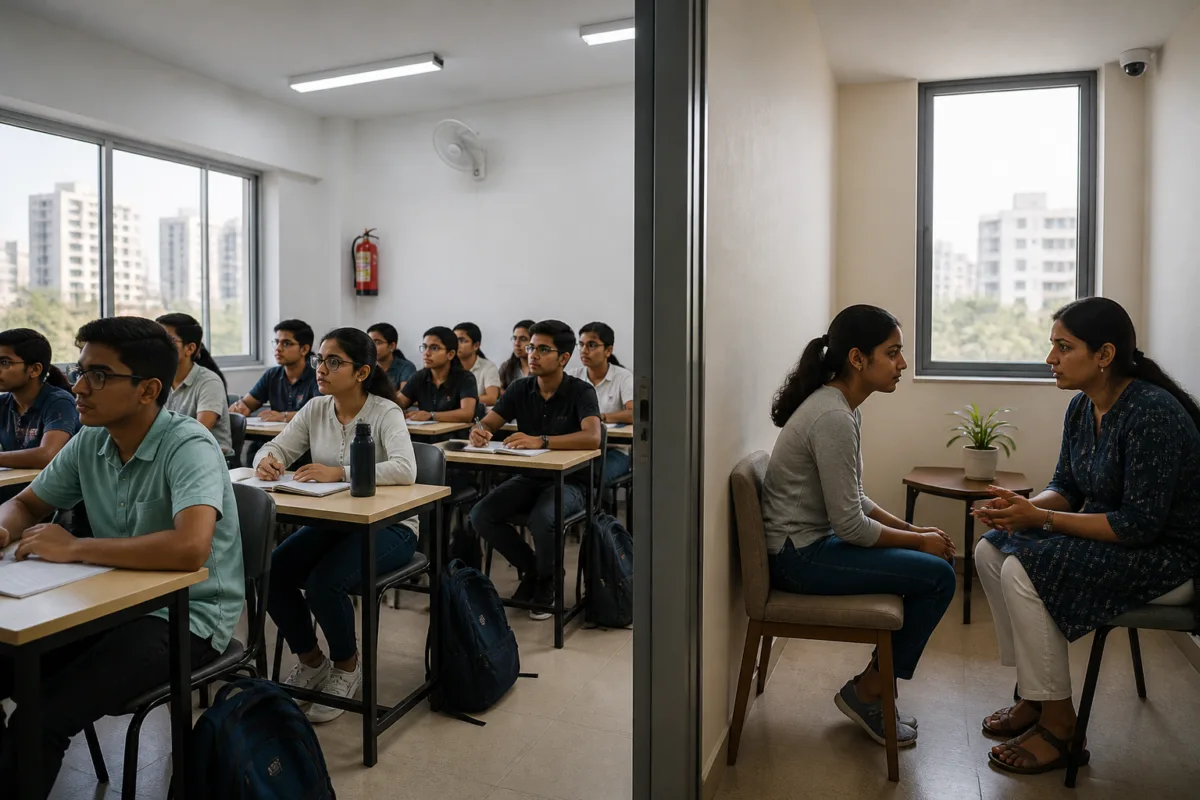
The draft also requires every coaching centre to appoint a mental health counsellor and conduct periodic mental health workshops and sensitisation sessions for students and parents. Tutors would have to receive training on mental health issues and communicate areas for improvement to students sensitively.
Assessment-test results could not be made public inside or outside the premises. The draft says such tests should be kept confidential and used to analyse student performance. Students whose performance is declining would have to be provided counselling under the proposed guidelines. Institutes would also be required to provide information about career options beyond engineering and medicine.
The proposed framework includes financial protections for families. Centres would not be allowed to collect the entire course fee as a single upfront payment and would have to offer parents the option of paying in at least four equal instalments. Fees would have to be fair and reasonable, with receipts issued. If a student withdraws, the institution would have to refund the advance fee for the remaining period on a pro-rata basis within 10 days. Hostel and mess fees would also have to be refunded promptly.
The draft prohibits misleading promises, guaranteed ranks and deceptive claims about student results or faculty qualifications. Coaching centres would not be allowed to employ faculty from government or aided institutions, or tutors convicted of offences involving moral turpitude.
Registration would be completed through the Seva Sindhu portal and would require the geotagged location of the premises. Each branch would be treated as a separate tutorial institution. The registration fee would be Rs 15,000, with an additional Rs 5,000 for each course, and registration would remain valid for three years. The deputy commissioner of each district would be the registering authority, while the commissioner of collegiate and technical education would hear appeals.
The proposed building and safety requirements include at least one square metre of classroom floor space per student, disaster-risk-reduction measures, fire-safety, building-safety and sanitation certificates, adequate ventilation and lighting, separate toilets for boys and girls, CCTV coverage and a complaint box. Classes would have to contain at least 20 and no more than 80 students. Centres with hostel facilities would need all required approvals.
Two district-level monitoring committees are proposed: one for Bengaluru Urban district and another for the remaining districts of Karnataka. Centres operating without registration after six months could be sealed, while the appellate authority could cancel registrations or impose penalties of up to Rs 5 lakh for serious non-compliance.
The draft rules define a coaching centre and tutorial institution broadly, covering centres, tutorials, tuition classes, trusts, societies and other establishments that supplement mainstream education. Members of the public can submit recommendations within 15 days of the draft’s publication.

