


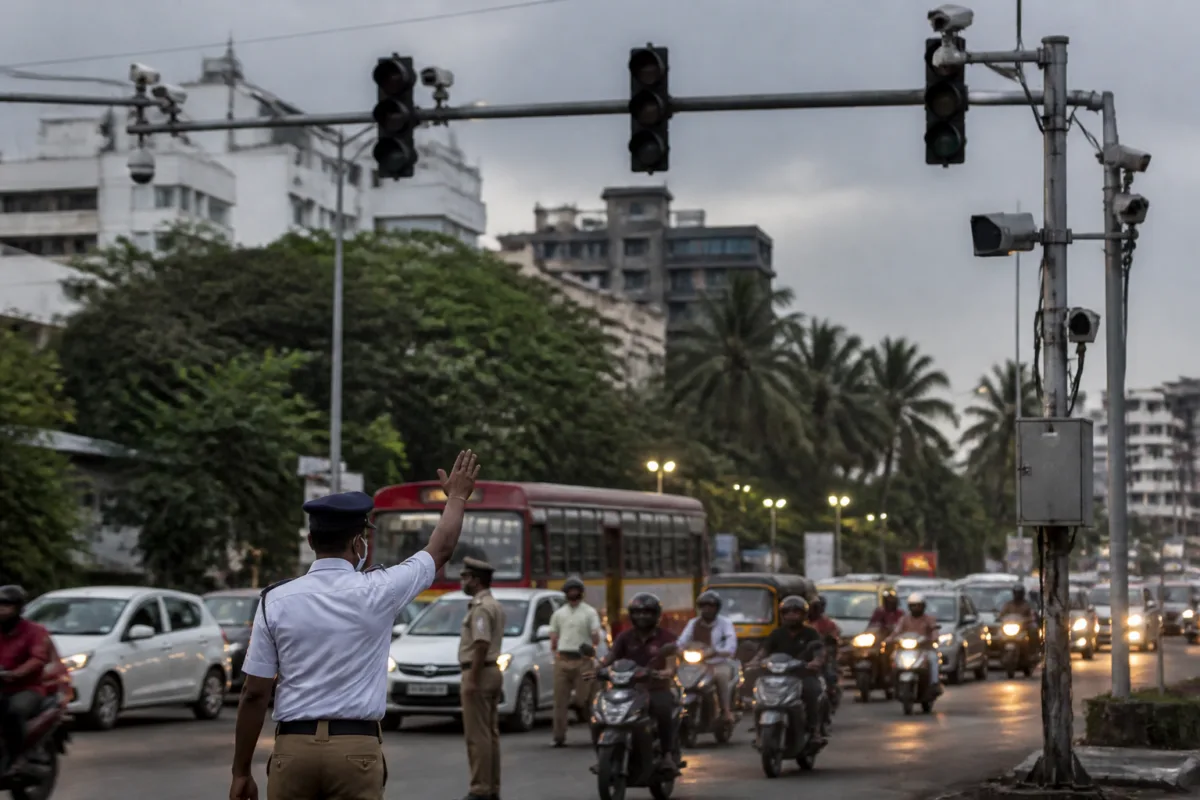
Thiruvananthapuram’s Rs 54-crore smart traffic system remains in limbo after city police refused to take over the infrastructure, citing faulty signals, non-functional cameras and an unresolved plan for funding operations and maintenance.
The adaptive traffic control system, installed at 57 junctions, is designed to automatically adjust signal timings according to traffic density. City police commissioner Arul R B Krishna said the system was not functioning properly, with malfunctioning signals confusing motorists and adding to congestion.
Police personnel are continuing to regulate traffic manually, but the commissioner said managing traffic during technical failures was different from formally taking over the system. The police would not accept responsibility for the infrastructure until the signals and cameras were working properly and a clear operation and maintenance arrangement was established.
The police have identified deficiencies in 234 automatic number plate recognition cameras and 46 red-light violation detection cameras. ANPR cameras read vehicle registration numbers, while RLVD cameras detect vehicles crossing the stop line after a signal turns red. A police study detailing the deficiencies has been shared with Smart City Thiruvananthapuram Ltd, the agency responsible for the project.
About 40 cameras connected to the city police commissionerate have also stopped functioning because internet charges were not paid, according to the commissioner. The project includes traffic signals at 57 junctions and about 1,047 cameras installed across 110 junctions.
The maintenance dispute extends beyond the current technical failures. The annual maintenance contract for the signals and cameras rests with SCTL and is understood to remain in force until 2029. The police want clarity on who will pay for maintenance if the infrastructure is transferred to them after the contract ends.
A self-sustaining model proposed under the Smart City Mission would use revenue from e-challans to fund the system’s operation and maintenance. However, the commissioner said the proceeds from challans go to the state treasury and are not directly controlled by the police. Without a government order permitting the revenue to be used for the system, the police cannot rely on it to meet future maintenance costs.
An SCTL source said work was under way to address the concerns raised by the police. The non-functional signal at Petta had been restored, while the remaining problems were expected to be resolved before December 2026. The source also said a funding issue involving the contractor was expected to be settled.
SCTL has taken note of the police objections and assured them at a recent meeting that the technical and funding issues were being addressed. The agency said the revenue-sharing arrangement would be settled at the earliest. Until the deficiencies are rectified and responsibility for maintenance is clarified, police personnel will continue to regulate traffic manually.

