


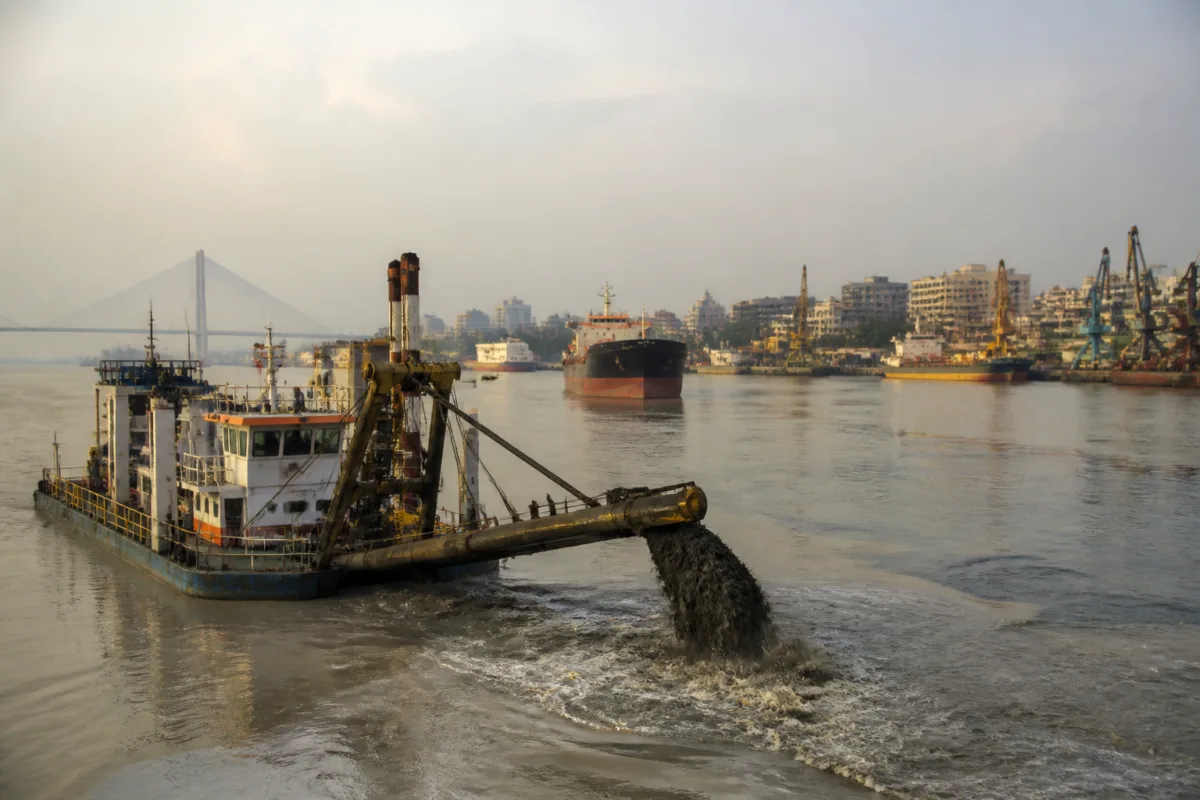
The Centre has sanctioned Rs 430.7 crore for dredging at Kolkata and Haldia ports, funding the removal of silt and sand from the Hooghly River to maintain navigable channels and support the safe movement of vessels, according to officials quoted by the Times of India.
The allocation has been made to Syama Prasad Mookerjee Port Kolkata (SMPK), which operates the Kolkata Dock System and Haldia Dock Complex. Regular dredging is required because sediment accumulates in the Hooghly and reduces the depth available for ships using the port channels.
The Kolkata Dock System requires dredging along a 232-km stretch of the river, while the Haldia Dock Complex needs maintenance dredging along a further 125 km. The combined 357-km requirement underlines the scale of the navigational challenge facing the port system and the recurring nature of the expenditure.
Officials said the dredging will help ensure adequate water depth for vessels and smooth movement through the channels. Silt accumulation can restrict vessel movement, particularly for larger ships, making the maintenance of navigability central to the operational functioning of both Kolkata and Haldia ports.
The funding also sets out a phased change in the way dredging is financed. Under the proposed plan, central assistance will be reduced in stages, with SMPK expected to meet the full dredging expenditure from its internal resources after the 2030-31 financial year.
The port authority will face performance-linked conditions for central assistance from 2026-27. The targets will include the volume of cargo handled through public-private partnerships, the modernisation of cargo-handling facilities, growth in cargo throughput and earnings before tax excluding subsidy income, officials said.
The arrangement means that the immediate allocation is not only a maintenance intervention but also part of a longer transition towards financial self-reliance for SMPK. The authority will need to demonstrate improvements in cargo operations and earnings while continuing to fund dredging across the two port complexes.
Regular dredging has been described by experts as indispensable to maintaining the operational viability of Kolkata port. Unlike ports where navigational channels may require less frequent intervention, the Kolkata and Haldia facilities depend on continued management of sediment in the Hooghly to preserve access for vessels.
For cargo operators, the channel depth affects the ability of ships to reach the dock systems and move through the river safely. Restrictions on vessel movement can have operational consequences for cargo handling and port throughput, although the supplied report does not specify the volume of cargo expected to benefit from the latest allocation.
The Centre’s assistance will therefore continue to support navigational maintenance in the near term, while the performance conditions and planned reduction in subsidy establish the next phase for the port authority. SMPK is expected to meet the entire dredging expenditure from internal resources after the 2030-31 financial year.

