


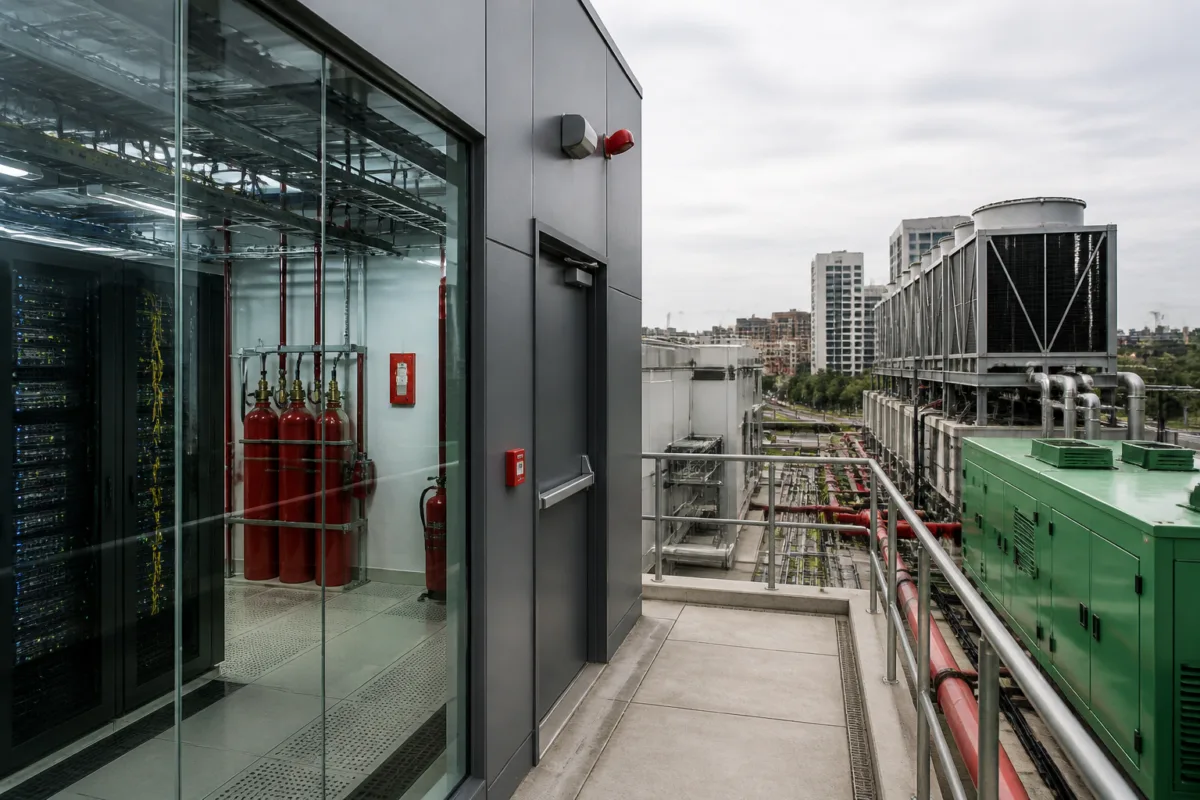
Telangana’s Fire, Disaster Response, Emergency and Civil Defence Department has issued special fire and life safety guidelines for data centres, combining additional safeguards for high-risk infrastructure with a framework intended to speed up provisional Fire No Objection Certificate (NOC) processing.
The guidelines were issued by Director General of Fire Services Vikram Singh Mann and will apply to provisional Fire NOC applications submitted on or after November 6. They are designed specifically for data centres, which contain servers, storage systems and networking equipment that require uninterrupted power and cooling.
The department’s guidelines recognise that these facilities have fire risks beyond those found in conventional commercial buildings. Uninterruptible power supply systems, batteries, transformers, generators, fuel storage areas and extensive cable networks are among the installations covered by the prescribed measures.
The safety framework includes fire detection and alarm systems, suitable suppression systems, fire compartmentation, firefighting shafts, wet risers, refuge areas and adequate water storage and pumping facilities. It also requires comprehensive fire risk assessments, proper ventilation, fire-rated separation and emergency shutdown arrangements.
Different parts of a data centre will require different forms of fire protection. Automatic sprinklers are prescribed for administrative areas, while technical areas must have suitable water-mist or clean-agent gas suppression systems. The guidelines also give specific attention to battery rooms, UPS installations, transformer and switchgear rooms, fuel storage areas and other high-risk zones.
The department has further prescribed measures to prevent combustible materials from accumulating in data halls. Ventilation and emergency shutdown arrangements are intended to address risks associated with equipment rooms and power systems while supporting safe response during an incident.
Data centres are critical infrastructure because their operations depend on continuous electricity, cooling and network connectivity. A fire in one of these facilities can therefore involve both immediate risks to workers and equipment and disruption to the systems hosted there. The new norms place these operational characteristics within the fire approval process rather than treating data centres as ordinary commercial premises.
The guidelines are also significant for the administrative process governing new data-centre facilities. By setting out specific requirements for detection, suppression, compartmentation, water systems, high-risk rooms and emergency procedures, the department has established a dedicated basis for assessing provisional Fire NOC applications.
The new requirements will be used for provisional Fire NOC applications submitted from November 6, according to the guidelines issued by the Telangana Fire Services Department.

