


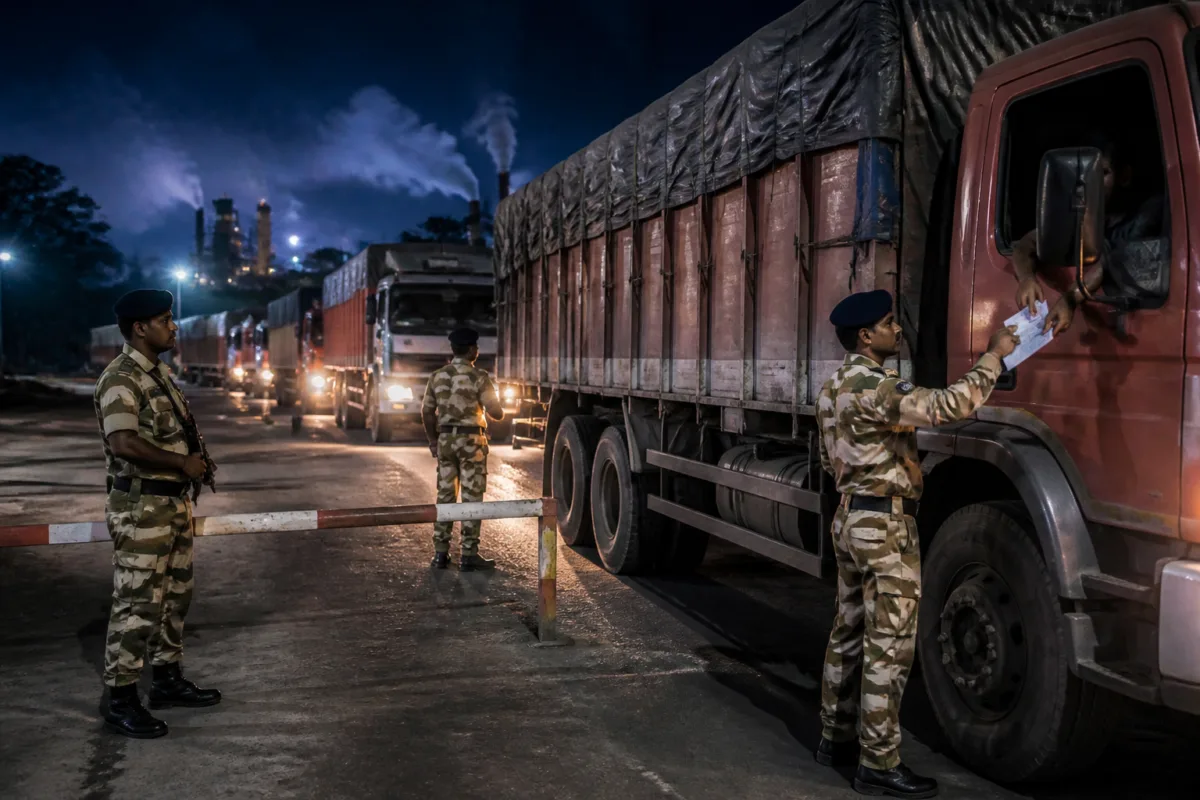
Coal belt security has been tightened across five locations in the Bokaro-Kargili and Dhori areas of Central Coalfield Limited, with the CISF deploying more than 150 personnel for late-night checks on vehicles, transport documents and suspicious activity.
The operation, reported by the Times of India, involved CISF rapid response teams, the striking reserve, a quick reaction team and the force’s intelligence wing. Personnel were deployed at Deendayal Chowk, Makoli, Hindustan Pul, the turn near Karo check post and the area near DD Mines.
The checks focused on vehicles moving coal through the belt. Officers scrutinised registration papers, permits and other transport-related documents, according to CISF commandant Raj Pratap Singh. Security teams also monitored people found along the roads late at night and kept watch for suspicious activity in surrounding areas.
The operation is aimed at curbing coal theft, illegal mining and other unlawful activities while supporting the safe movement of coal from mining areas and sidings. The locations covered by the drive form part of the wider network of mine sites, transport routes and coal-handling points serving the CCL belt.
“Vehicles involved in coal transportation were stopped and their registration papers, permits and other transportation-related documents were scrutinised,” Singh said, according to the report. He added that security personnel monitored late-night movement and suspicious activities in the vicinity.
The deployment brings several different CISF capabilities into one operation. Rapid response teams and the quick reaction team are intended to respond to emerging security situations, while the striking reserve provides additional personnel. The intelligence wing is tasked with monitoring information relevant to security risks and unlawful activity.
For the coal belt, the checks place documentation and road movement at the centre of enforcement. Coal transport depends on the movement of authorised vehicles between mines, sidings and other designated points. Scrutiny of registration papers, permits and related documents is intended to help distinguish permitted transport from activity linked to theft or illegal extraction.
The CISF said cases involving illegal mining may attract action under provisions of the Mines and Minerals (Development and Regulation) Act, depending on the facts and evidence available in each case. The statement did not provide details of arrests, seizures, vehicles detained or specific cases registered during the late-night drive.
The operation also highlights the security challenges around coal infrastructure, where mining areas, roads and transport facilities operate as a connected system. Disruption or unlawful activity at any point can affect the movement of coal and the functioning of associated sites. The CISF said the intensified checks were intended to strengthen security around mines, sidings and transportation routes.
The force has not indicated how long the intensified checks will continue or whether similar operations will be expanded to additional locations. Further action in individual cases will depend on the documents examined and evidence gathered during enforcement.

