


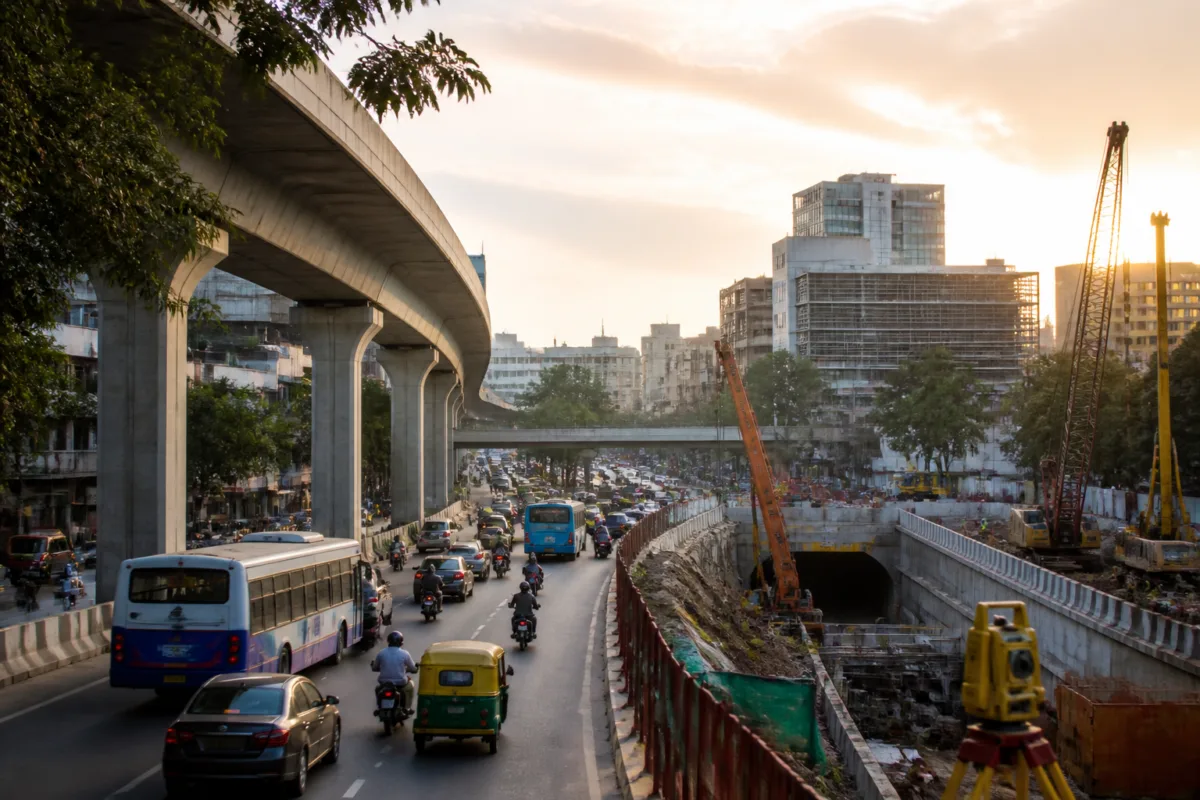
Karnataka Chief Minister D.K. Shivakumar has outlined a major Bengaluru infrastructure programme that includes a 40-km twin-bore tunnel route, 120 km of elevated corridors, 1,500 km of upgraded arterial and sub-arterial roads, and an expansion of the metro network to 170 km by 2027.
Shivakumar announced the plans during a meeting with legislators from Bengaluru city at his official residence, Krishna, on Tuesday. He said the government was committed to upgrading the city’s transport system and wider infrastructure, according to a report by Prajavani.
The proposed tunnel programme includes a 2-km short tunnel project at Hebbal. The government has also planned a 16.5-km north-south corridor at an estimated cost of ₹17,780 crore, of which the state government will invest ₹7,000 crore, Shivakumar said.
A separate 120-km elevated corridor has been planned at an estimated cost of ₹23,165 crore, based on national highway standards. The government is also taking up 500 km of new road connectivity, including 300 km of buffer roads along canals and a 68-km business corridor.
The road programme includes redevelopment of 17 km of the Outer Ring Road. A proposal for a 37-km double-decker road has been submitted, but the Union government has so far approved construction for only 11 km, the Chief Minister said. White-topping work is also scheduled to begin on an 18-km stretch on the city’s outskirts.
The scale of the proposals places road capacity, public transport and project coordination at the centre of Bengaluru’s next infrastructure cycle. The announcement combines projects under different institutional and funding arrangements, including state-funded works, a proposal requiring central approval and transport systems operated by separate agencies.
Shivakumar said the plans were being prepared with a 10-year horizon as Bengaluru approaches the 500th anniversary of its founding in 2027. New projects would require approximately ₹1 lakh crore, he said, adding that funding would be provided according to priority.
Public transport targets include adding 4,500 buses to the existing fleet of 7,000. The government also aims to accelerate suburban rail construction and achieve 150 km of suburban rail connectivity by 2030. The metro network, meanwhile, is targeted to reach 170 km by 2027.
The announcement also covered municipal administration and waste management. Shivakumar said all legislators’ constituencies had been provided necessary funds without discrimination. He warned that contractors found negligent in waste management would face strict action.
The statement sets out targets and estimated project costs, but the supplied report does not specify detailed construction schedules, tender timelines, agency-wise responsibilities or the final funding structure for each project. The next stages will therefore depend on approvals, project execution and the release of funds under the government’s stated priority-based plan.

