


The dispute over the magisterial enquiry into the death of Panjab University PhD scholar Jyoti has widened from a question of electrical safety to a question of institutional accountability. Her family says it was not meaningfully included in the proceedings and has still not received the completed report, while the enquiry reportedly identified deficiencies in electrical safety and recommended departmental action against officials responsible for the relevant systems.
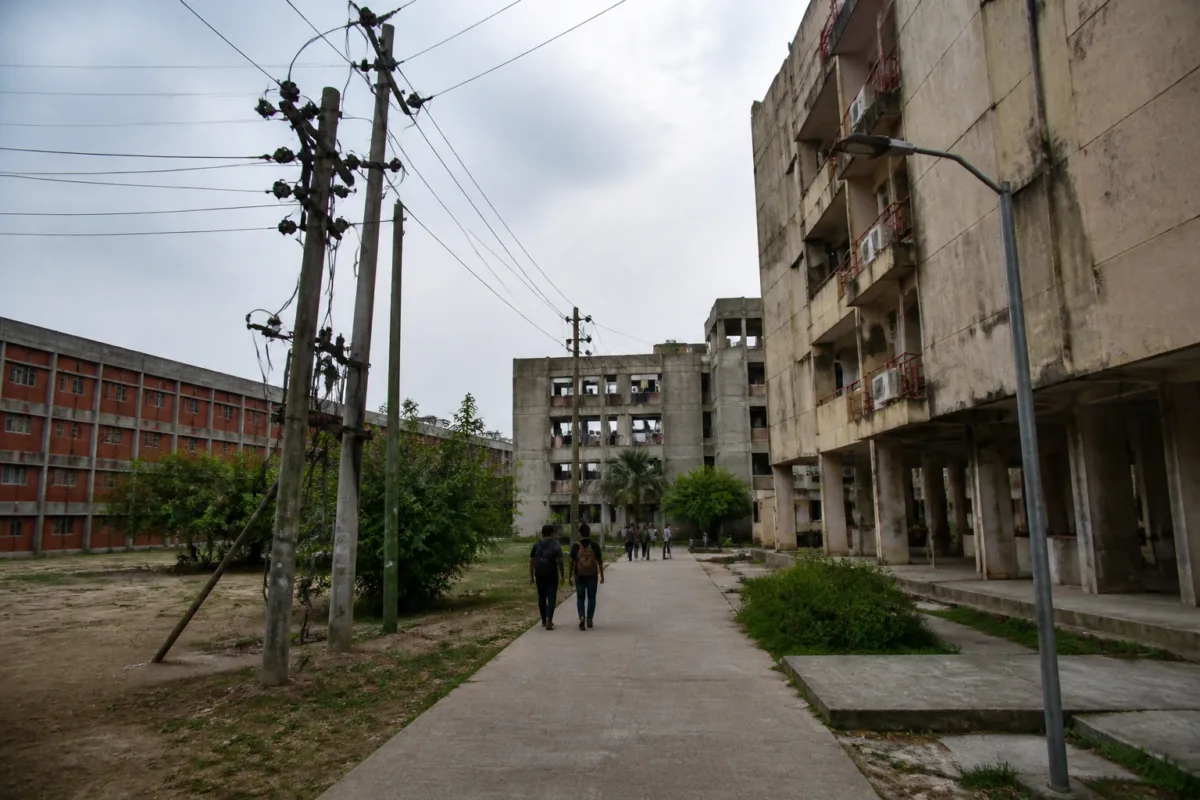
Jyoti, 28, was pursuing a PhD in microbiology at Panjab University. She died near Girls Hostel No. 8 on the university’s South Campus on July 28 while proceeding to her department. The incident brought the safety of electrical infrastructure within the campus into focus. The subsequent enquiry, conducted through the office of the director, social welfare, was expected to establish what went wrong and whether responsibility could be fixed among the officials overseeing the system.
Instead, the handling of the enquiry has created a second institutional concern: whether the family of the deceased was given a practical opportunity to participate and whether the findings were communicated transparently after the probe ended.
The family’s account, reported by the Times of India, is that notices asking relatives to appear before the committee reached them only a day before the scheduled hearings. The family lives in Kakrala village in Haryana’s Mahendragarh district and told the newspaper that distance and lack of resources made travel to Chandigarh difficult. It requested a virtual hearing so that it could participate despite those constraints.
The family said an employee shared a link for a virtual meeting on August 17, but that no one was available to conduct the interaction. According to Jyoti’s paternal uncle, Jitendra, only two people were present and no information related to the investigation was shared. The family says it subsequently sought updates and inclusion in the enquiry but received no information about the proceedings, the report or related documents.
Notices issued by the director, social welfare’s office show that personal hearings were scheduled for August 4, August 14 and September 2. Those summoned were asked to appear before the committee with relevant documents supporting their submissions. The existence of scheduled hearings indicates that the enquiry had a formal process. The family’s complaint raises a more specific question about access: whether the process was realistically accessible to those directly affected by the death.
That distinction matters in institutional investigations. A notice can satisfy a procedural requirement on paper without ensuring that a family can understand, attend or participate in the process. In this case, the family says the short notice, travel constraints and failed virtual meeting prevented meaningful involvement. The account does not establish the committee’s response to those allegations, but it shows how administrative procedure can become difficult to navigate when the affected party is outside the city and lacks the resources to attend in person.
The dispute also highlights the importance of timely communication after a public institution completes an internal or magisterial investigation. The family has sought the current status of the enquiry and copies of all reports and related documents. Its request is not limited to the final conclusion. It also seeks access to the materials needed to understand how the conclusion was reached and whether the findings address the circumstances of Jyoti’s death.
The report’s movement between offices has added to the uncertainty. According to the report, the magisterial enquiry was submitted to Chandigarh deputy commissioner Nishant Kumar Yadav around October 6. In a statement cited by the Times of India on October 13, Yadav said the report had been marked by him and would be sent to Panjab University in a day or two. Panjab University, however, said on October 22 that it had still not received the report.
This gap is significant because responsibility for action depends on the report reaching the institution where the relevant officials work. A finding can identify deficiencies and recommend action, but implementation requires the receiving authority to formally take charge of the document, examine the recommendations and decide what administrative steps follow. The reported delay therefore leaves unclear whether the recommendations have entered the university’s disciplinary or corrective system.
The enquiry reportedly found deficiencies in electrical safety and recommended departmental action against the sub-divisional engineer, junior engineer and electrical inspector concerned. It also called for individual responsibility to be fixed according to the duties assigned to the officials. These reported findings are important because they move the issue beyond a general description of an accident. They point towards an examination of the institutional chain responsible for inspection, maintenance and oversight.
At the same time, the available account does not provide the full report, the precise safety deficiencies identified or the university’s response to the recommendations. It is therefore not possible to determine from the supplied material whether the reported lapses involved installation, maintenance, inspection, supervision or some combination of these responsibilities. Nor is it established whether any official action has been initiated.
That missing detail is central to understanding safety in a large university campus. South Campus is not merely a collection of academic buildings. It includes hostels, routes used by students and staff, electrical installations and administrative systems operating together as an urban environment. A failure in one part of that network can affect people moving through the campus, including those who may not know which office is responsible for a particular piece of infrastructure.
The reported recommendation to fix individual responsibility according to assigned duties reflects this complexity. Electrical safety is rarely controlled by a single employee or department. It typically depends on multiple layers of design, installation, inspection, maintenance and administrative approval. The source material does not specify how those responsibilities were divided at Panjab University, but the enquiry’s reported wording suggests that the investigators considered the allocation of duties relevant to determining accountability.
The case also exposes the limits of treating safety as a technical issue alone. Once a death occurs, the institution must address at least three connected questions: what failed, who was responsible for preventing or identifying the failure, and how the affected family can obtain a credible account of what happened. The reported electrical-safety findings address the first two questions in part. The family’s complaint concerns the third.
For public institutions, transparency is not only a matter of releasing a final document. It also involves making the process intelligible to those affected, providing reasonable opportunities to participate and communicating the status of decisions. In Jyoti’s case, the family says it was asked to appear with little notice, could not travel, did not receive effective access through the proposed virtual meeting and was later left without the report. Those allegations make procedural access part of the public-interest story.
The institutional chain described in the report includes the magisterial enquiry committee, the director, social welfare’s office, the Chandigarh deputy commissioner and Panjab University. Each represents a different stage in the process. The committee conducts the enquiry, the administrative office arranges hearings, the deputy commissioner receives and marks the report, and the university is expected to receive it and consider action concerning its officials. When the report’s transfer between authorities is delayed or unclear, accountability becomes harder to track.
The available information does not establish why Panjab University had not received the report by October 22, despite the deputy commissioner’s statement that it would be sent shortly after October 13. It also does not establish whether the report was later transmitted, whether the university has formally responded, or whether the family has since been given copies. These are the immediate factual gaps that remain.
What the case does establish is a chain of unresolved institutional questions following a fatal electrical-safety incident. The enquiry reportedly identified deficiencies and named categories of officials for possible departmental action. The family says it was excluded from meaningful participation and has not received the findings. The report’s transmission to the university was also disputed in public statements.
The next stage should therefore be judged not only by whether disciplinary action is announced, but by whether the authorities clarify the report’s status, disclose the findings to the family and explain how responsibility was assessed. Until those steps are documented, the safety failure and the administrative response remain connected parts of the same accountability problem.

