


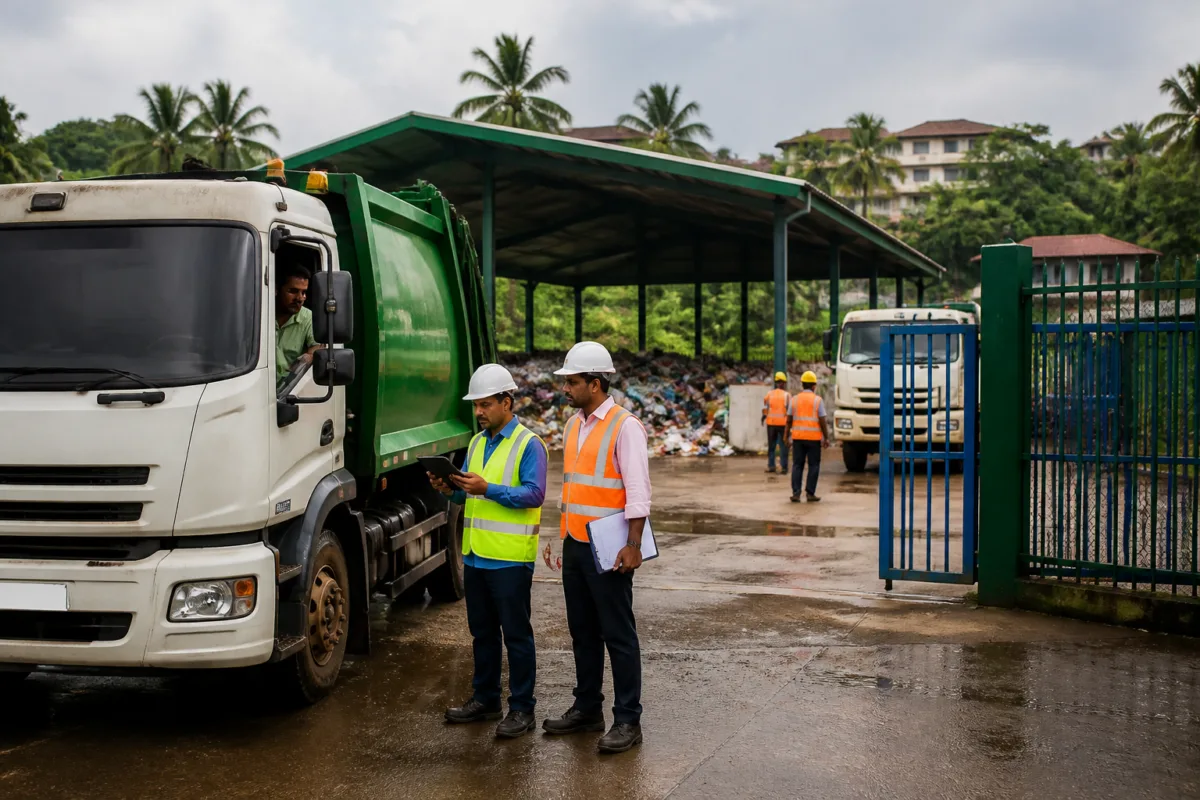
Goa State Pollution Control Board has framed rules for a Digital Waste Monitoring System that will require bulk waste generators, waste handlers, storage facilities, recyclers and non-biodegradable waste traders to register through an online portal. The framework is intended to bring the registration, transportation, storage and disposal of waste handled across municipal, panchayat and other systems under a standardised process.
The Goa State Pollution Control Board, or GSPCB, will develop and operate the portal on a revenue-sharing model. The system follows an amendment to the Goa Non-Biodegradable Garbage (Control) Act, 1996, under which bulk waste generators, waste collectors, recyclers and co-processors must register on the board’s online portal for waste disposal.
The board took note of the amendment at its last meeting in June and decided to formulate a standardised procedure. The new guidelines cover biodegradable waste activities by bulk waste collectors, including agencies working for municipal and panchayat bodies. They also apply to waste storage facilities, material recovery facilities, recyclers, co-processors and traders handling non-biodegradable waste.
Registration will be organised into six categories: bulk waste generators; waste collectors and transporters working for local bodies; waste collectors and transporters working for other entities; waste storage facilities; recyclers and co-processors; and non-biodegradable waste traders. Applicants will have to submit documents and operational details relevant to their category.
Bulk waste generators will be required to provide information on the quantity and nature of waste generated, along with land ownership details. Collectors and transporters working for local bodies will have to submit vehicle registration numbers and details of transportation and disposal routes. Recyclers will need to provide a flowchart describing their recycling and co-processing processes.
The framework also establishes infrastructure and siting requirements for waste storage facilities and material recovery facilities. These facilities must have concrete working areas, covered premises, fencing and access for fire-safety operations. Minimum setback distances from residential areas, water bodies and institutions will be determined according to the overall area of the facility in square metres.
The digital system will include a structured fee mechanism. This will comprise a one-time registration fee, an annual portal fee and a transaction fee based on the quantum and category of waste handled. The stated framework therefore combines registration, facility standards and payment requirements in a single compliance system.
For local bodies, the proposed portal creates a common administrative channel for recording the agencies and vehicles involved in waste collection and transportation. For private operators and other entities, registration will link their operations to specified documentation, routes, facilities and disposal processes. The supplied guidelines do not state the date on which the portal will become operational or identify the final fee amounts.
The next implementation step is the development of the Digital Waste Monitoring System by the GSPCB. Its effectiveness will depend on the portal’s rollout, registration of the six categories of operators and enforcement of the infrastructure and siting norms set out in the framework.

