


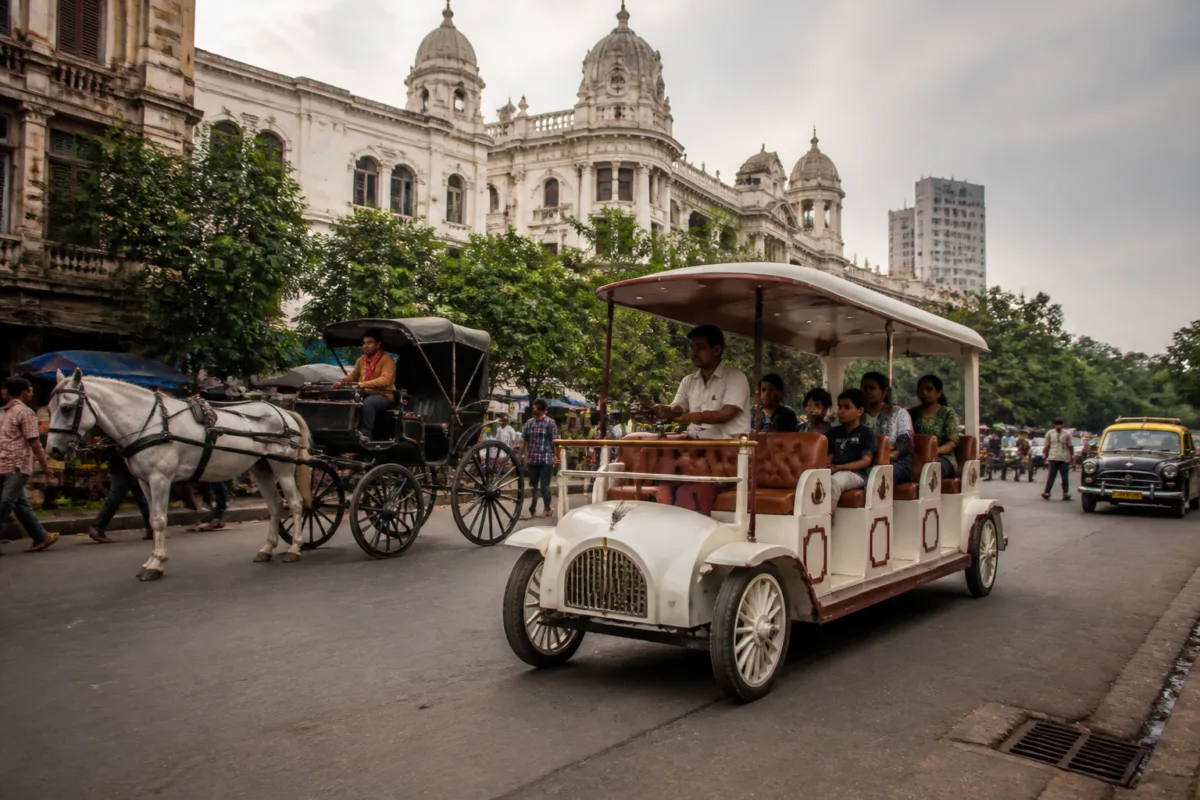
Kolkata’s horse-drawn tourist carriages face renewed pressure to be replaced after former MP and actor Mimi Chakraborty and Deepak Mahajan, whose 18-year-old son died in a horse-carriage incident in New York, separately urged West Bengal’s urban development and municipal affairs minister Agnimitra Paul to fast-track heritage-style electric carriages.
Their appeals followed the death of a frail and severely dehydrated horse that collapsed on a Kolkata road despite attempts by bystanders to save it. The campaigners want the state’s reported pilot project for electric heritage carriages to become the basis for ending horse-drawn tourist rides in the city.
Chakraborty, who supports PETA India, said she was “deeply shaken” by the horse’s suffering and death. In her letter to the minister, she cited PETA India records that allegedly show at least 19 horses in Kolkata have died or later succumbed to road accidents and other injuries since 2024. The report did not include a response from the minister or details of the proposed pilot’s timeline, route or funding.
Chakraborty also referred to a 2026 incident in which police registered a first information report after a horse tied to a tourist carriage collapsed on a city road. She said replacing the animals would improve cleanliness and help protect public health from zoonotic diseases such as glanders. Her appeal cited Mumbai as an example of a city that has replaced horse-drawn carriages with Victorian-style battery-operated alternatives.
Mahajan’s intervention is linked to the death of his son, Romanch, in New York. According to the report, Romanch was travelling with family members in Central Park when the horse bolted. He jumped from the carriage while attempting to help his mother and later died from his injuries. Mahajan now works with PETA India and said that no family should have to question whether a tragedy such as theirs could have been prevented.
New York has also become part of the policy context surrounding the Kolkata appeal. The city council approved Romanch’s Law, named after Mahajan’s son, to phase out horse-drawn carriages by 2028 after more than 160 years of operation. PETA India has urged West Bengal to permanently adopt electric carriages as a replacement that can protect horses while supporting the livelihoods connected to tourist carriage operations.
The proposed transition would require more than a change in vehicle design. Kolkata’s municipal and urban development authorities would need to determine how heritage carriage routes are regulated, how operators are licensed, what safety standards apply and how existing carriage workers are incorporated into the new system. The immediate next step reported by the campaigners is for the state ministry to advance its pilot project and consider a complete transition to electric heritage carriages.

