


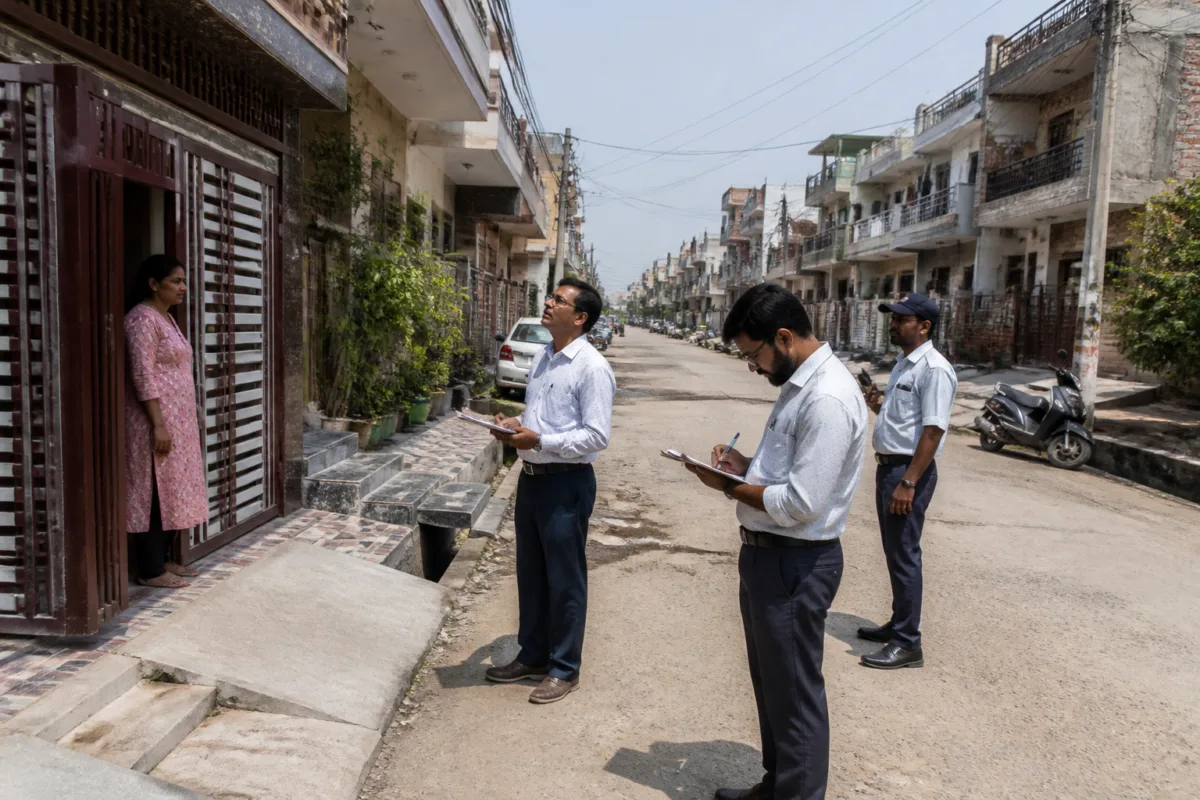
Ghaziabad Nagar Nigam has started surveys across all five zones to identify properties in freehold colonies that are not currently covered by house tax, a move that could bring 80,000 to 90,000 additional properties into the municipal tax network from the next financial year.
The survey is being conducted across an estimated 450 freehold colonies in the city. The properties include residential houses as well as shops and other commercial premises. The municipal corporation plans to assess the properties and begin tax collection after the assessment process is completed.
The move comes as Ghaziabad’s urban area continues to expand beyond developments created by planning authorities. Municipal councillors have been proposing road, drainage and other civic works in freehold colonies, even though a large number of properties in these areas are not generating house-tax revenue for the corporation.
According to the report, Ghaziabad Nagar Nigam currently has approximately 4.60 lakh taxpayers. Officials believe that bringing more freehold properties into the tax base will increase municipal revenue and provide additional funds for development works. The corporation has said that the survey is intended to identify properties that have so far been left out of the house-tax assessment system.
The exercise also covers unassessed flats in large housing societies. In Raj Nagar Extension, 50 societies have a combined 26,143 flats. The corporation has assessed 24,375 of them, while approximately 1,768 flats had not been assessed because they were vacant when the earlier process took place. As residents have since moved into these flats, they are now expected to be brought into the tax assessment process.
In Crossings Republik, 25 societies contain 13,493 flats. The Vijay Nagar zone has assessed 9,646 flats, while 4,847 had not been assessed. These flats will also be included in the house-tax process. The corporation is additionally working on assessments for uncovered flats in Wave City, Tanushree and Golf Link, while the process has begun in societies in Siddharth Vihar, where notices are being issued.
Municipal officials have linked the tax expansion to the cost of providing civic infrastructure. The corporation receives proposals from councillors for development works in freehold colonies, including roads and drains. Officials have said that larger projects require more funding and that inadequate budgets can affect the pace of implementation. The corporation expects additional house-tax revenue to support these works.
The proposed expansion is also connected to earlier plans to impose house tax in 35 villages that have been incorporated into urban wards. These include Sadarpur, Raispur, Rajapur, Mahrauli and Bamheta. Residents in these areas had opposed the proposal and demanded better roads, street lighting and piped drinking-water supply before accepting the tax burden.
Municipal officials have previously visited several villages to explain that civic works would be accelerated after house tax was imposed. The latest survey in freehold colonies indicates that the corporation is attempting to widen its tax base across both established private developments and newly occupied housing societies.
Anirudh Singh, chief tax assessment officer, said every property in the city’s freehold colonies would be brought within the house-tax system. He added that tax was already being collected from some freehold colonies and that surveys were continuing in housing societies. The next financial year is expected to mark the beginning of tax collection from the newly assessed properties.

