


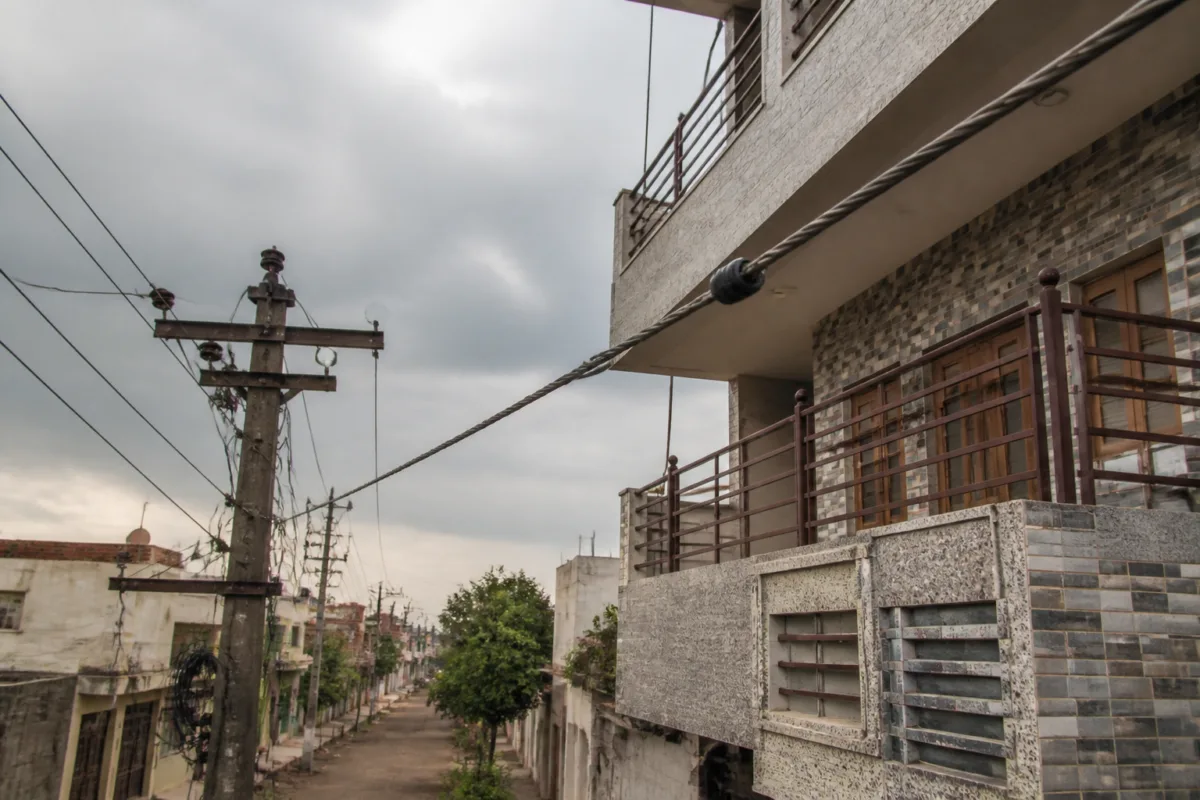
A 65-year-old mason died in Vidisha district after he reportedly came into contact with an overhead 11kV high-tension line while standing on the balcony of a rented house in Ganjbasoda, according to a report by Times of India – Bhopal. The incident has also prompted residents to allege that repeated complaints about power lines passing dangerously close to homes were not acted upon.
Prabhulal Gupta was standing on the third-floor balcony of his rented house in Gayatri Nagar at about 1pm when the incident occurred. He had been living in the house for around 10 years and was originally from Chhatarpur. Local residents told the newspaper that fluid he spat while chewing gutka came into contact with the overhead wire, leaving him severely burnt.
The precise mechanism of the electrocution was not independently established in the supplied report. Electrical experts cited by the newspaper said saliva contains moisture and dissolved salts, which can make it conductive under certain conditions. They said a continuous stream of fluid reaching a live conductor could potentially create a conductive path, while an 11kV line may also produce an electrical arc if a person or balcony is sufficiently close to the wire.
If an electrical path through the body was established, the resulting shock could cause severe burns or death, the experts said. The account therefore links the fatality to possible contact with the live line, while the technical explanation remains conditional on the distance between the balcony and the conductor and the circumstances of the incident.
Residents said the death exposed a wider safety concern in the locality. They alleged that electricity poles, wires and distribution transformers were in poor condition and that complaints about the 11kV line passing close to houses had been made repeatedly. The allegations raise questions about how overhead distribution infrastructure is surveyed and maintained in built-up neighbourhoods, particularly where residential balconies and other structures are near live conductors.
Padma Chidhar, the house owner, said she had also approached electricity officials several times seeking removal of the line. Officials allegedly assured her that it would be shifted, but no action had followed, she said. The report did not include a response from the electricity company confirming the complaints, explaining the line’s clearance from the building or stating whether relocation had been sanctioned.
The incident also highlights the difficulty of separating individual conduct from infrastructure safety. Even where a line is legally installed, inadequate clearance from homes can expose residents to risks that are not obvious from street level. The reported presence of a third-floor balcony close to an 11kV conductor makes the location and maintenance of the distribution network central to determining how the fatal contact occurred.
A Dial 112 team reached the spot after receiving information about the incident. Further official details on the investigation, the electricity network’s condition and any action on residents’ complaints were not provided in the supplied report.

