


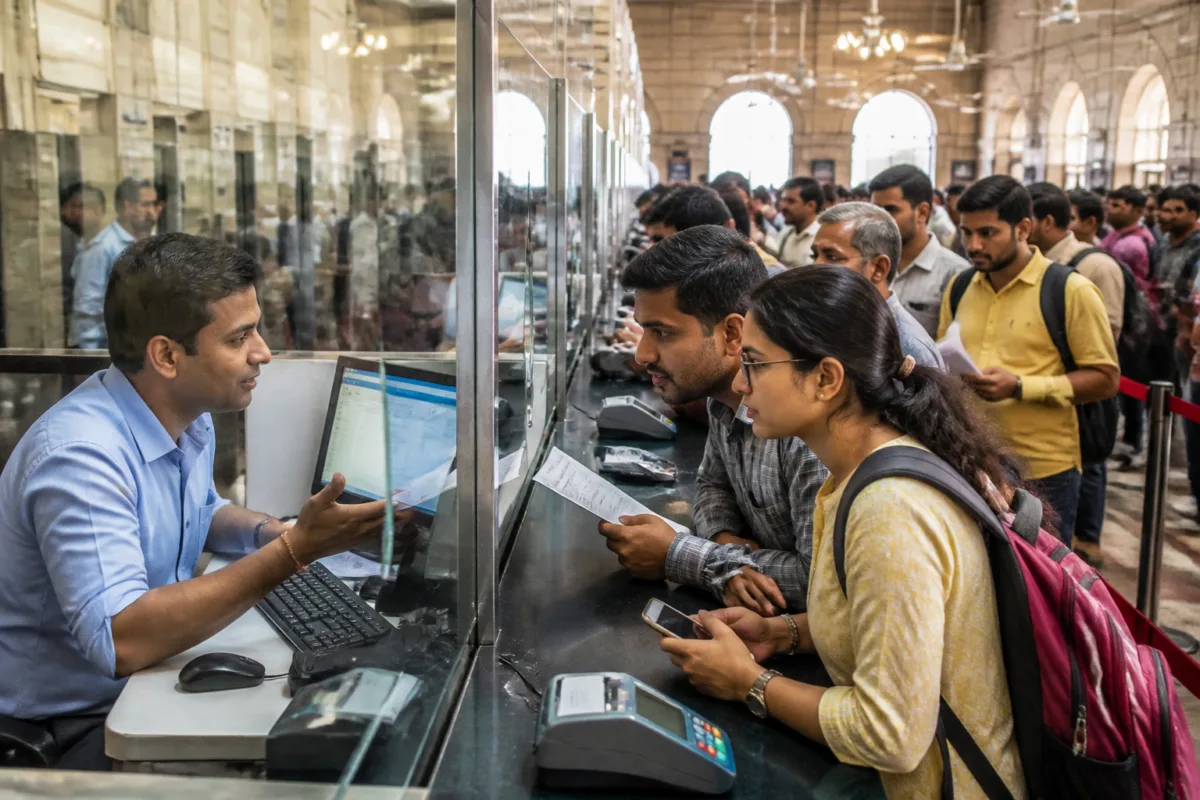
Railway passengers booking reserved tickets at Passenger Reservation System (PRS) centres will be able to opt for travel insurance from October 27, 2026, extending a facility that was previously available only to passengers booking e-tickets online. The option will be voluntary, but passengers must provide a mobile number and pay digitally to use it.
The change follows a Supreme Court order dated October 6, 2026, according to a report by Navbharat Times – Mumbai. Under the new arrangement, reservation-centre staff will inform passengers about the Optional Travel Insurance Scheme (OTIS) and process it only after receiving their consent.
Passengers who choose the insurance will have to pay the premium digitally along with the ticket fare. Those paying for their tickets in cash will not be eligible for the facility. The requirement means the insurance option at physical reservation counters will depend on both digital payment and the availability of a registered mobile number.
The policy details will be sent to the mobile number provided during booking. Reservation staff will also help passengers understand how to access the policy information when required. The railway’s instructions say that employees must explain the insurance process, collect the premium and respond to passenger queries before the facility is implemented.
The reported coverage includes up to ₹10 lakh in the event of death and up to ₹10 lakh for permanent and total disability. The provision for permanent partial disability is up to ₹7.5 lakh, while hospital treatment expenses are covered up to ₹2 lakh. The scheme also provides up to ₹10,000 for transporting mortal remains.
The expansion will require changes to the reservation system used at railway counters. The Centre for Railway Information Systems (CRIS) and the Indian Railway Catering and Tourism Corporation (IRCTC) are working on the required technical changes, according to the report. Railway zones have been directed to complete preparations at reservation centres before the October 27 rollout.
The instructions also assign monitoring responsibilities to divisional railway managers and commercial department officials. Any technical problems arising during implementation are to be referred to the relevant CRIS and IRCTC officials. Staff training is expected to cover the insurance procedure, premium collection and the handling of passenger questions.
The change brings an optional financial-protection product into a wider range of railway booking transactions, but it does not make insurance compulsory. Railway zones have been asked to complete the arrangements and report their readiness to the ministry before the facility becomes operational.

