


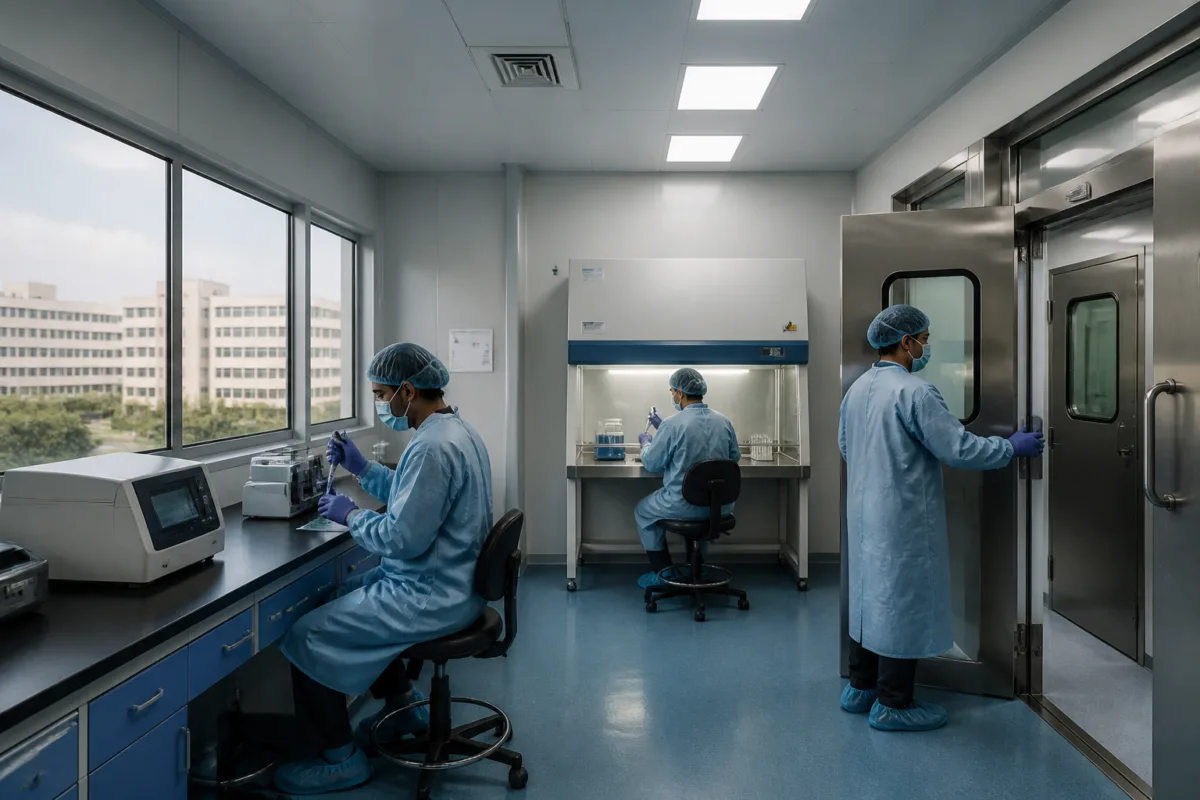
AIIMS Nagpur has received a ₹30 crore sanction from the National Centre for Disease Control (NCDC), New Delhi, to establish a Biosafety Level-III laboratory aimed at improving the detection, investigation and surveillance of emerging and high-risk infectious diseases in the region.
The laboratory is expected to become operational in about a year. AIIMS executive director Prashant Joshi said space had already been earmarked for the facility and that the sanctioned amount would be used to develop its infrastructure. Manpower and equipment will be funded through separate budgets, he said.
The BSL-III facility is expected to reduce AIIMS Nagpur’s dependence on the National Institute of Virology in Pune for advanced testing. According to Joshi, it will also strengthen Maharashtra’s capacity for infectious-disease surveillance and research by adding high-containment testing infrastructure within the state.
The planned laboratory comes as public-health institutions face growing concerns around infections that can emerge at the intersection of human, animal and environmental systems. Joshi linked the increasing human-animal interface to deforestation and the expansion of human activity into animal habitats, while also identifying climate change as an important factor in the spread and emergence of zoonotic infections.
Meena Mishra, head of microbiology at AIIMS Nagpur, said early detection would require both syndromic and genomic surveillance. Syndromic surveillance tracks unusual patterns of illness based on symptoms, while genomic surveillance helps identify mutations and emerging pathogens through whole genome sequencing.
Mishra said a rise in disease incidence should be detected early through both approaches so that preventive measures can be implemented. The planned BSL-III laboratory will therefore add capacity not only for testing, but also for investigating high-risk infections that require specialised containment and diagnostic processes.
AIIMS Nagpur is also undertaking a separate ₹17 crore upgrade of its Virus Research and Diagnostic Laboratory. The facility is being converted into an Infectious Disease Research and Diagnostic Laboratory under funding from the Indian Council of Medical Research’s Department of Health Research.
The upgraded regional laboratory is expected to become functional within three months. Its scope will include bacteriology, mycology, parasitology and virology, expanding the range of infections that can be tested at AIIMS Nagpur.
Mishra said the microbiology department was already involved in national surveillance programmes and had contributed to granting PCR-testing status to more than 250 laboratories. The two projects will give the institute both a higher-containment laboratory and a broader regional diagnostic facility, with the BSL-III laboratory expected to be operational in about a year and the upgraded IRDL within three months.

