


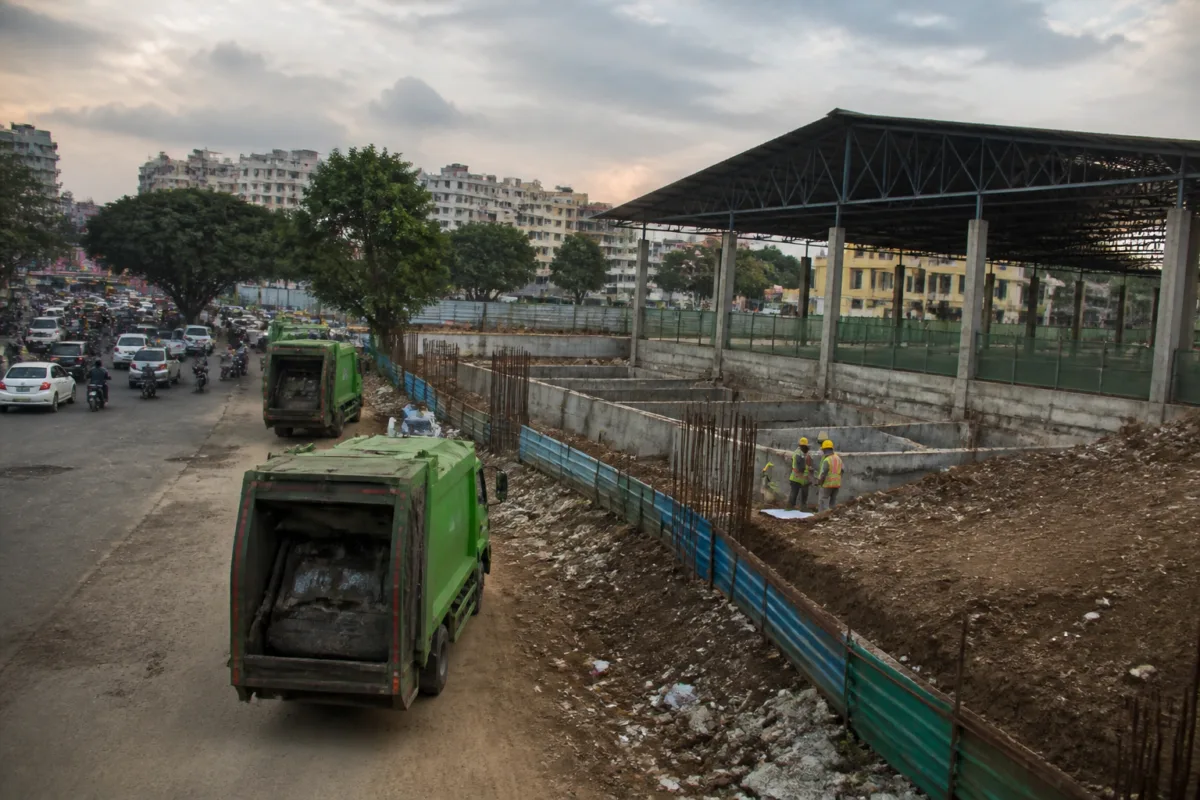
A ₹133 crore tender for Bengaluru’s waste-transfer stations has become the centre of a political and administrative dispute after Karnataka Opposition Leader R. Ashoka alleged that contracts were awarded to an ineligible company and that mandatory security deposits were not collected. The claims, reported by Prajavani from Ashoka’s press conference, place procurement procedure—not merely the cost of waste management—at the centre of the controversy.
Ashoka alleged that the Greater Bengaluru Authority and the Bengaluru Solid Waste Management Limited awarded the contracts to Muniyappa Enterprises despite the company not meeting financial eligibility conditions. He said the company had reported a turnover of ₹3.34 crore in 2023-24, after recording annual turnover of only ₹1 crore to ₹2 crore in earlier years. According to his account, the tender rules required an annual turnover of ₹10 crore.
The material supplied for this report contains no response from the Greater Bengaluru Authority, Bengaluru Solid Waste Management Limited, the state government or Muniyappa Enterprises. It also does not include the tender documents, eligibility assessment, letters of award or work orders themselves. The central fact established by the supplied report is therefore that Ashoka made these allegations and released documents that he said related to the tender. Whether the alleged violations occurred remains an issue for official examination.
The dispute is significant because waste-transfer stations are an operational link between neighbourhood collection and subsequent movement of municipal waste. A tender for such facilities is not only a construction or contracting exercise. It can determine whether waste is transferred through planned sites, whether collection vehicles can operate efficiently and whether the municipal system has the physical capacity to handle waste before it moves to later stages of processing or disposal. In this case, however, the report does not establish whether any of the 21 proposed packages have been completed, whether work has begun or whether services have been disrupted.
Ashoka’s first allegation concerns the financial capacity of the successful bidder. He claimed that the company did not possess the turnover required under a rule introduced by the state government in 2018. If the tender documents contain that condition, the key administrative question is how the bidder was evaluated against it and who certified compliance. A procurement rule has practical meaning only when eligibility is checked before the contract is awarded and when the record shows how competing bids were assessed.
The second issue involves additional security deposits. Ashoka said that contractors who bid below the estimated tender value were required to provide the difference as a security deposit. He alleged that this requirement was not enforced even after the Finance Department raised concerns. He cited Package 2, where the estimated cost was ₹55.04 crore and an additional deposit of ₹6.79 crore was allegedly due, and Package 5, where he said an additional security deposit of ₹5.99 crore was not collected. He put the total uncollected amount at ₹12.99 crore.
These figures are allegations presented by Ashoka and are not independently established in the supplied material. They nevertheless identify the documents that would be needed to resolve the dispute: the estimates for each package, the bid prices, the tender conditions, the Finance Department’s communication, the security-deposit calculations and the final approvals. Without those records, the public cannot determine whether the amounts were waived under an authorised provision, omitted in error or wrongly not collected.
The chronology described in the report also raises a question about the sequence between planning and procurement. Ashoka alleged that 21 packages were tendered before land had been identified for the waste-transfer stations. The report does not specify the proposed locations, ownership status, approvals, site constraints or construction timelines. Those details matter because a contract cannot be assessed only by its financial value if the sites required for execution have not been secured.
A tender issued before sites are ready can create an administrative mismatch between the contract and the physical conditions needed to execute it. But the supplied report does not establish that such a mismatch occurred in this case. It records Ashoka’s demand that officials disclose where the sites were identified and what land arrangements had been made. That demand points to a basic record-keeping question: whether the project was planned as a complete chain—from site identification and approvals to construction, operation and payment—or whether procurement moved ahead of those steps.
The institutions named in the allegations have different responsibilities within that chain, although the supplied report does not provide their formal division of powers. The Greater Bengaluru Authority and the Bengaluru Solid Waste Management Limited are identified as the bodies involved in the tendering process. The Finance Department is mentioned as having issued a warning, according to Ashoka. The next level of accountability would therefore involve establishing which body prepared the tender, which authority approved the eligibility conditions, who issued the letter of award and work order, and who authorised any departure from the security-deposit requirement.
Ashoka has demanded that the Package 2 and Package 5 files be seized and that the matter be referred for a high-level inquiry or investigation by the Lokayukta. He also said he would write to the chief minister seeking cancellation of the tender. These are political and procedural demands, not findings by an investigative agency. The supplied report does not say that a formal inquiry has been ordered, that the tender has been cancelled or that any official has been found responsible.
The controversy also exposes how easily waste infrastructure becomes entangled with broader questions about municipal finance. Ashoka alleged that the tender involved kickbacks and accused a minister of having a role in awarding the contracts. Those are serious allegations, but the report provides no documentary finding or response that establishes them. They should therefore remain clearly separated from the verifiable procedural questions about eligibility, deposits, land and approvals.
The reference to the Union government’s Swachh Bharat programme adds another dimension to the political dispute. Ashoka alleged that central funding was relevant to the project and criticised the state government over its statements about the availability of funds. The supplied report does not specify the amount of central assistance, the funding arrangement, the sanction order or the release conditions. It cannot therefore establish whether the disputed tender was financed through that programme or how any funds were allocated.
For citizens, the immediate issue is not only whether a contractor was eligible. It is whether Bengaluru’s waste infrastructure is being built through a process that can withstand scrutiny. Waste-transfer stations occupy a critical position between street-level collection and larger disposal or processing systems. If tenders are delayed, cancelled or investigated, the consequences could affect the rollout of facilities. If contracts proceed without clear land and eligibility records, the city could face disputes over cost, construction and performance. The supplied report does not establish that either outcome has occurred.
The evidence currently available supports a narrower conclusion. A senior opposition leader has alleged that a ₹133 crore waste-transfer-station tender breached eligibility and security-deposit rules, and he has sought investigation and cancellation. The allegations identify specific companies, packages, financial figures and administrative actions that can be tested against official records. They do not, by themselves, prove a scam or establish that kickbacks were paid.
The next meaningful development will be an official response from the Greater Bengaluru Authority, Bengaluru Solid Waste Management Limited, the state government or the contractor, followed by disclosure or examination of the tender files. Until those records and responses are available, the public record contains a detailed political allegation but not an established finding of procurement wrongdoing.

