


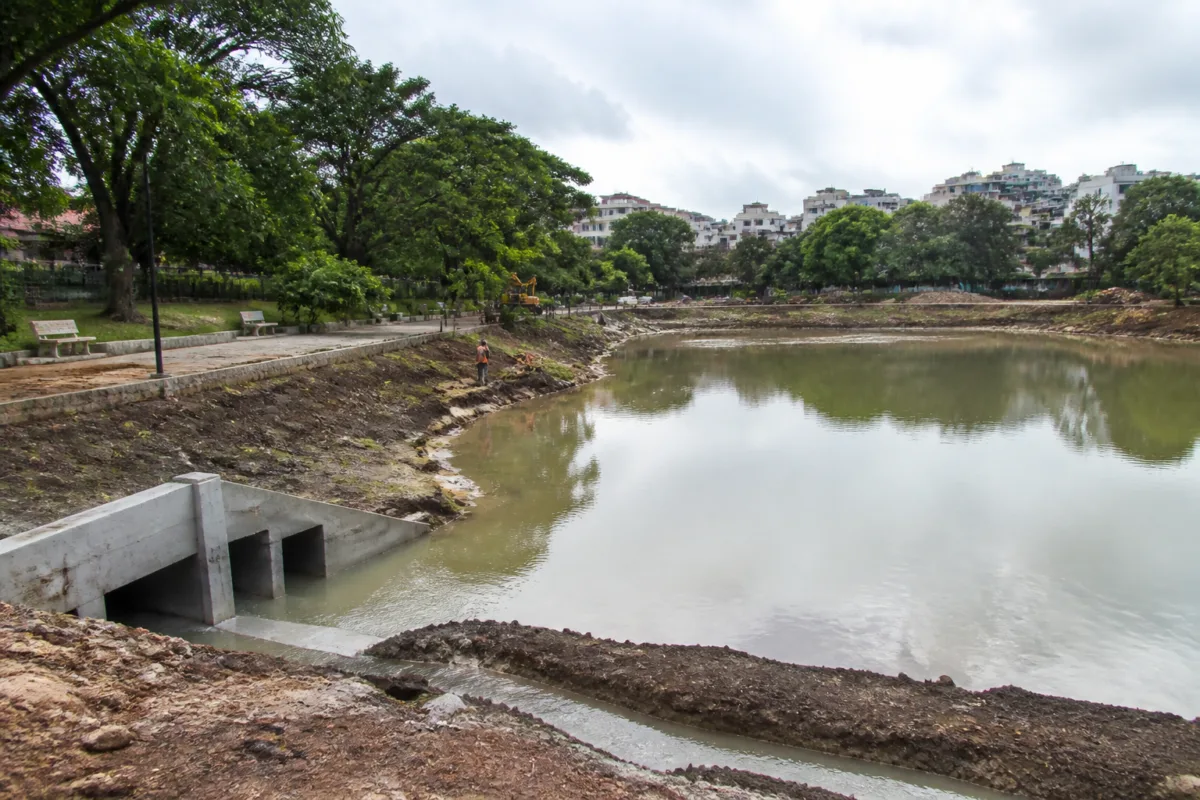
HYDRAA has begun work to restore and expand the lake at Krishna Kanth Park in Yousufguda from about three acres to 12 acres, a project intended to reduce flooding in Krishnanagar, Yousufguda and Ameerpet. HYDRAA commissioner A.V. Ranganath launched the restoration works on Saturday.
The lake was once spread across 27 acres, but its extent was reduced to approximately three acres after the surrounding area was developed into Krishna Kanth Park. The state government has now deputed HYDRAA to restore the water body and increase its capacity to hold rainwater.
According to the report, the lake previously received substantial rainwater flows from Jubilee Hills, Venkatagiri, Krishnanagar and Yousufguda. After its capacity was reduced, rainfall of even around 5 cm often resulted in flooding in Krishnanagar, Yousufguda and Maitrivanam.
The restoration plan includes deepening the lake and constructing inlets to allow stormwater to enter more easily. Outlets will also be developed so that excess water can drain out. These components are intended to improve the movement and storage of rainwater within the lake system, although the report does not provide a project cost or completion timeline.
The project will also involve changes to the site’s vegetation. Trees at the location will be relocated after approval from the tree protection committee and replanted near Sunnam Cheruvu, according to the report. The proposal additionally includes a bund around the lake and improvements to the park’s visitor facilities.
Planned public-use facilities include a walking path, another open gym, improved seating areas and upgraded children’s play facilities. Fencing will be installed to prevent people from entering the water. The planned combination of water infrastructure and park improvements means that the site is being treated both as a flood-management asset and as a public recreational space.
The lake’s reduced footprint illustrates how the alteration of urban water bodies can affect neighbourhood drainage. Rainwater that earlier flowed into the larger lake system now contributes to runoff across built-up areas, while the remaining lake has less capacity to absorb and retain stormwater. The flooding reported after relatively limited rainfall has connected the condition of the water body directly to the daily functioning of nearby streets and neighbourhoods.
HYDRAA said the restored lake would help improve groundwater levels in surrounding areas while creating a better recreational space for visitors. The next stated steps are to secure tree protection committee approval for relocation work and implement the lake, drainage and park improvements described in the restoration plan.

