


HPCL has refinanced about ₹50,000 crore of debt linked to its Rajasthan refinery, reducing borrowing costs by around 105 basis points as it targets annual interest savings of up to ₹1,000 crore and moves the facility towards full-scale operations.
Chairman and Managing Director Vikas Kaushal said on an earnings call that the refinancing, effective October 3, was expected to deliver annual savings of about ₹470 crore to ₹550 crore. Additional equity infusions, the conversion of subordinated loans into equity and interest-free support from the Rajasthan government are expected to reduce the project’s financing burden further.
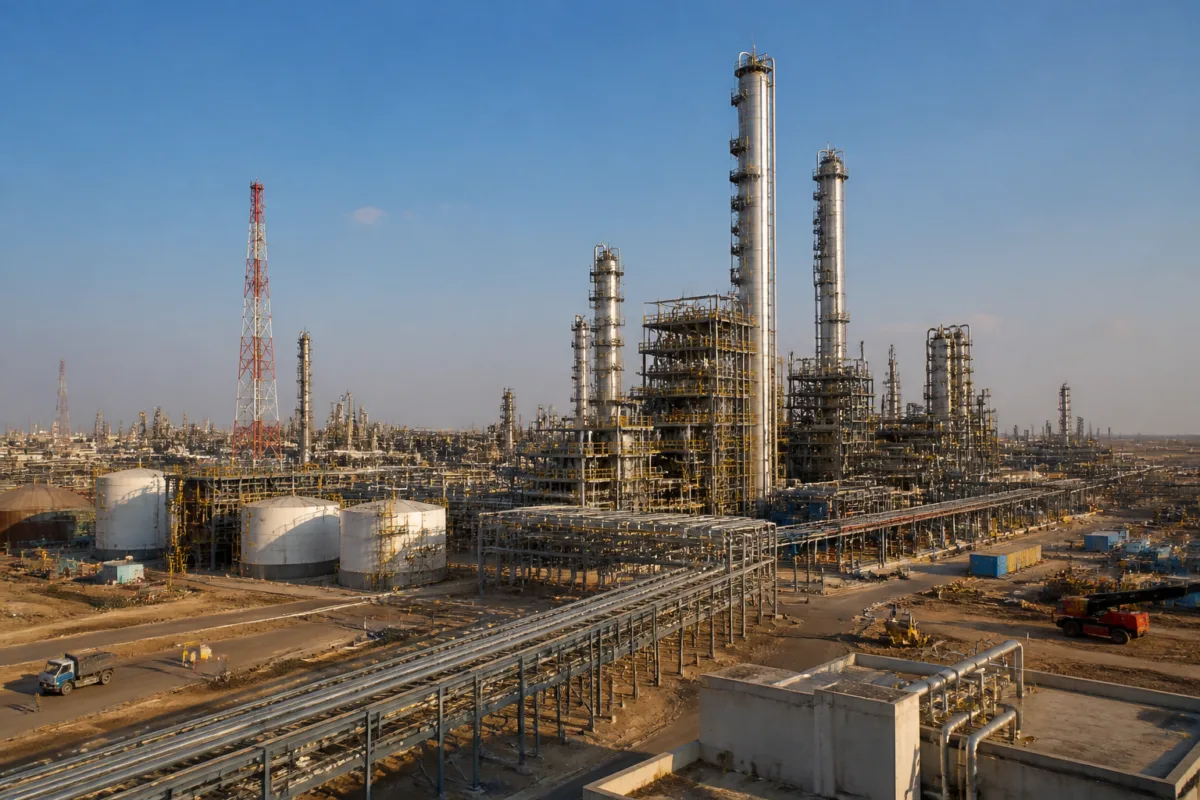
The 9-million-tonne-a-year refinery at Pachpadra in Rajasthan’s Balotra district was built at a cost of ₹79,459 crore. HPCL holds a 74 per cent stake in HPCL Rajasthan Refinery Limited, the joint venture company implementing the project, while the Rajasthan government holds the remaining 26 per cent.
As part of the refinancing, HRRL raised ₹8,000 crore in rupee term loans from a consortium comprising the National Bank for Financing Infrastructure and Development, India Infrastructure Finance Company, ICICI Bank, UCO Bank and Punjab & Sind Bank. It also secured a ₹2,000 crore working capital demand loan from Bank of Baroda and fund-based and non-fund-based credit facilities totalling ₹400 crore from ICICI Bank.
The term loans will be used partly to refinance existing project loans. The working capital facilities will support HRRL’s operating requirements and help manage cash-flow mismatches linked to the refinery and its allied utilities and facilities at Pachpadra.
Kaushal said HPCL had significantly altered the company’s debt structure. The Rajasthan government infused ₹1,500 crore of equity into the refinery during the September quarter, while HPCL converted ₹4,300 crore of subordinated loans into equity. The conversion is expected to reduce interest costs by about ₹350 crore. Further equity calls are planned over the next one or two quarters.
The state government has also committed to providing about ₹1,100 crore annually through interest-free loans, with the first instalment already received, according to Kaushal. The measures come as HPCL seeks to improve the financial performance of a large industrial asset that is still moving through its commissioning and ramp-up phase.
The refinery’s commercial operation date was declared on June 22, and the facility is currently operating at about 60 per cent utilisation. Almost all secondary processing units are in hot circulation, while two units remain to be brought into that stage. HPCL expects the remaining commissioning work, including the sulphur recovery unit, to be completed before the refinery moves towards full-capacity operations.
The company expects throughput to reach a run rate of 8 million to 9 million tonnes per annum around December, with the timing subject to a variation of one or two weeks. The refinery recorded a gross refining margin of about $12 per barrel in the September quarter. HPCL expects margins to rise above $20 per barrel in the fourth quarter as the facility increases its processing of higher-sulphur crude, for which it was designed.
Product shipments have also increased as operations have expanded. Kaushal said the refinery shipped about 15,000 tonnes of products on the day before the earnings call, compared with no shipments three months earlier. October shipments are expected to exceed 400,000 tonnes and generate more than ₹4,000 crore in revenue during the month.
Kaushal said the refinery could record a positive monthly profit before tax in October, while stressing that this was management’s optimism rather than formal guidance because of the volatility of refining margins and the facility’s early operating stage. HPCL’s next major milestone is the completion of the remaining commissioning work and the planned movement towards an 8-million-to-9-million-tonne annualised throughput run rate around December.

