


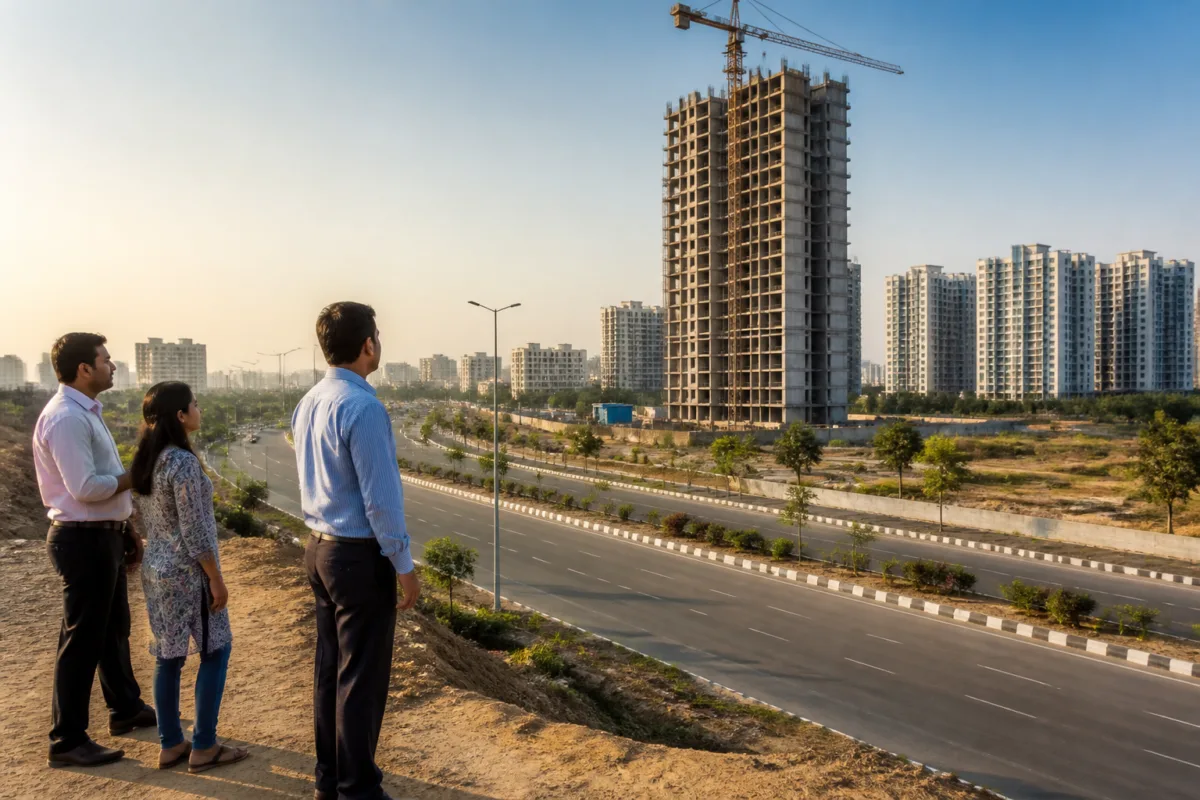
Delhi-NCR property demand is gaining momentum in the premium housing segment, but the latest festive-season response reveals a market being shaped less by discounts and more by connectivity, construction quality, developer credibility and the liveability of emerging residential corridors. Gurugram, Noida and Greater Noida are attracting buyers who are evaluating homes as part of a wider urban system rather than as isolated real estate products.
The shift is important because location is increasingly being judged through daily mobility and neighbourhood infrastructure. Buyers are looking at how easily a project connects to employment centres, established urban areas and transport networks, while also weighing whether surrounding infrastructure can support the promised lifestyle. This is particularly visible in corridors that are still developing, where future value depends not only on the project itself but also on the pace and quality of urbanisation around it.
According to figures cited by NDTV Business, housing demand in New Delhi rose 9.9 per cent quarter-on-quarter in the third quarter of 2026, as stated by Mohit Goel, Managing Director of Omaxe. Goel also said demand for homes priced above Rs 3 crore increased 19 per cent in Noida and 34 per cent in Greater Noida. These figures point to stronger interest at the premium end, although they do not establish that the broader market has recovered to its previous annual level.
That distinction matters. The report says festive-season buying has restored momentum, but demand has not returned to year-ago levels. The market is therefore showing a mixed pattern: premium housing is attracting attention, while affordability remains a constraint for mass-market buyers. A stronger response in higher-value segments does not automatically mean that the housing market as a whole has become more accessible or uniformly stronger.
The changing geography of demand is closely linked to the development of transport and civic infrastructure. In Gurugram, the Dwarka Expressway and developing sectors are drawing buyers seeking accessibility, larger homes and modern amenities. Vikas Garg, Joint Managing Director of Ganga Realty, attributed continued interest in Gurugram’s premium housing market to infrastructure development and improved connectivity.
The appeal of such corridors rests on a simple urban calculation. A home located farther from established centres may become attractive if improved roads and other infrastructure reduce travel friction. But connectivity is not merely a question of a new road or expressway. The value of a residential corridor also depends on the quality of local streets, access to services, neighbourhood planning and whether the surrounding area develops as a functioning community rather than a collection of housing projects.
The report does not provide a detailed assessment of these supporting systems, and that is a limitation when interpreting the demand figures. It identifies infrastructure and connectivity as important drivers, but does not establish how projects are performing on commute times, public transport access, water supply, drainage, schools, healthcare or other civic services. For buyers, these factors can determine whether a corridor offers liveability or only improved access to a distant destination.
Noida and Greater Noida illustrate the same tension in a different form. The reported rise in demand for homes above Rs 3 crore suggests that higher-value buyers are increasingly considering these markets. Greater Noida, in particular, has been presented as an emerging residential destination where infrastructure development and connectivity are influencing location choices. Yet the report also says prices in Greater Noida and Gurugram recorded little change, even as prices advanced in most markets.
Stable prices alongside rising interest can indicate that buyer enquiries and actual price movement are not progressing at the same pace. The available material does not provide enough evidence to determine whether this reflects greater supply, cautious negotiations, changing inventory or a temporary festive-season effect. It does, however, show why demand should not be read only through promotional activity or the number of enquiries generated by developers.
The premiumisation of demand is also changing what buyers expect from a home. Goel said buyers are assessing construction quality, location, developer track record and delivery history rather than responding only to festive offers. Neeraj K Mishra, an architect and real estate expert, said buyers are paying closer attention to architectural planning, natural light, ventilation, efficient use of space, privacy, amenities and the overall quality of the living environment.
These preferences connect real estate demand to the built environment more directly. Design features such as daylight, ventilation and space efficiency affect everyday living, while construction quality and delivery records influence financial and practical risk. The growing attention to these factors suggests that buyers are treating premium housing as a long-term use decision, not simply as a purchase triggered by auspicious dates or limited-period payment plans.
At the same time, the market remains dependent on confidence. Goel linked positive sentiment to stable interest rates, improving economic confidence and the aspiration to own a home. Developer representatives cited in the report also expect festive sentiment to support sales, particularly in premium and mid-premium segments. These statements explain the industry’s outlook, but they are not independent measures of affordability, sales conversion or household financial stress.
The institutional landscape behind these decisions is complex. Developers control project delivery, design and construction quality, while local and regional authorities shape roads, civic services, land-use planning and infrastructure provision. Buyers therefore assess both the private project and the public systems around it, even when these responsibilities are not always clearly visible in real estate marketing.
This is especially significant in emerging corridors. A project may advertise proximity to a major road or expressway, but the practical benefit depends on last-mile connections and the availability of daily services. If residential growth advances faster than neighbourhood infrastructure, residents may experience longer local trips, dependence on private vehicles and pressure on existing civic systems. The source material does not quantify these pressures, but its emphasis on connectivity and neighbourhood infrastructure places them at the centre of the housing question.
The price pattern reported across cities adds another layer. Mumbai and Chennai recorded some of the larger quarterly gains, followed by Ahmedabad and Bengaluru, while Greater Noida and Gurugram saw little change. The comparison suggests that Delhi-NCR’s premium demand story is not simply a national property boom moving uniformly across locations. Local supply, infrastructure conditions and pricing continue to shape how buyers respond in each market.
For Delhi-NCR, the key issue is whether festive momentum can translate into sustained demand without widening the gap between premium housing and the broader affordability market. The reported growth in homes above Rs 3 crore in Noida and Greater Noida highlights the strength of high-value demand, but the report also acknowledges that affordability will continue to matter for mass-market buyers. The two segments may therefore be responding to different economic conditions within the same regional housing market.
The evidence confirms that connectivity has become a major filter through which buyers assess Delhi-NCR housing, particularly in Gurugram, Noida and Greater Noida. It also shows that premium buyers are examining design, construction and delivery credibility more closely. What remains uncertain is whether current interest will produce sustained transactions, how much of the demand will extend beyond the premium segment and whether emerging corridors can match housing supply with complete urban infrastructure. Those are the indicators that will determine whether the festive revival represents durable market strength or a temporary improvement in sentiment.

