


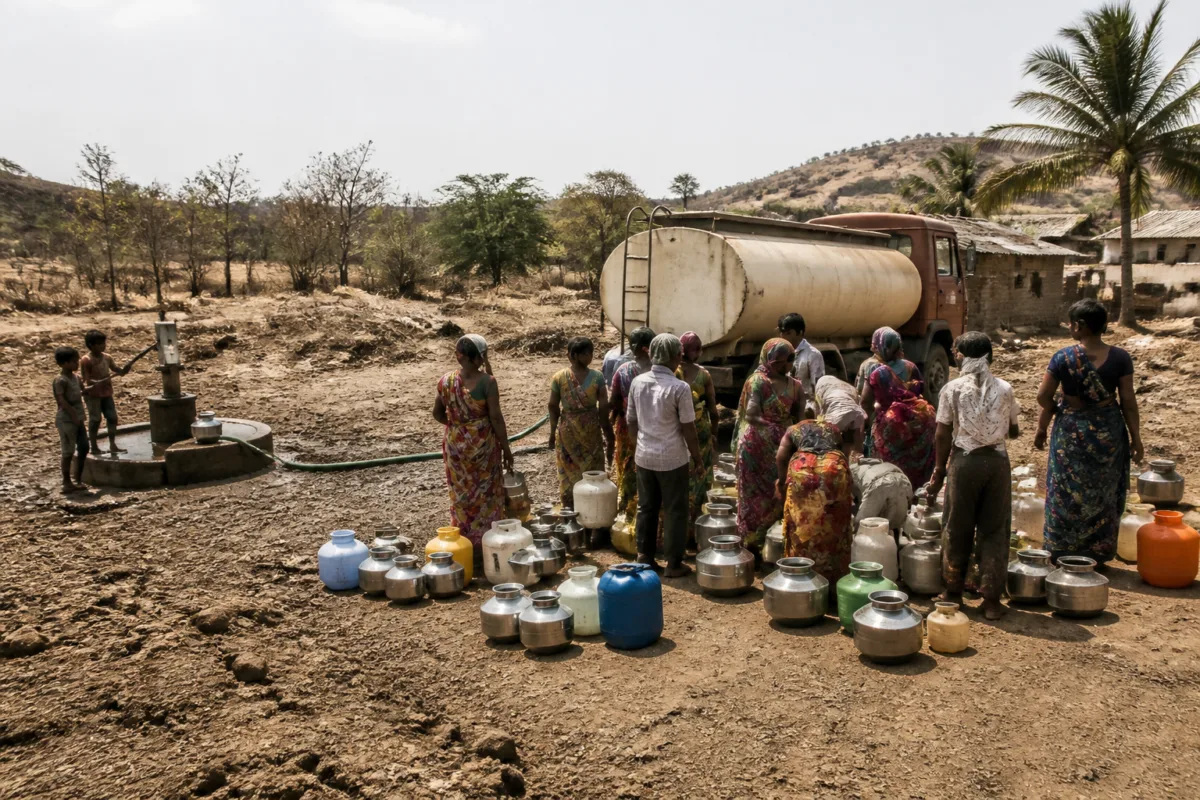
Pune district’s rural administration is preparing a wider drought-response plan as water shortages affect five villages and 53 hamlets, where eight tankers are currently supplying drinking water to about 18,650 residents. The Pune Zilla Parishad will review the situation at its regular meeting on October 22, including drinking water supply, crop-loss assessments, fodder planning and preparations for the summer shortage.
Zilla Parishad president Veerdhवल Jagdale said the meeting would examine measures required in drought-affected areas and consider village-level planning based on the expected severity of the shortage. Baramati, Indapur, Daund, Shirur, Purandar, Khed, Velhe, Bhor, Ambegaon and Junnar have been included among the ten drought-affected talukas in the district.
The current tanker operation indicates that the pressure on rural water systems has already moved beyond a purely seasonal planning exercise. The eight tankers are supplying water to locations where local sources are not meeting demand. The district’s rural water supply department has also begun repairing borewells, while complaints about non-functional borewell handpumps have been raised by Zilla Parishad members.
The administration has said it will check whether approved water-supply schemes are actually functioning on the ground, whether defunct schemes have been restored and whether tanker services are being delivered regularly. This monitoring is intended to move the response beyond administrative approvals and establish whether residents are receiving water at the required frequency.
The October 22 review is also expected to cover crop-loss assessments, compensation for farmers, fodder cultivation, distribution of fodder seeds and water-conservation works under employment guarantee schemes. Jagdale said the Zilla Parishad would consider making separate financial provisions if required for these measures.
The drought response is being planned across multiple systems because the shortage affects both households and livestock. Drinking water supply is being handled through tanker operations, borewell repairs and checks on rural schemes, while the agricultural response involves crop-loss surveys and possible compensation. Fodder planning is intended to address the risk to cattle and other livestock if agricultural stress continues.
The district administration’s next challenge will be ensuring that repairs and approved interventions translate into functioning water points in villages and hamlets. The Zilla Parishad has said that field-level verification of borewells, handpumps, water schemes and tanker operations will form part of its response.
The meeting on October 22 is expected to provide the next formal review of the shortage, the status of village-level interventions and any additional funding or drought-relief measures required across Pune’s affected talukas.

