


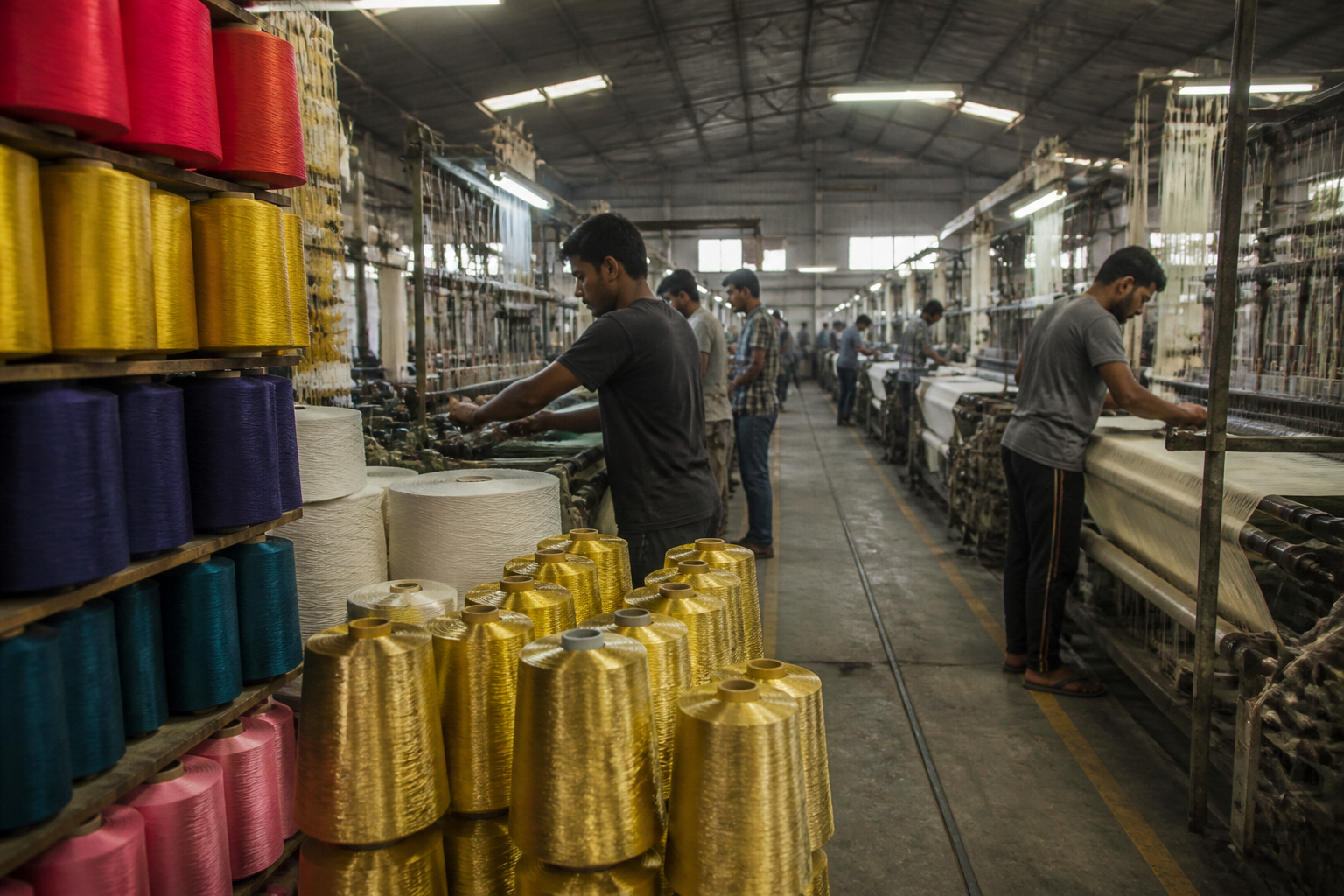
Surat’s textile industry has warned of an extended Diwali shutdown after yarn prices rose by up to 66%, while metallic jari manufacturers said GST refunds worth about Rs 18 crore a month have remained unresolved for nearly three years. The concerns were raised during a meeting with Union textile minister Giriraj Singh on Friday, with industry representatives seeking immediate government intervention.
Chetan Maniya, president of the Rapier Jacquard Weavers Association of Surat, said the increase in yarn prices was affecting the entire textile value chain. He urged the Union ministry to monitor prices, control the escalation and take steps against the alleged dumping of cheap yarn.
“Yarn prices have increased by 66%. Traders are increasing prices at every level. Overall charges for shipping are also adding to the rising prices. We request the ministry to monitor the price rise and control it,” Maniya said.
Industry representatives said the price rise was putting severe pressure on textile and allied units across Surat. They warned that many units were considering an extended Diwali shutdown of more than 15 days if the cost pressures continued. The proposed shutdown would affect production activity in one of the city’s key industrial sectors, although the report does not specify how many units are considering the move or when it would begin.
The delegation also renewed a long-pending demand concerning GST refunds for the jari industry. Jala Satiya, a representative of the Secure Embro Thread & Jari Association of Surat, said a government notification could resolve the refund issue. Tushar Kuvadiya, the association’s president, said metallic jari manufacturers had not received around Rs 18 crore in GST returns every month for the past three years.
“The issue has been raised at various levels but it is not being resolved,” Kuvadiya said. The industry’s claim places the value of the pending monthly refunds at approximately Rs 18 crore, but the report does not provide a government figure or explain whether the amount represents approved claims, disputed claims or total applications awaiting settlement.
The two demands point to separate pressures on Surat’s textile value chain: rising input and logistics costs on one side, and delayed tax refunds affecting working capital on the other. Yarn is a basic production input for weaving and related activities, while jari manufacturers supply metallic thread used in textile and embroidery products. Disruptions in either segment can affect linked traders, processors and manufacturing units.
Industry members raised the issues directly with Singh during the meeting, and participants reportedly supported Maniya’s intervention with applause. The minister assured the delegation that necessary action would be taken at the earliest. The report does not specify the measures proposed, a timeline for addressing the yarn-price concerns or the process through which the GST refund issue will be reviewed.
The next steps therefore depend on whether the ministry issues directions on price monitoring, alleged cheap-yarn dumping and the pending GST refunds. No formal notification or implementation deadline was cited in the report.
