


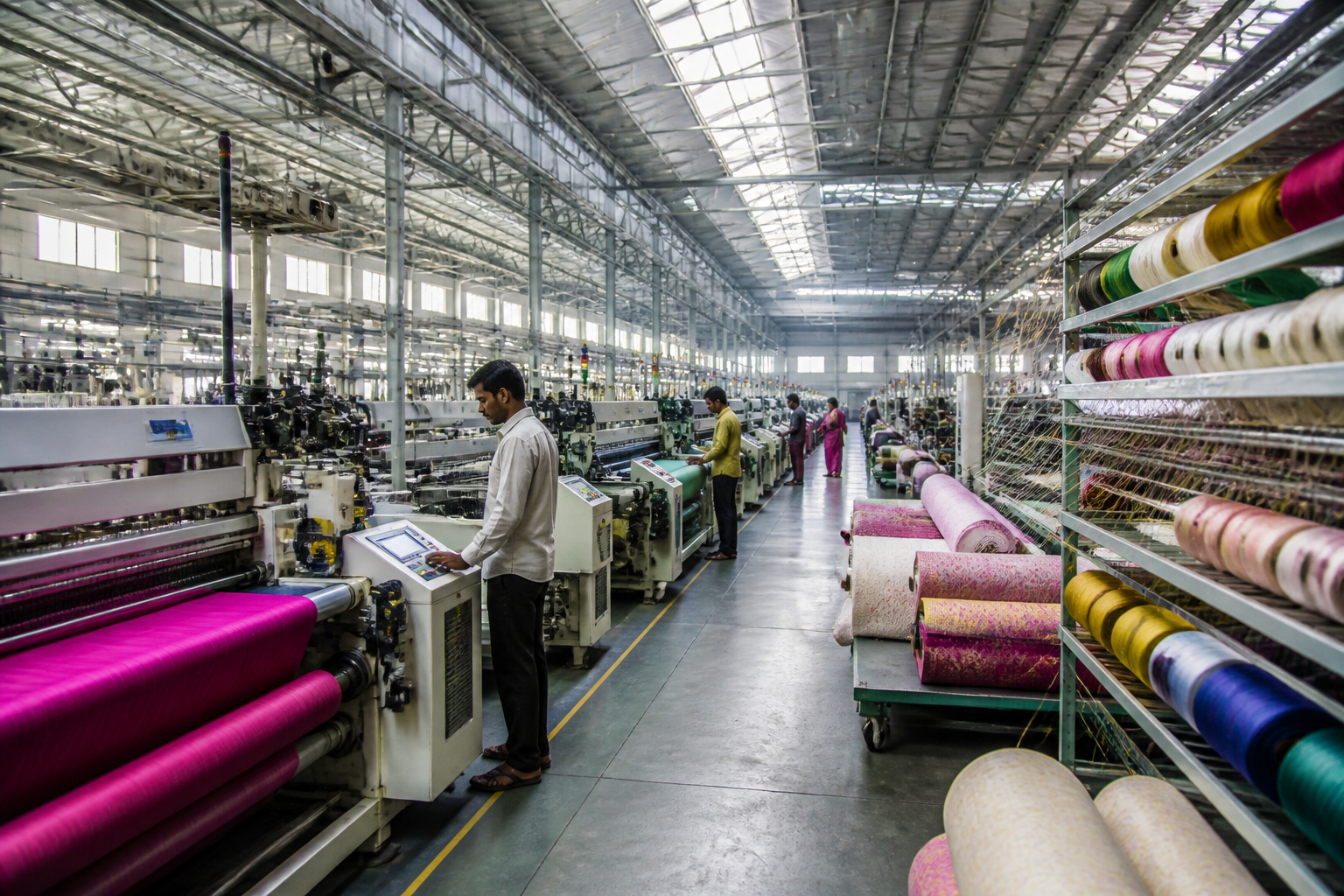
Surat’s textile industry has taken its concerns on credit, technology upgrades and changing markets to the Union government, with the Southern Gujarat Chamber of Commerce and Industry (SGCCI) raising the issues during a meeting with Union textile minister Giriraj Singh in New Delhi this week.
The discussion brought operational challenges facing Surat’s textile ecosystem directly before the ministry, including market shifts, capacity utilisation, machinery modernisation and policy matters related to yarn and fabric. SGCCI president Ashok Jirawala represented the chamber while attending Textile Conclave 2026, organised by Laghu Udyog Bharti.
Jirawala said textile entrepreneurs had highlighted the day-to-day pressures affecting units in Surat, one of India’s major textile manufacturing centres. These included the need to respond to changing market conditions, improve operational efficiency and adopt newer technologies.
According to Jirawala, Singh reiterated the Centre’s focus on strengthening textile micro, small and medium enterprises by improving their access to finance and helping them connect with global markets through export facilitation centres. The minister also said the textile ministry had held consultations with the department of financial services and bankers to support smoother credit flow to textile units.
Access to timely finance is a key concern for MSMEs undertaking machinery upgrades or managing changing production requirements. For Surat’s textile businesses, the issue is linked not only to individual units but also to the functioning of the wider industrial ecosystem, which includes yarn suppliers, fabric manufacturers and other connected enterprises. The SGCCI delegation also raised concerns about the competitiveness of the sector and the policy treatment of yarn and fabric.
The meeting did not announce a specific financial package, project or implementation deadline for Surat-based textile units. The Centre’s position, as conveyed by Jirawala, was focused on improving financing channels and strengthening export linkages rather than on a city-specific intervention.
The discussions come as textile businesses navigate shifts in demand and the need to modernise machinery and production systems. For the city, the issues have implications beyond manufacturing because the textile sector supports a large network of enterprises and commercial activity. However, the supplied report does not provide figures on the number of affected units, current capacity utilisation, credit requirements or the value of Surat’s textile output.
Trade sources cited in the report said Singh is likely to visit Surat next week and attend events connected with the city’s textile industry. Such a visit could provide an opportunity for local industry representatives to pursue the concerns raised in New Delhi, although no confirmed schedule or specific agenda was announced in the report.

