


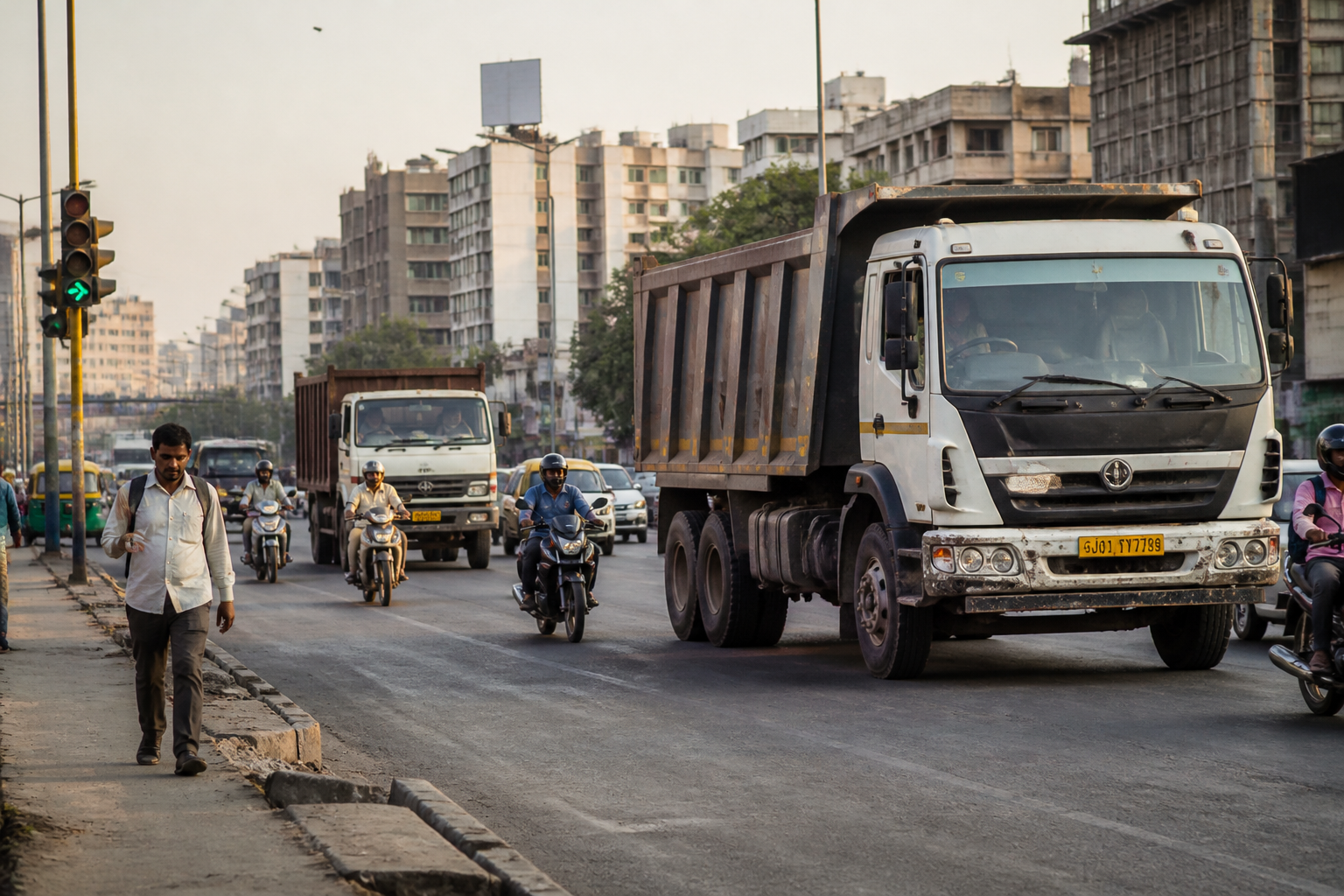
The Gujarat High Court has raised concerns over the safety risks posed by dumpers and trucks operating on Ahmedabad’s roads, questioning enforcement of traffic rules related to unclear number plates, heavy-vehicle movement, helmet use and mobile-phone use while driving.
The concerns, reported by Sandesh, centre on the safety of motorists and pedestrians in the city. The court’s observations have also brought scrutiny to the performance of the authorities responsible for enforcing traffic regulations and preventing dangerous driving practices.
One of the issues before the court was the presence of dumpers whose number plates are not clearly visible. Vehicle identification is essential when a road crash or traffic violation occurs, because unclear or missing registration details can make it difficult to establish responsibility and take action against the operator or owner.
The report said the court questioned when action would be taken against dumpers without clearly visible number plates. The issue is particularly significant for large commercial vehicles, which can create greater risks for smaller vehicles, two-wheeler riders and pedestrians when they are driven recklessly or operated without effective enforcement.
The movement of heavy vehicles during the day was another concern raised in the proceedings. Dumpers and trucks travelling through city roads can share space with two-wheelers, cars, buses and pedestrians. The court’s observations pointed to the need for controls on such movement and stricter implementation of the rules governing heavy vehicles.
The proceedings also drew attention to helmet compliance among two-wheeler riders. Helmets are a key safety measure, but non-compliance can increase the likelihood of severe or fatal head injuries in a crash. The court questioned whether the existing rules were being followed effectively on Ahmedabad’s roads.
Mobile-phone use while driving was also identified as a safety concern. Using a phone while operating a vehicle can distract drivers and reduce their ability to respond to changing traffic conditions. The court’s observations placed this issue alongside other violations as part of the wider question of whether traffic rules are being enforced consistently.
The case therefore extends beyond individual violations. It raises questions about how the city identifies unsafe commercial vehicles, monitors heavy-vehicle movement, records traffic offences and ensures that action follows after violations are detected. For residents, these enforcement mechanisms affect everyday journeys, especially on roads where large vehicles operate alongside vulnerable road users.
The report said the court sought attention from the government and the police to ensure citizen safety and take action against negligent drivers and other rule violators. The authorities’ response and the steps they take on number-plate visibility, heavy-vehicle regulation, helmet compliance and distracted driving will determine the next stage of the matter.
