


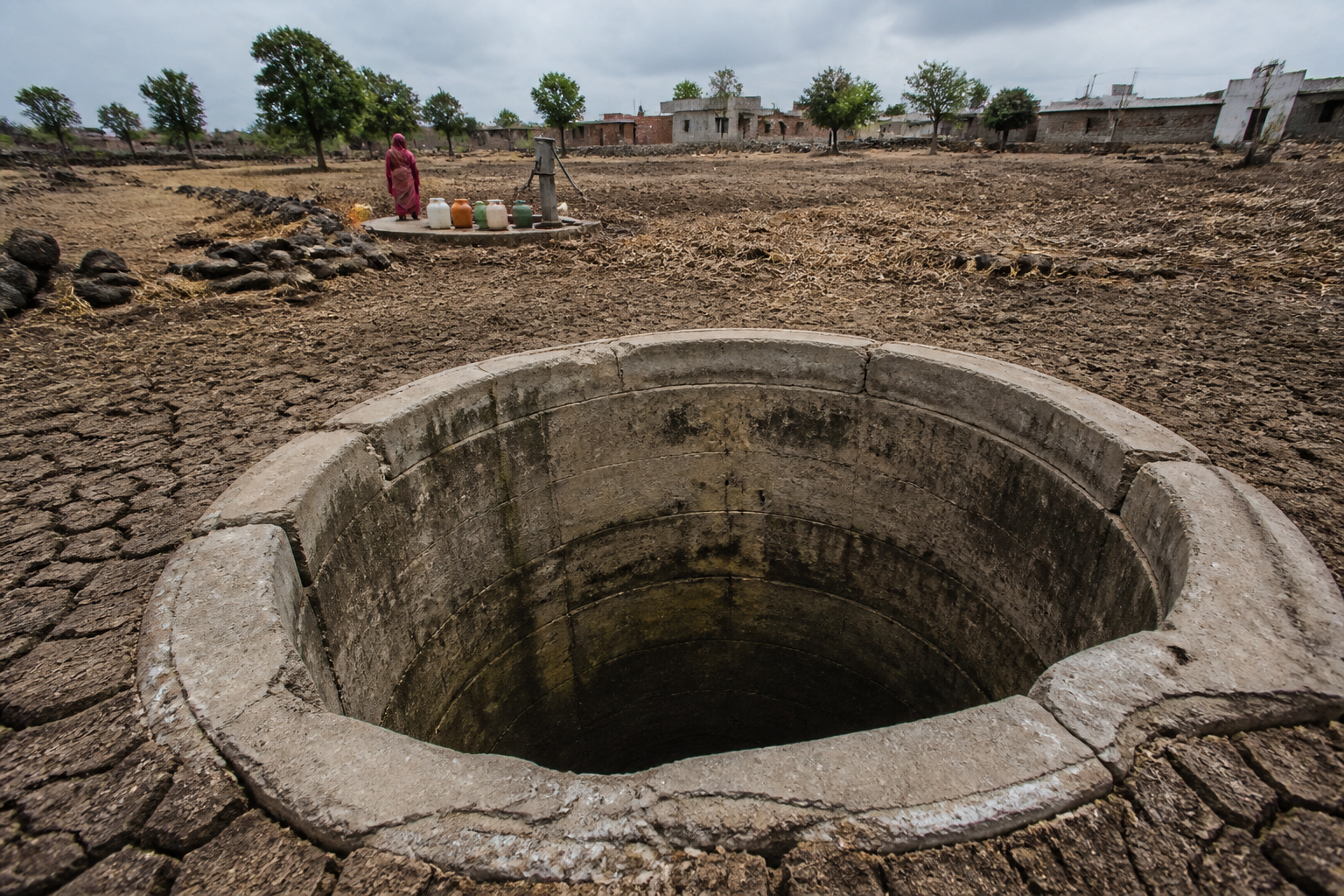
Nagpur groundwater levels were 42% below the five-year September average across Maharashtra’s Nagpur division, according to new data from the state government’s Groundwater Surveys and Development Agency (GSDA), raising concerns over drinking water availability and the upcoming rabi crop season. Chandrapur recorded the steepest decline at 73%.
The assessment covered 622 observation wells across Nagpur, Wardha, Bhandara, Chandrapur, Gadchiroli and Gondia. The division’s average water table fell by 0.80 metres, reaching 2.70 metres below ground level in September, compared with the five-year average of 1.90 metres for the same month.
Nagpur district recorded a 52% decline, with its water table falling by 1.17 metres to 3.41 metres below ground level from an average of 2.24 metres. Wardha saw a 55% fall, with groundwater dropping by 1.24 metres to 3.50 metres below ground level, the lowest level recorded in the division.
In Chandrapur, the water table declined by 1.25 metres to 2.97 metres below ground level, compared with 1.72 metres during the corresponding period over the previous five years. Bhandara recorded a 46% decline, with its water table falling by 0.75 metres to 2.42 metres.
The impact was less severe in Gadchiroli and Gondia. Gadchiroli’s water table fell by 0.27 metres, or 16%, to 1.92 metres, while Gondia recorded the smallest decline in the division, at 0.12 metres or 6%, bringing its water table to 1.98 metres below ground level.
The tehsil-level findings show that the decline was widespread. Of the division’s 64 tehsils, 31 recorded groundwater depletion of between one and two metres, while 27 reported a fall of up to one metre. Only six tehsils recorded no decline.
The monitoring network includes 111 wells in Nagpur district, 112 each in Wardha and Gadchiroli, 134 in Chandrapur, 79 in Gondia and 74 in Bhandara. The readings are part of the GSDA’s annual comparison of rainfall up to the end of September and groundwater levels recorded during the first week of October against long-term averages.
The findings come amid concerns over drought conditions in Maharashtra. Revenue minister Chandrashekhar Bawankule, who heads the cabinet sub-committee on drought, said that soybean, tur, cotton and maize crops had suffered extensive losses. He also warned that the upcoming rabi season was unlikely to materialise in many affected areas.
The annual groundwater assessment has been conducted since 1996-97. It is mandated under the Maharashtra Groundwater (Regulation for Drinking Water Purposes) Act, 1993, and its accompanying rules, and is used as an indicator for forecasting drinking water scarcity across the state.
