


Indian designer fashion flagship stores are becoming more than places to sell clothing. Across Mumbai and Delhi, designers are using permanent physical spaces to combine retail with architecture, craft, art, hospitality and brand storytelling, signalling a broader shift in how luxury is being built into the city.
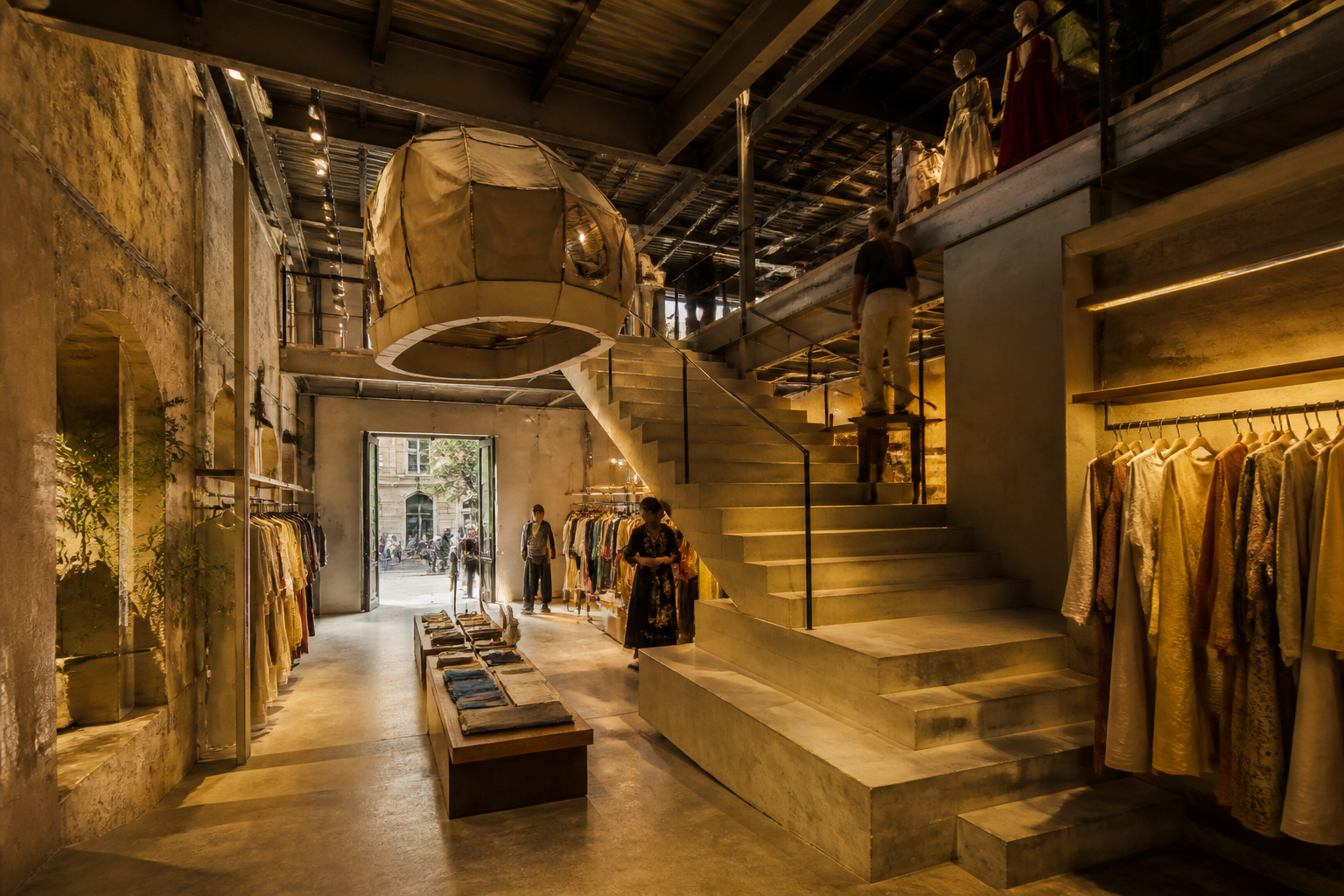
The change is visible in the locations and formats of the newest stores. Amit Aggarwal’s 6,000 sq ft, two-level flagship in Mumbai’s Kala Ghoda occupies a windowless heritage structure with exposed girders, split levels and irregular geometry. The interior uses concrete, sculptural forms and shadows, with a 13-foot suspended pod forming a central visual element. The store brings together couture, occasionwear, menswear, accessories and the pret line AM.IT in one location.
Aggarwal’s stated ambition is not simply to display products. He describes the flagship as a way for visitors to encounter the designer’s complete world before encountering the clothes. That distinction matters because it changes the store from a point of transaction into a controlled physical expression of the brand’s identity.
The same logic appears in other recent retail spaces. Abu Jani Sandeep Khosla’s Mubarak Baug, which opened in August inside Mumbai’s Framjee Cawasjee Institute, occupies 20,000 sq ft and presents the designers’ four decades of work through architecture, art, craft, couture, murals, sculptures, installations and archival textiles. At 11.11/eleven eleven’s Delhi flagship, a brass vat filled with indigo is used as an installation connected to the brand’s textile practice. Strategic Brand Asset Studio Medium’s Delhi store also incorporates textile installations.
These examples point to an important change in the architect’s brief. A conventional boutique is expected to organise merchandise efficiently and support sales. The new flagship is expected to carry an idea, communicate a design philosophy and remain recognisable even when the products are removed. Vami Koticha, partner at sP+a, which has worked on Ritu Kumar Couture in Hyderabad and AK-OK at Palladium in Mumbai, says the test is whether the space can still communicate the brand without the clothes.
That approach brings design decisions that are usually associated with galleries, cultural institutions or hospitality interiors into commercial retail. At Ritu Kumar, a 3D-printed concrete wall combines an established building material with robotic technology. At AK-OK, an aluminium skin across the walls and ceiling allows displays to change. The store is therefore treated as a flexible environment rather than a fixed background for racks and shelves.
Péro’s Pérodise in Delhi’s Lodhi Colony Market provides another version of the model. The store has 1,500 sq ft of covered space and a further 2,500 sq ft outdoors. Its material palette includes terracotta tiles made by potters from Odisha, hand-laid terrazzo, blown-glass hearts, beaten brass, copper bells from Gujarat’s Kutch region and handmade hangers. Clothing rails can disappear so that the space can become a gallery, host an artist or accommodate an intimate fashion show.
This flexibility is significant in urban terms. Retail premises are increasingly being asked to perform several functions at once: sell products, host events, communicate cultural meaning and create a reason for people to visit even when they are not ready to buy. In that model, the value of a site is not limited to its floor area or its sales counter. Its ability to support changing programmes becomes part of the commercial proposition.
Péro’s founder Aneeth Arora also frames the store as a response to the social experience of luxury retail. She recalls visiting designer stores as a design student and feeling that customers were being judged before they entered. Pérodise is intended to be more welcoming, including for people who may not make a purchase. That ambition gives the flagship a public-facing role, even though it remains a private commercial space.
The distinction is important for the future of high-end retail streets. A store that welcomes visitors, hosts artists or operates like a gallery can contribute to the identity and footfall of a neighbourhood in ways that a purely transactional outlet may not. Kala Ghoda, Lodhi Colony Market and other established urban destinations already carry cultural associations. Designer flagships are using those associations while also adding new layers of architecture, craft and programmed activity.
The locations also show how luxury retail can work through existing urban fabric rather than relying only on newly constructed commercial buildings. Aggarwal’s flagship is inside a heritage structure, while Mubarak Baug occupies the Framjee Cawasjee Institute. The source does not establish the details of the ownership, conservation or permissions involved in these properties, but the examples demonstrate the appeal of distinctive existing spaces for brands seeking a permanent identity.
This is different from treating a store as a neutral interior fit-out. Irregular geometry, exposed structural elements, heritage settings and locally sourced craft materials become part of the brand proposition. The physical constraints of older buildings can even provide qualities that a standardised retail box may not offer: memory, texture, visible history and a stronger relationship with the surrounding district.
The commercial reasoning behind the investment is equally important. Abhay Gupta, founder and chairman of Luxury Connect in Gurugram, describes the flagship as a strategic brand asset rather than a space whose value is measured only by direct sales. According to Gupta, a permanent physical address can give designers greater control over discovery, service, storytelling and conversion. It can also support full-price selling, cross-category purchases, client relationships, pricing power and brand equity.
That argument places physical retail within a wider relationship between digital and offline commerce. The source does not present flagships as a rejection of online channels. Instead, designers describe the two formats as serving different purposes. Digital platforms introduce consumers to a brand, while the flagship allows them to enter its physical world. In fashion, where touch, material and fit influence perception, the store retains a role that online presentation cannot fully reproduce.
Aneeth Arora’s observation that clothing remains tactile is central to this transition. The renewed investment in physical stores is not simply a return to older retail habits. It is an attempt to make the physical experience distinctive enough to justify a visit in a market where discovery, communication and comparison can happen online. The flagship becomes a bridge between digital reach and physical experience.
For cities, the trend raises questions about who benefits from branded cultural spaces and how they integrate into neighbourhood life. These stores can bring investment, design activity and new forms of programming to established districts. They can also make commercial premises more flexible and visually distinctive. At the same time, the supplied material does not establish their broader effects on rents, access, local businesses or neighbourhood affordability. Those questions will require evidence beyond the designers’ and consultants’ descriptions.
What the current examples confirm is that Indian luxury fashion is treating architecture as part of the product. The store is no longer merely where the product is placed; it is part of what the customer is being invited to buy into. That shift gives architects a larger role in shaping brand identity and gives urban districts another form of cultural infrastructure, even when the space remains fundamentally commercial.
The next phase of this retail model will depend on whether these flagships can sustain the programming, accessibility and full-price economics that justify their scale. For now, the evidence points to a clear movement: Indian designer brands are using permanent stores to turn retail into a carefully designed encounter with place, material and culture.
