


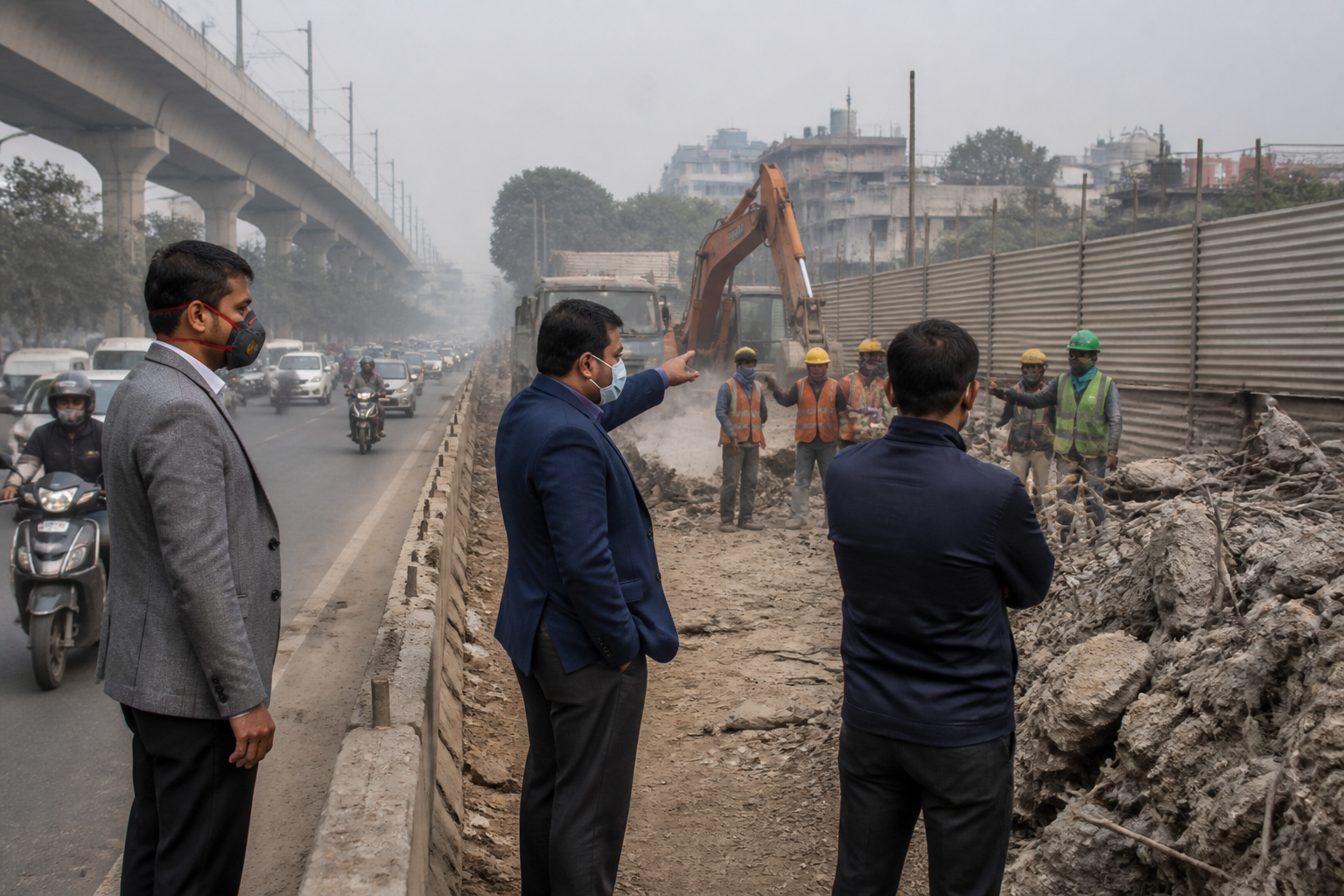
The Commission for Air Quality Management in the National Capital Region and Adjoining Areas has directed enforcement agencies to tighten compliance across the NCR, with specific focus on vehicular and industrial pollution, stubble burning, road dust, and construction and demolition activities.
The direction was issued after a meeting of the CAQM’s Sub-Committee on Safeguarding & Enforcement, held on September 29 under the chairmanship of CAQM Chairperson Rajesh Verma. The meeting reviewed preparedness, enforcement and compliance measures being undertaken by NCR State governments, including the Delhi government, and other implementing agencies.
According to the CAQM, agencies have been asked to ensure strict compliance with the Commission’s directions and to strengthen inspection and compliance-monitoring mechanisms across the region. The measures cover pollution sources that operate across administrative boundaries, making coordination between Delhi and the neighbouring NCR States central to enforcement.
The Commission identified vehicular pollution and industrial emissions as priority areas for effective enforcement. It also directed agencies to focus on preventing stubble burning and mitigating dust from roads as well as construction and demolition sites.
“The Sub-Committee reiterated the importance of sustained and coordinated efforts by all concerned agencies to ensure effective implementation of sector-specific measures and strengthen enforcement mechanisms,” the CAQM said in a statement issued on September 30.
The Commission said all implementing agencies had reaffirmed their commitment to undertake “strict, targeted and time-bound actions” for effective implementation of its directions. The statement did not specify new penalties, enforcement numbers, inspection targets or a separate timeline for individual agencies.
The focus on road and construction dust places local enforcement bodies and project agencies within the wider regional pollution-control framework. Dust from active construction and demolition sites, road activity and uncovered surfaces can affect neighbourhood-level air quality, while industrial and vehicular emissions require monitoring across multiple jurisdictions.
Stubble burning remains a seasonal concern for the NCR because smoke from agricultural fields in neighbouring States can contribute to regional pollution episodes. The CAQM’s direction places prevention of such burning alongside enforcement in urban sectors, reflecting the need for simultaneous action across rural and metropolitan areas.
The meeting also underlined the institutional challenge of implementing air-quality measures across the NCR. The CAQM can issue directions, but compliance depends on State governments, municipal agencies, pollution-control authorities, traffic and enforcement departments, and agencies responsible for construction and road management.
The CAQM said the meeting reviewed the status of preparedness and compliance measures already being undertaken by the concerned governments and implementing agencies. It did not release a consolidated assessment of the actions completed or the number of violations recorded.
The next stage will be the implementation of the sector-specific measures and the strengthened inspection and compliance-monitoring mechanisms directed by the Commission. The CAQM’s statement said agencies would undertake targeted and time-bound action across the NCR.
