


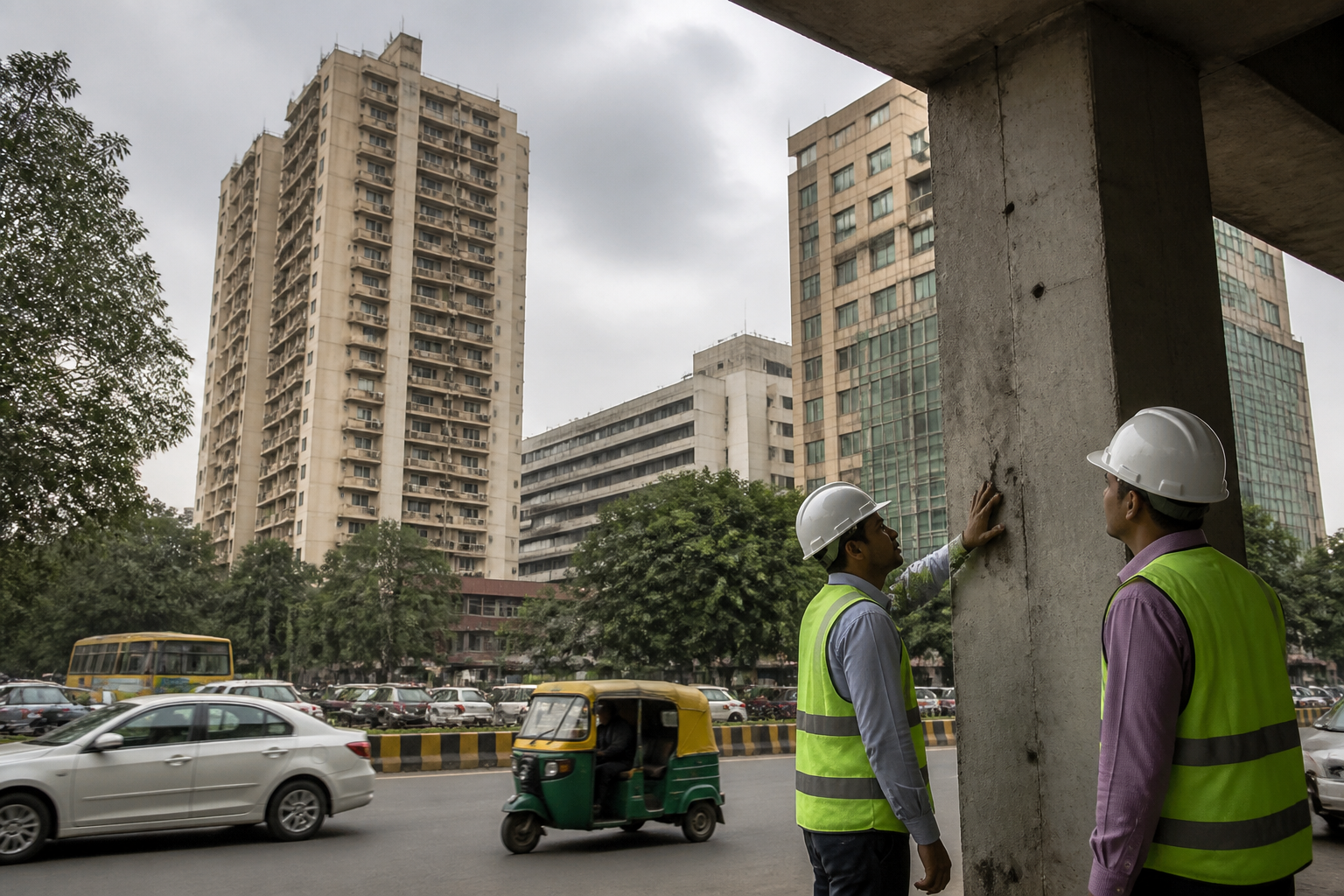
The Delhi Development Authority has ordered mandatory structural safety audits for high-rise buildings constructed under sanctions issued before March 21, 2001, placing older malls, hospitals, educational institutions and other high-footfall buildings under a three-month compliance deadline.
The direction, issued through a public notice on Thursday, applies to all high-rise buildings measuring 15 metres or more. Owners of buildings sanctioned before the cutoff date must arrange the structural audit within three months, according to the notice reported by Millennium Post.
The requirement also covers buildings below 15 metres where large numbers of people regularly gather. The DDA has specifically included group housing, educational buildings, hospitals and institutional buildings in this category, meaning height alone will not determine whether an older structure must be assessed.
The move follows a series of building collapse incidents in Delhi, including the collapse in Satya Niketan that killed seven people. The incidents have raised questions about the structural integrity and maintenance of buildings that were designed, sanctioned or constructed under older regulatory conditions.
DDA officials said the notice also takes into account Delhi’s earthquake risk. The national capital is located in seismic Zone IV because of its proximity to the Himalayas. The zone has fairly high seismicity, with earthquakes of magnitude 5 to 6 described as a general occurrence in the notice-related official explanation.
The audit will examine the structural safety of covered buildings, although the supplied notice does not specify a standardised public format, the professionals authorised to conduct the assessment or the process through which audit findings will be submitted. Those details will be important for owners and occupants because the order places the immediate responsibility for arranging the assessment on building owners.
The DDA has said that retrofitting and other corrective measures must follow wherever the audit identifies structural deficiencies. Retrofitting could involve strengthening an existing building, but the notice, as reported, does not provide a uniform list of interventions or a cost-sharing framework for different categories of property.
The order also makes non-compliance a potential enforcement issue. The DDA has stated that action will be taken against owners who fail to comply, though the reported notice does not specify the penalties, inspection mechanism or enforcement timetable.
The direction places a wide range of buildings under a common safety obligation, from residential group housing to facilities such as hospitals and educational buildings where evacuation and continued public access can present distinct operational challenges. It also shifts the immediate focus from post-collapse response to documented assessment of existing structures.
Owners now have three months from the direction to complete the structural audit. Further action will depend on the findings and on compliance with the DDA’s requirement to carry out retrofitting and corrective measures where necessary.
