


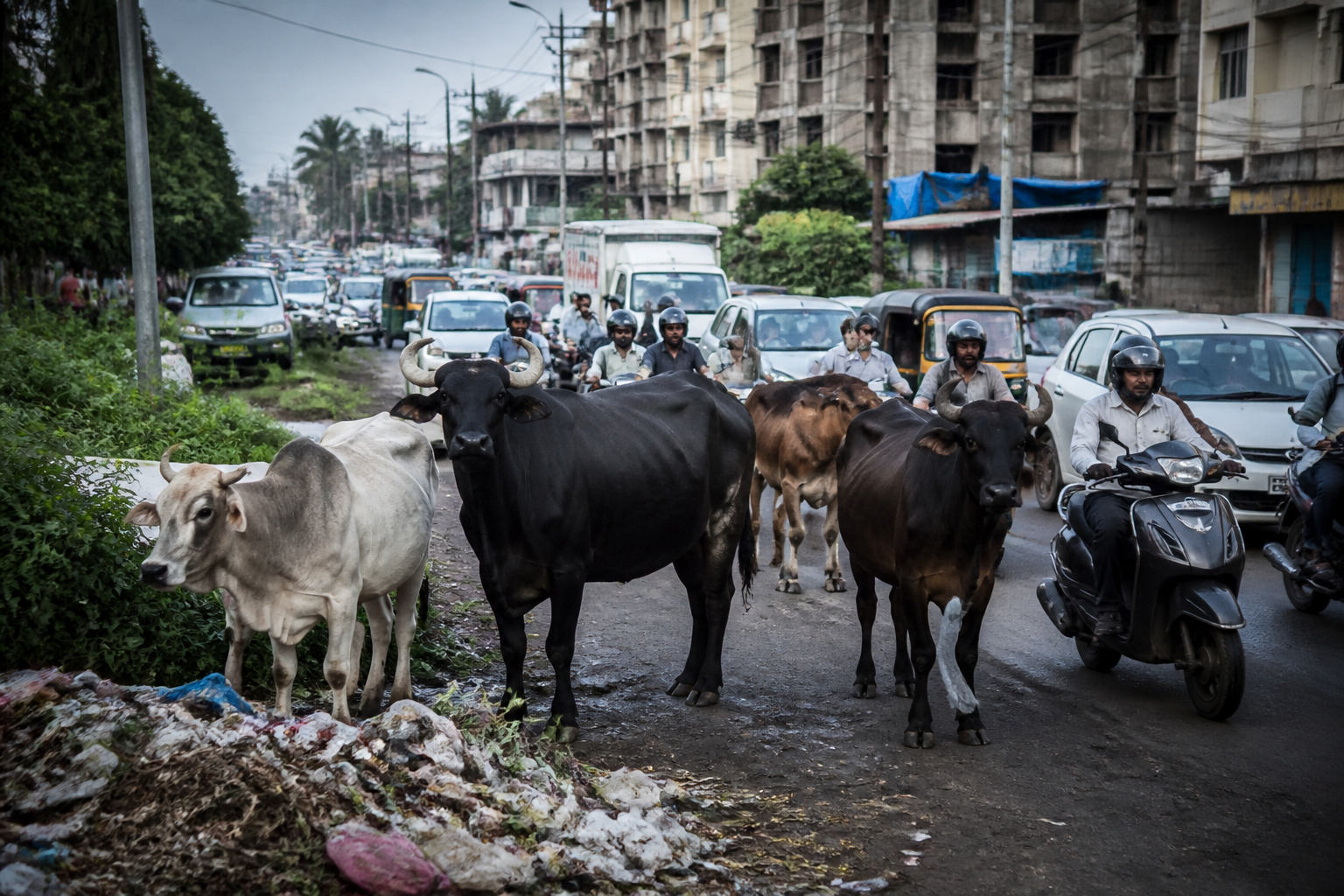
Vasai-Virar Municipal Corporation is set to seek help from gaushalas and animal welfare organisations to control the movement of stray cattle, while owners who leave cattle on roads may face fines, according to a report by Loksatta. The issue was raised by councillors during the civic body’s general meeting held on Wednesday, amid concerns over traffic congestion, public sanitation and road accidents.
The report said cattle owners in Vasai-Virar often leave cows and buffaloes outside cattle sheds, on grazing land, open plots and roads. The city has several large cattle sheds, while some residents in its rural areas continue to keep cattle. When the animals are not kept in enclosed facilities, they move freely through urban areas and create difficulties for residents and motorists.
The municipal corporation currently does not have cattle pounds, or kondwadas, to detain animals found on public roads. As a result, cows and buffaloes continue to move through streets without an organised civic mechanism for capture, temporary shelter and further action. The absence of such a facility was cited as one of the reasons behind the continuing stray-cattle problem.
The civic concerns extend beyond inconvenience. The report said cattle on roads contribute to unclean conditions and traffic jams, while animals suddenly appearing in front of vehicles can lead to serious accidents. In such incidents, both motorists and animals can be injured. The issue therefore combines road safety, animal management and municipal sanitation responsibilities.
Councillor Pramila Patil demanded that the corporation construct cattle pounds on open plots owned by the civic body and use those facilities to house stray cattle. The corporation is also expected to take assistance from gaushalas and animal welfare organisations to move the animals. The report’s summary said the civic body had decided to provide a subsidy of Rs 50 for cattle shifted to gaushalas, although the supplied report does not provide further details on the payment process or eligibility conditions.
The general body discussion also highlighted the danger of plastic waste to cattle. According to the report, cattle have died after consuming plastic waste in the belt between Sopara and Santoshbhuvan. The municipal corporation does not have an adequate system for disposing of the bodies of dead animals, creating further difficulties for residents and the administration.
The proposed response includes action against owners who release cattle on roads, support for shifting animals to gaushalas and consideration of municipal cattle pounds. The next steps will depend on how the corporation implements these measures, establishes facilities on its land and manages the disposal of dead animals.
