


India’s retail technology cycle is entering a more demanding phase. As the country’s retail market is projected to expand to ₹210–215 lakh crore by 2035, retailers are increasing technology spending not simply to add artificial intelligence to the shopping experience, but to manage more stores, products, orders and fulfilment decisions. The central question emerging from industry discussions is whether this investment can improve availability, productivity and margins rather than merely produce more visible digital features.
Technology spending by Indian retailers is estimated to have risen about 21 per cent to $4.6–5.1 billion in FY26, from $3.8–4.2 billion in FY25, according to industry experts cited at the Retailers Association of India’s ReTechCon. The same spending could more than double to $10.5–12 billion by FY30, implying annualised growth of roughly 23 per cent over five years. These figures describe a substantial expansion in the technology bill, but they also sharpen the question of where the money is being deployed and what operational problems it is expected to solve.
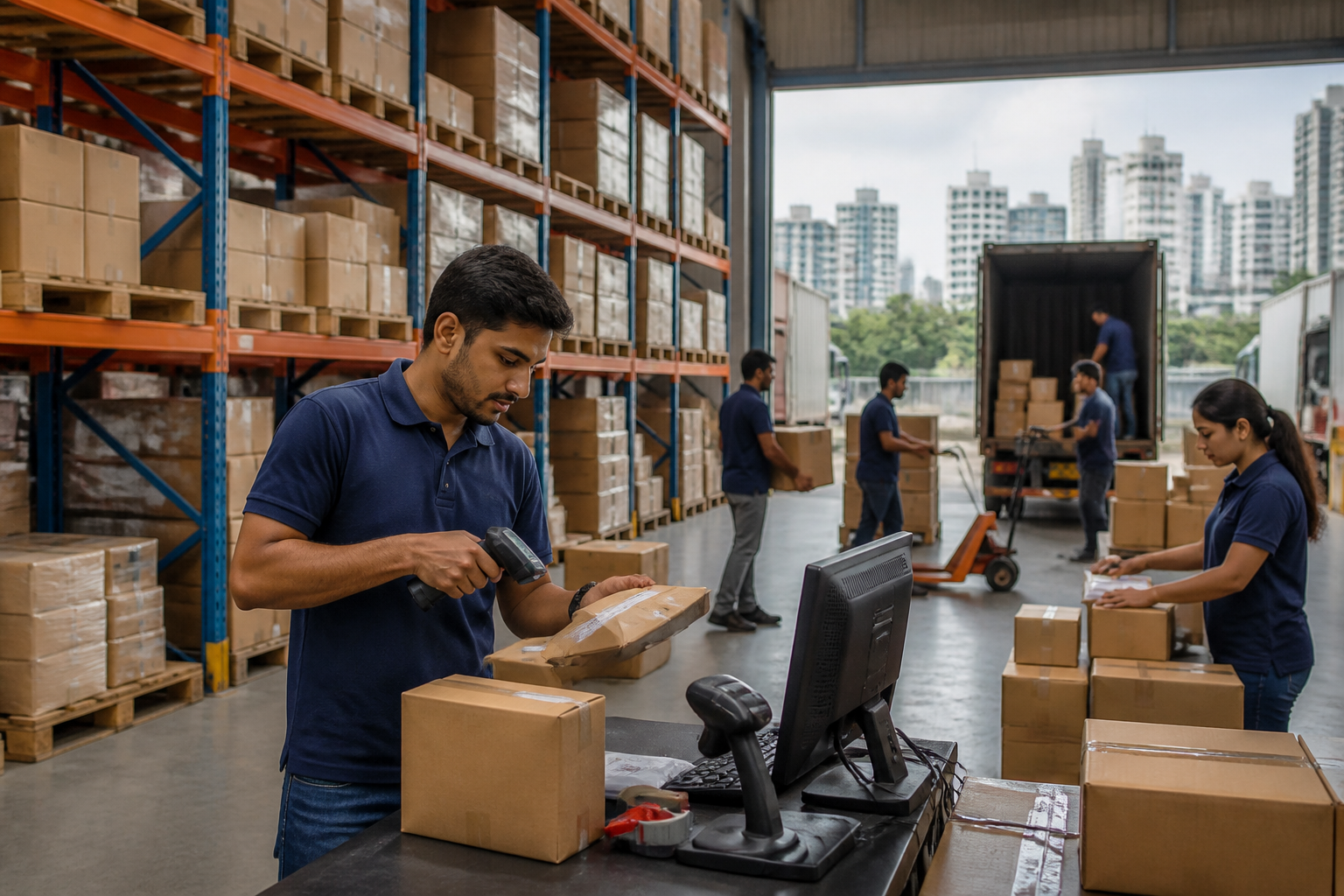
The evidence presented at the conference points to a change in the hierarchy of priorities. Supply chains, inventory systems, warehouse management, order management and data infrastructure are competing with AI initiatives for the next rupee of investment. The shift reflects a basic characteristic of retail: customers may encounter a website, an app or a store, but the promised product, location and delivery time depend on systems operating behind the visible experience.
Rajesh Jain, managing director and chief executive officer of Lacoste India, said at the conference that “the best technology is something that the customer never notices”. His description places the emphasis on the outcome rather than the interface. Customers want “the right product at the right time at the right place”, he said, making the reliability of the systems beneath the transaction more important than the novelty of the technology displayed to shoppers.
That distinction matters as Indian retailers expand across physical and digital channels. More stores and products create more points at which inventory can become inaccurate, orders can be delayed or stock can remain in the wrong location. The source material does not establish a uniform technology model across the sector, but the comments from retailers indicate that backend capability is being treated as a condition for scaling rather than as a separate administrative function.
Lacoste’s experience provides one example of the operational link. Jain said that upgrading the company’s warehouse management and order management systems produced an “immediate jump” in online sales while also benefiting offline operations. He also said that more return on investment was being delivered from “your systems and processes, the data that you collect and how you analyse the data”. The example suggests that the same backend infrastructure can influence both digital orders and physical retail, rather than serving only one sales channel.
Sanjay Vakharia, chief executive officer of Spykar Lifestyles, described the supply chain as the “backbone of our business”. He said technology that makes it more exact and optimises resources is “money well spent and time well spent”. The emphasis on precision is important because retail technology does not create value in isolation. Its usefulness depends on whether it improves the movement of products, the use of resources and the accuracy of decisions made across the network.
This is also where the proposed expansion of AI encounters a practical constraint. A second ReTechCon panel examined AI-led product discovery and agents. Such systems require structured information about products, customers, locations and availability. One panelist said the success of an agent depends on data quality rather than on the AI world. In effect, the discussion places data organisation before automation: an AI tool cannot reliably identify or recommend a product if the underlying information about that product, its location or its availability is incomplete or inconsistent.
The sequence has implications for how retailers define digital transformation. If experimentation with AI is moving towards production, as one technology executive said, deployment cannot be separated from the quality of the operational systems feeding it. The same executive cautioned against putting AI into stores merely for its own sake and said the priority was greater backend investment to improve supply chains and product availability. This frames AI as an additional layer over retail operations, not a substitute for the systems that make those operations work.
The spending numbers make this sequencing more consequential. An increase from $3.8–4.2 billion in FY25 to $4.6–5.1 billion in FY26 is already a large annual expansion. A possible rise to $10.5–12 billion by FY30 would create a significantly larger technology market for retailers and their vendors. But the figures supplied in the report are estimates from industry experts, and they do not establish how this spending will be divided between enterprise systems, supply-chain technology, data infrastructure, AI or customer-facing applications. The growth in spending therefore indicates the scale of the decision, not the success of any particular technology category.
The expected expansion of the retail market adds another layer. A market reaching ₹210–215 lakh crore by 2035 would involve a larger operating footprint and more transactions to coordinate. Retailers would need to handle the relationships among stores, warehouses, products, online orders and customers with greater consistency. The conference discussions indicate that the industry sees this coordination problem as central to technology investment. They do not, however, provide a sector-wide measure of inventory accuracy, fulfilment performance or margins that would allow the reported spending to be assessed against common outcomes.
The institutional question is who sets the priorities for this technology cycle. The Retailers Association of India’s conference brought together executives from retail companies and technology functions, creating a forum for comparing operational needs with emerging tools. Kumar Rajagopalan, chief executive officer of the association, framed the challenge around identifying “what’s working for us, what’s not working for us, what is getting overripe, and where should we really be putting the money going forward” on technology. His comments point to an industry moving from adoption as a general objective towards evaluation of specific systems and returns.
That evaluation is particularly important because backend systems are often less visible than customer-facing AI, but they carry the operational dependencies of the business. Warehouse management, order management and data systems influence whether a retailer can present accurate availability, fulfil an order and use stock across channels. The report offers a company example of these systems improving online and offline operations, but it does not establish that similar results have been achieved across the wider market.
For cities, the relevance of this shift lies in the growing importance of retail networks to everyday urban consumption. The source material does not provide city-level data or measure effects on traffic, warehousing, employment or delivery infrastructure. It does show, however, that the technology choices made by retailers are connected to physical systems: warehouses, stores, product movement and locations. As retail expands, digital performance depends on the management of this physical network.
The evidence therefore supports a narrower but more durable conclusion than the idea that AI will transform retail on its own. Indian retailers are increasing technology investment, while industry executives are directing attention towards the supply chain, inventory, data quality and backend processes that determine whether customer-facing systems can work reliably. The retail technology story is consequently becoming a test of operational capacity. The next developments to monitor are whether the projected spending growth materialises, how retailers allocate it across backend and AI systems, and whether companies report measurable improvements in product availability, fulfilment, productivity and returns.
