


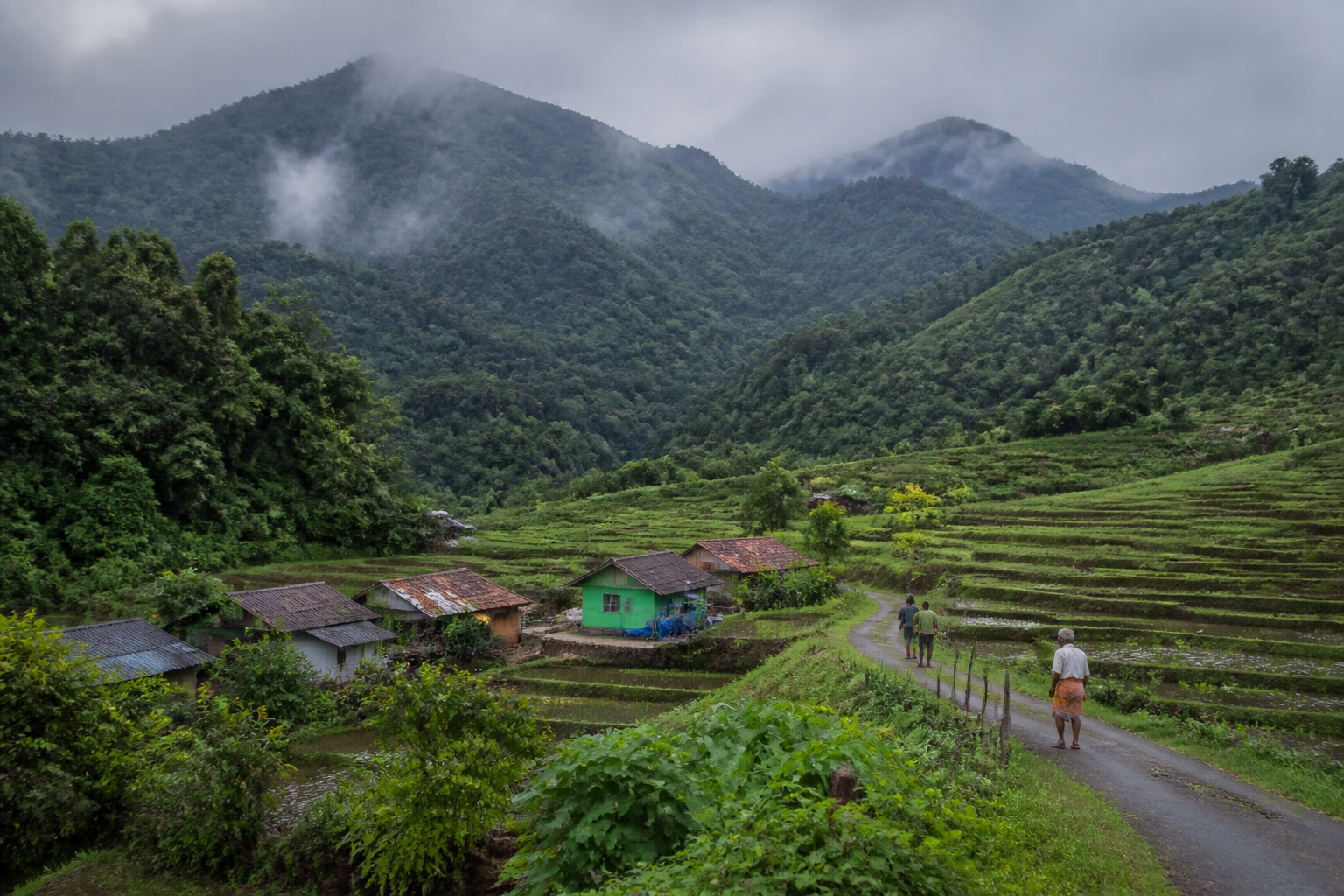
The Karnataka Assembly on Tuesday unanimously adopted a resolution seeking a review and modification of the Kasturirangan report on ecologically sensitive areas in the Western Ghats, rejecting the Union environment ministry’s latest draft notification in its current form.
The resolution followed a detailed discussion on the seventh draft notification issued by the Union environment and forests ministry in July 2026 after directions from the National Green Tribunal. The notification proposed declaring 20,668 square kilometres across 10 Karnataka districts as ecologically sensitive areas.
Members of the Karnataka legislature, cutting across party lines, said the notification could not be accepted as drafted. Chief Minister D K Shivakumar said the state would seek one year to conduct a physical survey to determine the extent and nature of the areas that should be covered by the ecological safeguards.
Several legislators criticised the report as being based largely on satellite data. During the Assembly discussion, they described the methodology as “unscientific”, according to the Indian Express report. Shivakumar said the state was not opposed to environmental protection but argued that farmers, tribal communities and families living in the region for generations should not be adversely affected.
“We are not anti-environment. We are nature lovers. But farmers should not be affected,” Shivakumar said. The state government’s position is that a ground-level assessment is required to distinguish between forests, agricultural and horticultural land, ecologically sensitive zones and inhabited areas before final designations are made.
The government also decided to establish a high-level committee to monitor the proposed survey, taking a cue from neighbouring Kerala. Shivakumar said the committee would be headed by a retired Supreme Court judge. Committees would also be formed at the gram panchayat level to support the physical identification and verification of areas covered by the draft notification.
The proposed survey is intended to assess forests, farms, horticultural land and settlements across the affected districts. The state has also decided to send an all-party delegation to meet the prime minister and the Union environment minister over the notification and its potential implications for communities in the Western Ghats.
The Kasturirangan report was prepared by a high-level working group led by former Indian Space Research Organisation chief K Kasturirangan. Its implementation has remained contested because the ecological restrictions would intersect with settled communities, agricultural activity and existing land use in the Western Ghats.
The Assembly resolution does not itself cancel the Union government’s draft notification. It records Karnataka’s opposition to the notification in its present form and seeks a review, modifications and additional time for a physical survey. The resolution was adopted on the second day of a special session convened to discuss the report and the drought situation in the state.
