


The return of Kolkata Municipal Corporation’s property tax concession for senior citizens closes a months-long administrative gap, but the episode also reveals how routine municipal benefits can become vulnerable when election restrictions, uncertainty over legal interpretation and changes in institutional authority overlap.
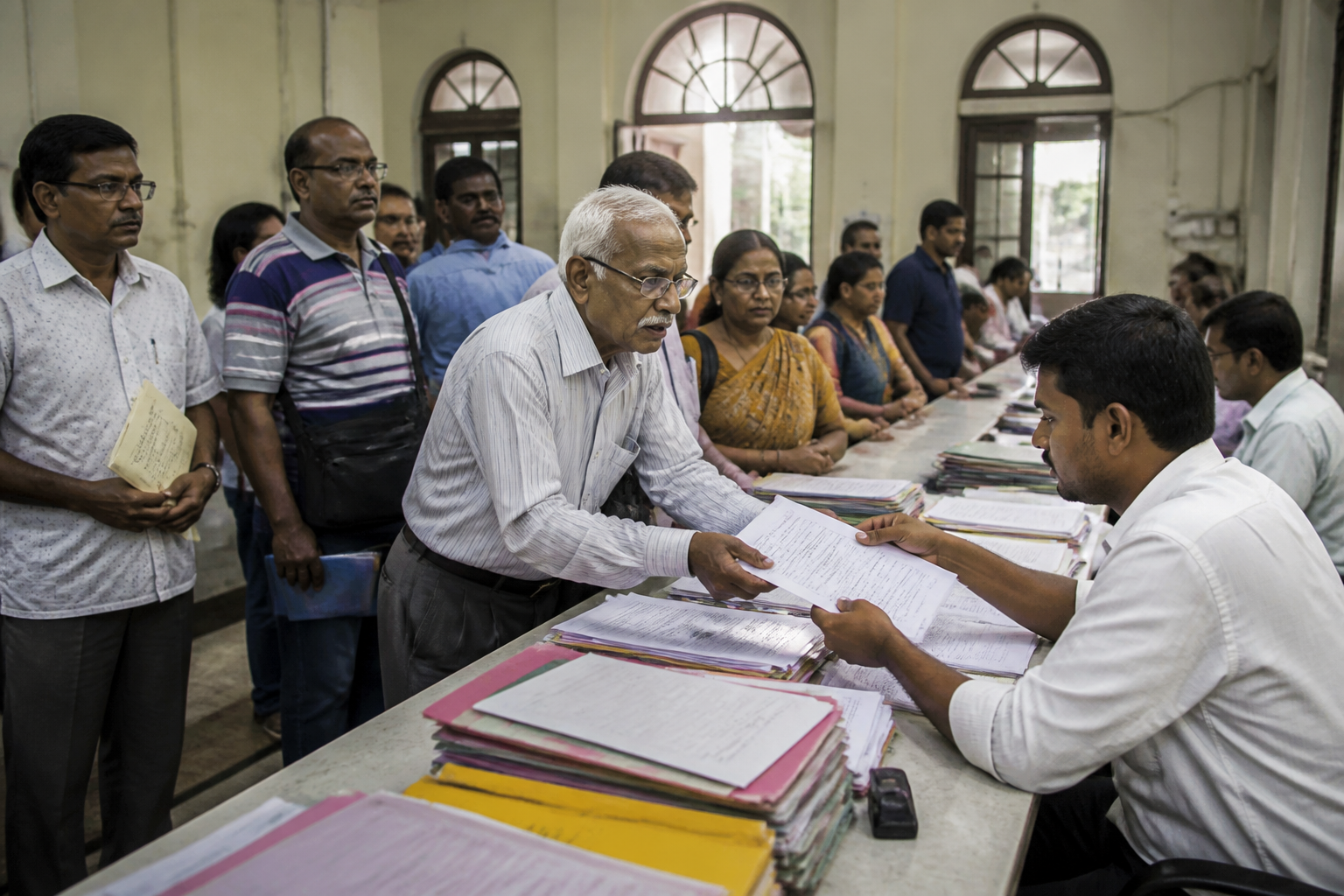
According to a report by Anandabazar – Kolkata, the KMC resumed processing the concession in the first week of September after applications had remained pending since the end of March. More than 300 applications were reportedly held up. They included fresh applications as well as renewal requests from taxpayers whose earlier three-year concession period had ended.
The concession itself was not described as a newly announced election-time benefit. Under the KMC’s existing rules, taxpayers aged 60 years or above receive a 10 per cent special concession on property tax. Retired defence personnel are eligible for a higher concession of 25 per cent. Once an application is approved, the benefit continues for three years, after which the taxpayer must apply for renewal.
That distinction became central to the delay. The report says the model code of conduct came into force ahead of the Assembly election, preventing the municipal administration from issuing fresh administrative approval. Officials in the property tax assessment and revenue collection departments reportedly differed over whether the concession fell within the scope of the election restrictions.
One view was that the concession was already provided for under a specific legal provision and was therefore part of an established annual system rather than a new policy announcement. The opposing view was that administrative approvals during the election process required greater caution, even if the underlying benefit was not new. The result was not a formal cancellation of the concession but an extended pause in processing applications.
This distinction matters for understanding how municipal administration works. A benefit can exist in law or under established rules and still require an administrative chain to remain operational. Applications must be received, documents checked, eligibility assessed and approvals issued. If any link in that chain becomes uncertain, citizens may experience the outcome as a withdrawal of the benefit, even when the rule itself has not changed.
The delay was compounded by a change in the KMC’s institutional structure. After a change of government in the state, the elected board of the Kolkata Municipal Corporation was dissolved, and Smita Pandey took charge as administrator, the report says. The pending applications therefore remained caught between the election-related caution and the absence of the earlier elected municipal arrangement.
The eventual restart followed discussions between KMC tax department officials and the administrator. After receiving Pandey’s consent, officials began examining the applications that had been held up and restarted the process of granting the concession from the beginning of September. The report says that both old applications and new applications are now being processed in parallel.
For senior taxpayers, the practical effect is significant even though the concession is limited in scope. Property tax is a recurring municipal obligation, and the concession reduces the amount payable for eligible households. The benefit is particularly dependent on procedural continuity because it is not applied automatically. Applicants must make the required submission, establish their age and identity, provide the relevant documents and comply with the rules governing the assessment and payment of tax.
The KMC system also contains other layers of relief. Taxpayers who deposit property tax within the prescribed period may receive a further concession under the applicable rules, while online payment can provide an additional benefit. These provisions create a more complex compliance structure for senior citizens: eligibility for the age-based concession is separate from timely payment, and the final benefit depends on the taxpayer following each relevant procedure.
That structure can create an information problem. A taxpayer may know that a concession exists but remain uncertain about whether a fresh application is required, whether a previous approval continues after three years, which documents must be submitted or whether an application is being held because of an administrative decision. The report indicates that the current exercise includes both fresh applications and renewals, suggesting that continuity of information is as important as the concession itself.
The episode also highlights the difference between policy continuity and administrative continuity. The KMC’s position, as reported, is that the senior-citizen concession is not a temporary financial measure but part of a long-standing statutory arrangement. Yet the processing of applications was interrupted because officials could not reach a common position on the effect of the election code and because the municipal leadership structure changed.
For urban residents, this is a familiar governance problem: a rule may be stable while the institution responsible for implementing it is in transition. Elections, changes in municipal leadership and temporary administrative arrangements can affect the speed with which applications move, even where there is no declared policy reversal. The burden is then transferred to applicants, who must wait for clarity while their financial obligations continue.
The more important question is not whether the KMC has restored the concession. It is whether the municipal system can prevent similar uncertainty when established citizen benefits intersect with election rules or institutional transitions. The report does not indicate that the concession was permanently threatened, but it shows that the absence of a clear and publicly communicated process allowed hundreds of applications to remain pending for several months.
The KMC’s next administrative task is therefore the disposal of the backlog alongside the regular processing of new applications and renewals. Officials are expected to verify age, taxpayer identity, property tax calculations and supporting documents before approving each request. The report also advises applicants to submit the required information and documents so that their claims can be examined.
The evidence currently establishes three points. The concession has resumed; more than 300 applications had reportedly been held up; and the delay arose from uncertainty during the election period and a subsequent change in municipal administration. It does not establish how many applications have already been approved, the total revenue impact on the KMC or whether a permanent protocol has been created for future election periods. Those details will determine whether the present restart resolves only the backlog or also strengthens the system’s ability to maintain routine municipal services during institutional change.
